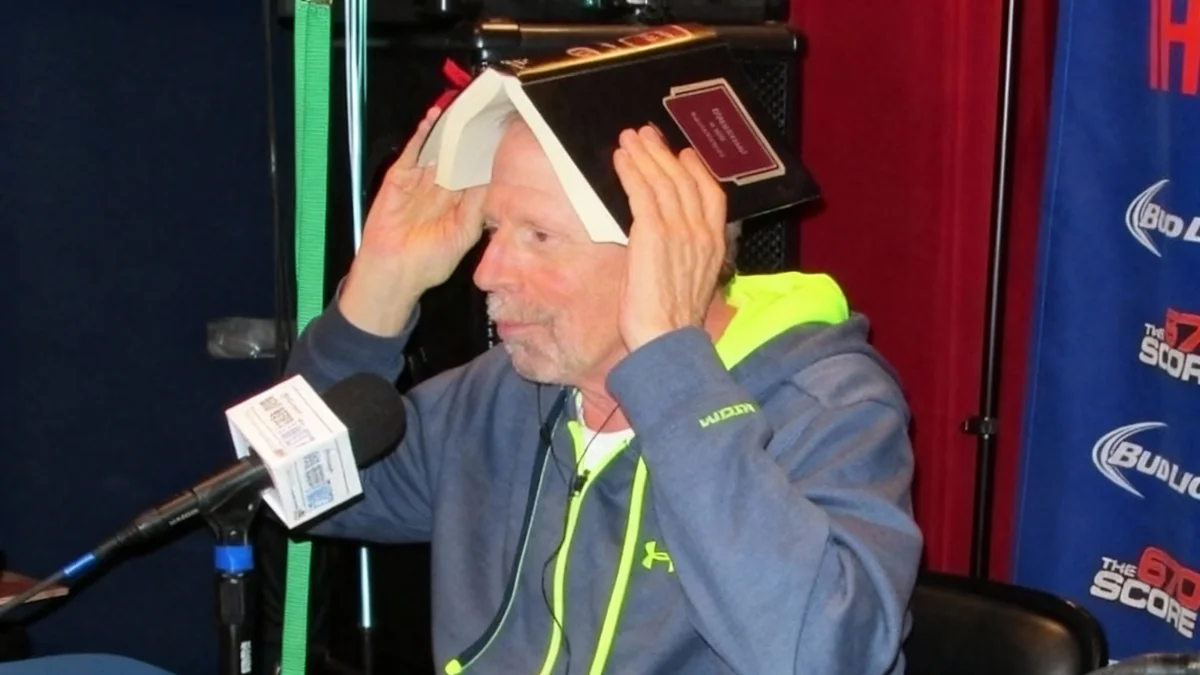

Terry Boers, a legendary voice in Chicago sports radio, passed away on Friday, surrounded by his loving family. Boers was a defining figure at 670 The Score, known for his unique blend of humor, insightful commentary, and genuine personality both on and off the air.
Key Takeaways
- Terry Boers, a long-time host at 670 The Score, died on Friday.
- He was celebrated for his authentic, eccentric personality and sharp wit.
- Boers created memorable radio partnerships, particularly with Dan McNeil and Dan Bernstein.
- His influence shaped the comedic and community-focused style of Chicago sports radio.
A Voice That Defined Chicago Sports Radio
Boers' career spanned decades, leaving an indelible mark on Chicago's media landscape. He was recognized for his ability to seamlessly transition between serious sports analysis and spontaneous, often hilarious, outbursts.
His distinctive "Whoop!" in a falsetto voice became a signature sound, punctuating discussions and catching listeners off guard. This unpredictable nature was a cornerstone of his appeal, making every broadcast a unique experience.
Quick Fact
Terry Boers was often compared to Don Rickles for his quick wit and benevolent teasing of colleagues and callers.
Those who worked with him often recall his consistent persona. He was the same authentic person whether the microphone was on or off. This genuine nature fostered deep connections with both his co-hosts and his audience.
Partnerships That Shaped an Era
Boers formed influential partnerships throughout his career. His early pairing with Dan McNeil in 1994 at 670 The Score set a new standard for sports talk radio.
McNeil, described as an exceptional show driver, found a perfect counterpoint in Boers' wild and unpredictable style. Their chemistry produced moments of radio gold, with Boers' one-liners often leaving McNeil in fits of laughter.
"Terry's ability or choice or natural gift at being the same person on and off the air was inspiring in ways I didn’t grasp for a while. He was comfortable with himself – flaws, weirdness and all. That’s what we loved, the eccentric authenticity."
Later, Boers teamed up with Dan Bernstein, a partnership that some referred to as "The Freight Train of Hate and Indignation." This collaboration further showcased Boers' versatility, proving he could maintain his unique character with different co-hosts.
These partnerships were not just about on-air performance; they extended to actively involving producers and fostering a strong sense of community among listeners. This approach helped build the station's identity.
The Master of Entertainment
Boers possessed a rare talent for stretching the entertainment value of any story, no matter how absurd. One notable example from 1997 involved the passing of former White Sox outfielder Johnny Dickshot.
Over two hours, Boers crafted every possible joke, repeating them with perfect timing and a stand-up comedian's knack for callbacks. Listeners and colleagues found it consistently fresh and entertaining, a testament to his comedic mastery.
Background
Boers was known for his extensive network of contacts, particularly out-of-town sports writers. He would often bring these guests onto his show, knowing they would provide compelling and humorous radio content. Guests like Art Thiel from Seattle, Patrick Reusse from Minneapolis, and Terry Pluto from Cleveland were frequent contributors, drawn by their admiration for Boers.
He was also skilled at using self-deprecation. Boers would laugh at himself and invite others to do the same, understanding the power in humility. This approach often created a warm atmosphere during interviews, leading to more genuine responses from guests.
A Lasting Legacy and Inspiration
Terry Boers' influence extended beyond his own shows. His comedic sensibilities helped define the station's overall voice, a style that continues to resonate with audiences today. His work serves as a benchmark for what Chicago sports radio can achieve.
Many in the industry view his partnerships as a "north star" for aspiring broadcasters. The aspiration to build a similar sense of community and engaging content continues to drive new talent.
His colleagues remember him as a mentor who showed them the importance of authenticity and accountability. Even when his directness sometimes caused hurt feelings, his willingness to discuss and resolve issues, combined with his kindness, made him easy to forgive.
Boers understood that building goodwill allowed him to take risks with his humor. He knew when he needed to be sharp to do his job effectively, and his genuine nature allowed him to navigate those moments.
The sports radio community in Chicago and beyond mourns the loss of a truly unique and inspiring figure. Terry Boers will be remembered for his infectious laughter, his sharp mind, and the authentic spirit he brought to every broadcast.