

The North Carolina Tar Heels men's basketball team returned from a challenging West Coast trip with two consecutive losses, bringing their season record to 14-4. The team, once 14-2, now grapples with defensive inconsistencies and offensive struggles, particularly from beyond the arc and at the free-throw line.
Key Takeaways
- North Carolina suffered losses to Stanford (95-90) and Cal (84-78).
- The team's three-point defense remains a significant weakness.
- Free-throw shooting is among the worst in the ACC, at 67 percent.
- Coach Hubert Davis is adjusting lineups and rotations amidst the struggles.
- Upcoming games against Notre Dame and Virginia will test the team's resilience.
Defensive Gaps and Offensive Woes Surface
The recent road trip highlighted significant vulnerabilities for the Tar Heels. Against Stanford, the team held a lead for nearly 38 minutes before succumbing to a late Cardinal rally, losing 95-90. Just days later, California dominated early, building a 20-point lead before UNC eventually fell 84-78. A consistent theme in both defeats was the opponent's success from long range.
Carolina's defense around the basket has been respectable, but their perimeter defense has allowed opponents to shoot one of the worst three-point percentages in the country against them. This pattern emerged clearly in California, with Stanford and Cal combining for 28 successful three-pointers compared to only 15 for the Tar Heels. This created a staggering 39-point differential from beyond the arc.
Key Statistic
Opponents made 28 three-pointers against UNC in the two West Coast games, while the Tar Heels only converted 15, resulting in a 39-point deficit from long range.
Beyond three-point defense, free-throw shooting has become a persistent issue. The Tar Heels are converting only 67 percent of their free throws, ranking them as the third-worst team in the ACC. This percentage is even lower than what opponents are shooting when playing against UNC, which stands at 70 percent.
Coach Davis Addresses Team's Performance
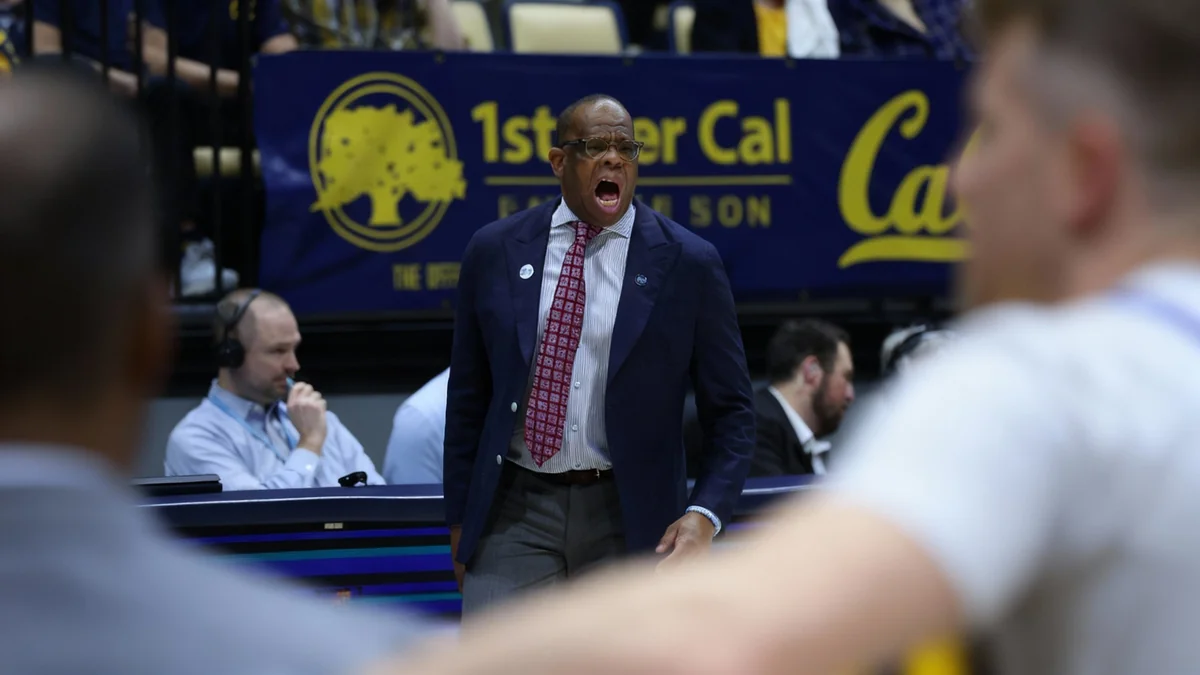
Head coach Hubert Davis faced questions regarding the team's performance, particularly after giving up 54 points in the first half against Cal. His response, "I don't know," drew considerable attention across social media, from former players to long-time media observers.
"It doesn't matter whether you're in California or at home or wherever you are," Davis stated. "You've got an opportunity to compete and put on that jersey and be a part of this program; your job and responsibility and expectations to give everything you've got out there on the floor the entire game."
Davis dismissed the idea that cross-country travel or hotel stays contributed to the team's struggles. He emphasized the consistent expectation for effort and commitment regardless of location. The coach acknowledged the need for adjustments, particularly in player rotations and minutes.
Team Roster Adjustments
Last season, the Tar Heels relied heavily on backcourt scoring. This year, Davis focused on adding size and skill with transfers like 7-foot center Henri Veesaar and 6-foot-10 freshman forward Caleb Wilson. Both bigs are shooting 64 percent from the floor in ACC games, but perimeter scoring remains inconsistent.
Lineup Changes and Player Development
In response to recent losses, Davis has begun experimenting with his lineup. Freshman Derek Dixon started at point guard against Cal, playing 29 minutes and hitting four three-pointers. Regular starter Kyan Evans, by contrast, played only 11 minutes and remained scoreless. Jonathan Powell has seen a reduction in minutes, possibly due to shot selection and defensive errors.
Lukaa Bogavac received more playing time than wing player Jarin Stevenson and showed improved shooting. Davis explained these shifts as an effort to find the right combinations.
"Nothing more than just tried to change some rotations a little bit," Davis commented on the minute distribution. "Zayden High had some more opportunities today, Jayden Young continues to improve. I played 10 guys and 10 guys deserved to play."
Davis also highlighted Dixon's confident performance in his first start. He believes the team is now facing its first real adversity of the season, a common experience for all teams.
Looking Ahead to Conference Play
The Tar Heels, now 2-3 in ACC play, face a critical stretch of their schedule. They are set to host Notre Dame (1-4) this week before traveling to Virginia (5-1) on Saturday. With Duke and Clemson both holding undefeated 6-0 records in the ACC, North Carolina must quickly address its defensive issues and find more offensive consistency.
Tyler Zeller, a Tar Heel Sports Network analyst and former ACC Player of the Year, emphasized the need for increased effort and connection.
"You can't show up and expect to win in this league any given night without putting in that kind of effort, that kind of energy," Zeller said. "And it goes across the board. There's no single guy who wasn't playing hard. I think they were trying, but I think you've gotta take it to another level to be able to compete and win at a high level each and every night."
Zeller pointed out that the team lacked a "connected" feel for much of the Stanford and Cal games, despite late surges in effort. He stressed the importance of learning from these road losses, especially with challenging conference games still ahead, including matchups against Miami, Syracuse, and Duke.
The Road Ahead
This Tar Heels squad is still relatively new, with a veteran player recovering from a fractured left arm and others adjusting to Davis's evolving rotation. The team's strong 12-1 start included wins over Kansas, Kentucky, and Ohio State, but the recent losses raise questions about their readiness for the tougher ACC schedule.
The program faces pressure from an engaged alumni base and fans, who are eager for consistent performance. While the landscape of college basketball has changed with revenue sharing, the transfer portal, and Name, Image, and Likeness (NIL) deals, the core challenge remains improving on-court execution.
The team's ability to fight through this adversity and implement necessary changes will define their season. With 15 more conference games ahead, the Tar Heels have the opportunity to prove their early season success was not an anomaly.