


A new photography book, Coreen Simpson: A Monograph, highlights the extensive career of photographer Coreen Simpson, whose lens has captured iconic figures like Toni Morrison and Muhammad Ali. Now 83, Simpson's work, spanning from compelling portraits to innovative jewelry design, reflects a lifelong pursuit of creative expression.
Key Takeaways
- Coreen Simpson's new monograph features unseen photographs of cultural icons.
- Her career began by teaching herself photography in 1976.
- Simpson also achieved success as a jewelry designer, creating the 'Black Cameo' line.
- Her work often emphasizes the inherent power and presence of her subjects.
- A strong survival instinct, developed during her childhood, fueled her drive.
A Self-Taught Visionary's Journey
Coreen Simpson's path to becoming a celebrated photographer was unconventional. In 1976, while working as a freelance lifestyle writer, she realized she could create better images for her stories than those provided. This realization sparked a new direction for her career. She approached a friend, Walter Johnson, a street photographer she knew from her modeling days, and asked him to teach her the basics of using a camera.
With a camera in hand, Simpson quickly developed her unique style. She understood that strong visuals were crucial for any published story. "You have to feel good about yourself, and good about the article that you’re presenting to the public," Simpson states. "So what makes it good? It’s the visuals. The visuals make it good."
Quick Fact
Coreen Simpson was an assistant curator at the Studio Museum in Harlem when she began photographing visiting artists, including Toni Morrison, in 1978.
Capturing Icons: Toni Morrison and Muhammad Ali
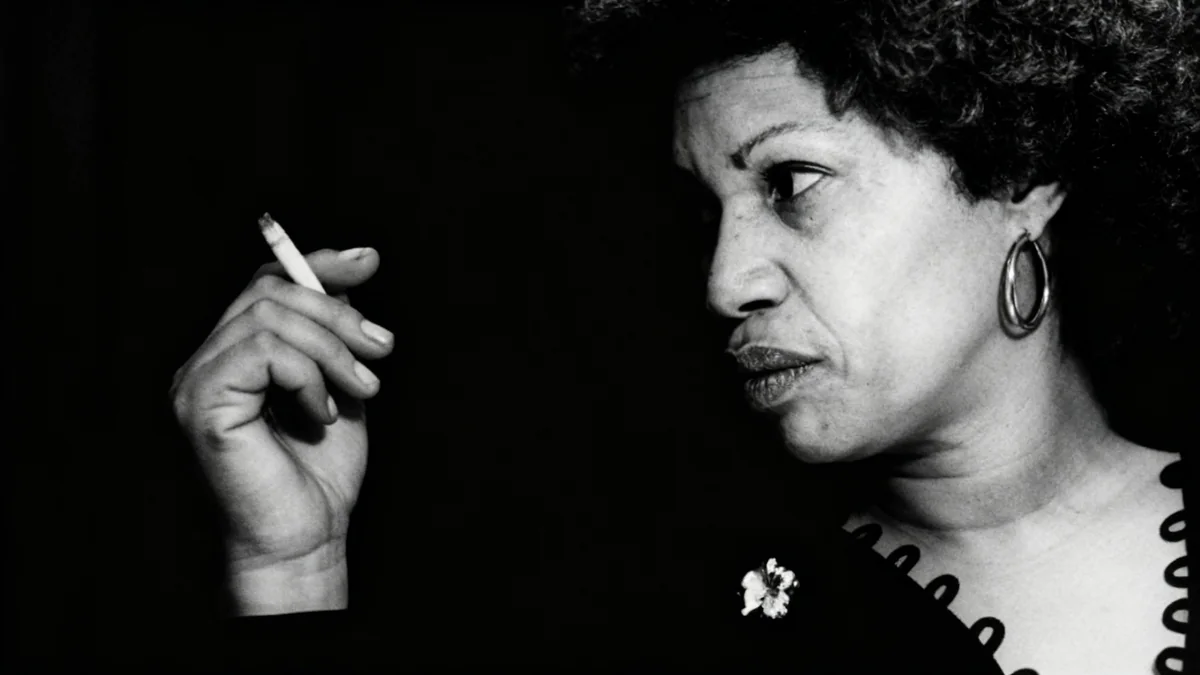
Simpson's ability to capture the essence of her subjects is evident in her portrait of Toni Morrison from 1978. Morrison looks directly into the camera, her expression commanding attention. The cigarette in her hand suggests her power as a literary figure. This image exemplifies Simpson's skill in revealing the true nature of her subjects while highlighting their presence.
During her time as an assistant curator at the Studio Museum in Harlem, Simpson established an unofficial photography studio in her office. She took it upon herself to photograph artists who visited. She recalls her interaction with Morrison:
"I made up this whole thing, ‘I’m Coreen Simpson, and I would like to do an official portrait of you.’ Toni Morrison was smoking a cigarette when she came in, and so she said, ‘Oh, let me put the cigarette out.’ And I told her, ‘But it looks so glamorous with the cigarette. This is you. Allow me to take the picture.’"
Another career-defining moment occurred in 1976. On the eve of Muhammad Ali's fight against Ken Norton at Yankee Stadium, Simpson was outside the venue, hoping to photograph attendees. Despite not having a ticket, a man approached her and offered to introduce her to Ali. Flashing her NBC work badge, where she was a union contractor, not a photographer, Ali invited her to be the only photographer to walk behind him as he entered the ring. After the fight, Ali extended an invitation for her to join his after-party events.
Background
Simpson credits her childhood in foster care with developing a strong survival instinct. This drive became a core part of her photographic process, pushing her to always 'get the shot' that editors desired.
Beyond the Lens: Jewelry Design and Entrepreneurship
Simpson's creative instincts extended beyond photography into the world of jewelry design. Her entry into the industry was accidental. She joined a friend, who worked for the chief curator of Vogue, to sell old clothes in the West Village. Simpson brought some of her old jewelry, and after a few successful Saturdays, they sold everything. This experience sparked her interest in selling more pieces.
Her friend suggested they take a jewelry-making class. After honing her skills, Simpson saw improvement in her designs. Initially, she faced challenges with pricing, as downtown customers were hesitant to pay her asking amounts. A customer's suggestion led her to sell her jewelry in front of Bendel's on 57th Street, which proved to be a pivotal move.
In 1989, an editor, Audreen Ballard, commissioned Simpson to create a 'Black Cameo.' This request marked a turning point, leading to the rapid growth of her jewelry business. The success of her 'Black Cameo' line provided a crucial financial supplement, allowing her to pursue photography without constant income pressure.
- 1976: Began photography career.
- 1978: Photographed Toni Morrison.
- 1979: Photographed Muhammad Ali.
- 1989: Created the iconic 'Black Cameo' jewelry.
- Current: Released Coreen Simpson: A Monograph.
A Legacy of Passion and Persistence
Even at 83, Simpson's passion for photography remains strong. "I’ve never gotten bored [with photography], but I used to get bored very easily with things," she says. "It’s fascinating to me that it has just enriched my life completely." Her new photo book, published by Aperture’s Vision & Justice project, celebrates her diverse body of work, featuring black-and-white portraits that reveal the inner spirit of her subjects, alongside experimental pieces that challenge perceptions of women's bodies.
As a single mother raising two children, Simpson consistently created opportunities for herself, driven by her passions. She often references James Baldwin's advice: "Go with the blood beats," meaning to pursue what truly excites you. This philosophy has guided her remarkable career, demonstrating the power of intuition and persistence in the creative world.
Her work captures a wide range of subjects, from everyday people in Harlem to global figures like James Baldwin, Jean-Michel Basquiat, and Andy Warhol. She also documented the vibrant nightlife of New York City clubs. Simpson views her camera as a "passport," opening doors to unique experiences and allowing her to connect deeply with the human spirit.