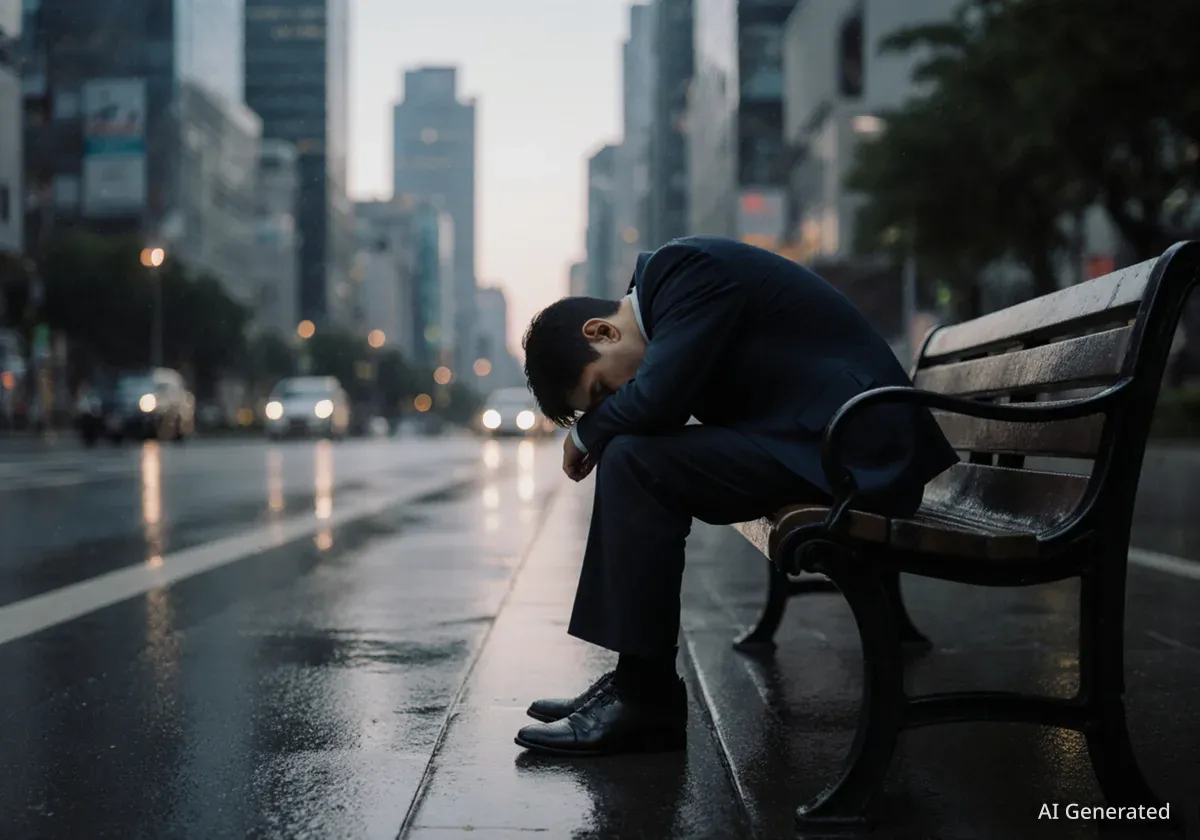


A powerful photography series titled "High Fashion" offers a stark look into the demanding work culture of Japan, capturing well-dressed businessmen, known as salarymen, asleep on the streets of Tokyo. The project, created by photographer Pawel Jaszczuk, documents a decade-long observation of a phenomenon that speaks volumes about professional exhaustion.
These images, while visually striking and at times surreal, point to a deeper societal issue. They depict individuals who, after long workdays followed by obligatory after-hours drinking with colleagues, have missed the last train home and resorted to sleeping on public benches, sidewalks, and stairwells.
Key Takeaways
- Photographer Pawel Jaszczuk's series "High Fashion" documents Japanese salarymen sleeping on Tokyo's streets.
- The project, which ran from 2008 to 2018, explores themes of overwork and professional exhaustion in Japan.
- Jaszczuk used a direct flash technique to create a high-contrast, fashion-like aesthetic, juxtaposing the men's formal attire with their vulnerable state.
- The phenomenon is often a result of missing the last train after work-related social gatherings, a common part of Japanese corporate culture.
- The series highlights the concept of "karoshi," a Japanese term meaning "death by overwork," raising questions about the sustainability of such a demanding work-life balance.
The Genesis of a Ten-Year Project
The project began in 2008 when Pawel Jaszczuk, then living in Tokyo, was struck by an unusual sight: a man in a pristine suit, collapsed in sleep on a public street. This initial encounter sparked a curiosity that would evolve into a decade-long photographic exploration.
Initially released as a black-and-white zine titled "Salaryman," the series was later refined and expanded into the full-color book "High Fashion." Jaszczuk's motivation was driven by the visual paradox he witnessed.
"The contrast between this beautiful man wearing a suit, looking really sophisticated and chic, lying down on the street, on the asphalt," Jaszczuk explained, was something he had never seen before and found deeply intriguing.
To find his subjects, Jaszczuk would ride his bicycle through Tokyo's business and entertainment districts late at night and into the early morning hours. He frequented areas near major train stations and karaoke bars, common last stops for salarymen before they attempted their journey home.
An Unconventional Fashion Shoot
Jaszczuk's approach was deliberate and methodical. He sought out specific compositions that would elevate the images beyond simple street photography. He was not just documenting a scene; he was creating a statement.
"They had to be well dressed, with an interesting pose and something extra to make the image special," he noted. His goal was to achieve a look reminiscent of a high-end fashion magazine, which inspired the project's ultimate title, "High Fashion."
To achieve this aesthetic, he employed a direct, harsh flash. This technique illuminates the subject starkly against the dark city backdrop, freezing the moment with unflinching clarity. The style is reminiscent of the mid-20th-century photographer Weegee, who famously used a similar method to document New York City's crime scenes, lending a raw, immediate quality to the photographs.
Understanding the Salaryman Culture
The term "salaryman" (サラリーマン, sararīman) refers to a white-collar, salaried worker in Japan. This role has traditionally been characterized by immense loyalty to a single company, long working hours, and participation in after-work social activities, such as drinking with superiors and colleagues, which are considered crucial for career advancement.
A Commentary on Modern Work Culture
As the project developed over ten years, its underlying message became clearer. The photographs evolved from a documentation of a curious urban phenomenon into a critique of a system that pushes its workforce to the absolute limit. The sleeping figures, though peaceful in their repose, represent a state of complete exhaustion.
The series serves as a visual representation of a culture grappling with extreme professional demands. In Japan, the issue is so pronounced that there is a specific term for it: karoshi, which translates directly to "death by overwork." This term gained official recognition decades ago and remains a significant social concern.
What is Karoshi?
Karoshi, or "death by overwork," is a Japanese term relating to sudden occupational mortality. The major medical causes of karoshi deaths are heart attack and stroke due to stress and a starvation diet. It is a recognized social problem that has led to legal challenges and a slow shift in corporate attitudes toward work-life balance.
Jaszczuk's work forces the viewer to confront the human cost of this system. He poses a critical question through his art: "The pictures show people who are used, who are overworked, overstressed, and exhausted. Do we really want to end up like this?"
The Enduring Image and a Shifting Culture
Jaszczuk concluded his photography for the project in 2018. Since then, the "High Fashion" book has been released in three editions, finding a global audience and sparking conversations about work culture far beyond Japan's borders.
While the images capture a specific moment in time, they also touch on a universal theme of burnout and the pressures of modern professional life. The sight of a suit-clad worker asleep on the concrete is a powerful symbol of the point where professional dedication meets physical and mental collapse.
There are indications, however, that the traditional salaryman culture in Japan is slowly evolving. A new generation of workers is increasingly prioritizing work-life balance, and some companies are beginning to implement reforms to curb excessive overtime. Jaszczuk's photographs serve as an important document of a culture at a potential turning point, capturing the stark reality of a system while hinting at the need for change.