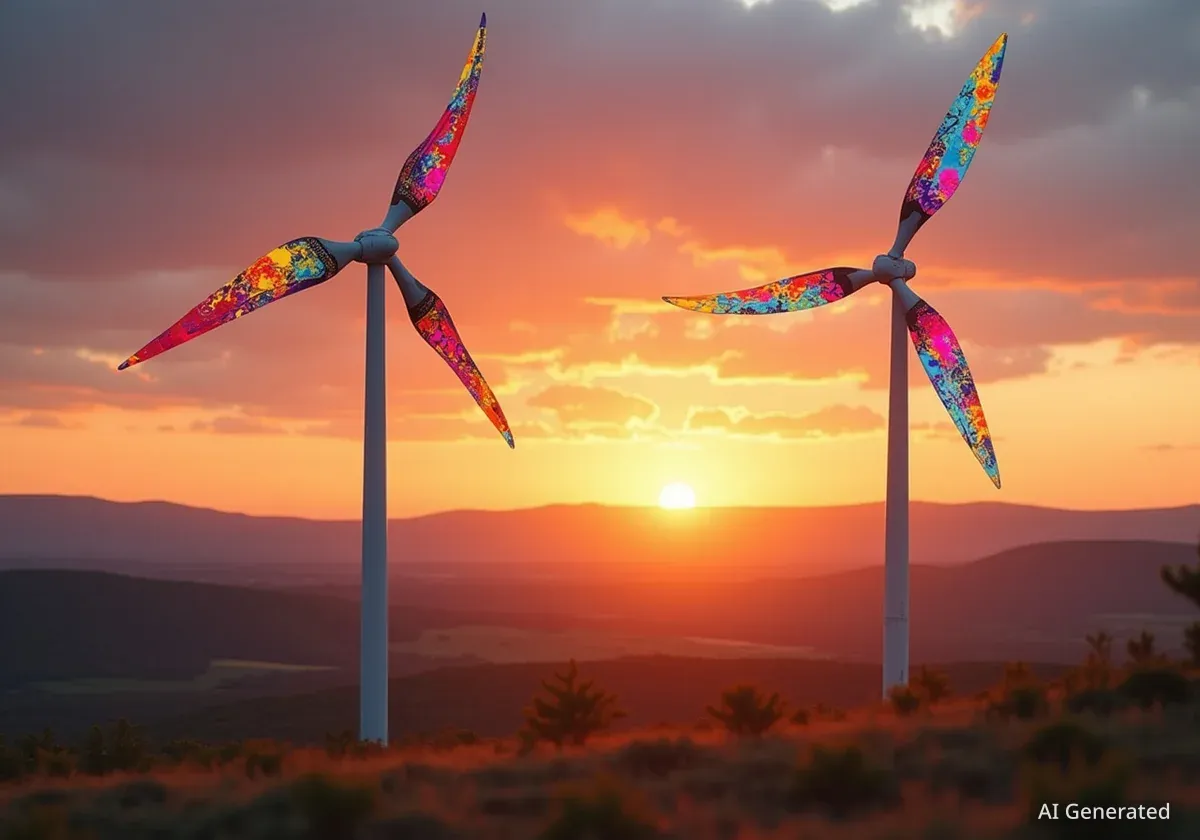


In the Portuguese municipality of Moimenta da Beira, two large wind turbines have been transformed into monumental public art installations. The WindArt project features the work of internationally recognized artists Joana Vasconcelos and Vhils, who have used the functional energy structures as canvases to explore the intersection of technology, nature, and culture.
Key Takeaways
- The WindArt project in Moimenta da Beira, Portugal, has converted two wind turbines into large-scale artworks.
- Renowned artists Joana Vasconcelos and Vhils each designed a unique piece for one of the turbines.
- The initiative aims to merge renewable energy infrastructure with cultural expression, changing public perception of these structures.
- The decorated turbines have become a point of interest, encouraging dialogue about art, sustainability, and community identity.
A New Vision for Renewable Energy
The skyline of Moimenta da Beira is now home to a unique fusion of industrial technology and artistic expression. The WindArt project, located at the Duoro Sul wind farm, challenges the conventional view of wind turbines as purely utilitarian objects. Instead, it presents them as dynamic monuments capable of storytelling and evoking emotion.
By inviting prominent artists to engage with these structures, the project explores whether a machine designed for energy production can also serve as a source of cultural inspiration. The initiative seeks to integrate renewable energy infrastructure more thoughtfully into the landscape, making it a part of the local identity rather than an imposition upon it.
Integrating Art and Infrastructure
Public art on infrastructure is a growing trend aimed at humanizing industrial landscapes. Projects like WindArt follow a tradition of using functional structures, such as bridges, water towers, and power stations, as canvases. This approach helps foster a stronger community connection to the built environment and can turn overlooked areas into cultural destinations.
The Artists and Their Creations
The two turbines were transformed by artists with distinctly different styles, resulting in two unique works that interact with the landscape and the machinery itself. Both Joana Vasconcelos and Vhils are celebrated figures in the contemporary art world, known for their large-scale and unconventional projects.
Joana Vasconcelos: Gone with the Wind
Joana Vasconcelos, known for her vibrant and often monumental installations, brought her signature style to her designated turbine. Her piece, titled "Gone with the Wind," envelops the structure in a brilliant display of color and pattern, centered around a large, multi-hued heart.
Her design draws heavily from Portuguese folk traditions and cultural identity. By applying aesthetics typically associated with handcrafted objects to an industrial machine, Vasconcelos creates a striking contrast. Her work invites viewers to reconsider their relationship with energy, framing it not just as a utility but as a concept connected to community, love, and cultural heritage.
The goal was to transform a generator into an artwork informed by folk objects, prompting excitement through art and culture rather than just the physical movement of the blades.
Vhils: Carving Stories into Steel
In contrast to Vasconcelos's colorful explosion, the artist Vhils applied his unique subtractive technique. Vhils is famous for his street art, where he carves into surfaces like walls to reveal portraits and patterns hidden within the layers.
He used a similar method on his turbine, creating intricate faces and abstract shapes that appear to emerge from the structure's metallic skin. The artwork is not merely static; as the turbine's massive blades rotate, the images shift and change, creating a dynamic and narrative experience. This constant motion suggests a living connection between humanity, nature, and the technology that harnesses it.
A Dynamic Canvas
The rotating blades of the turbines play a crucial role in the art. As they turn, they create a cinematic effect, blending colors and altering the visual sequence of the designs. This kinetic aspect means the artwork is never the same from one moment to the next, reflecting the ever-changing nature of the wind itself.
Impact on the Community and Tourism
The WindArt project has done more than just decorate the landscape; it has transformed the Duoro Sul wind farm into a cultural landmark. The site now attracts not only those interested in renewable energy but also art enthusiasts, tourists, and cultural explorers.
For local residents, the turbines are no longer just silent, functional elements in the background. They have become active storytellers and points of pride. The project has sparked community conversations about the role of art in public spaces, the identity of their landscape, and the importance of environmental stewardship.
- Community Engagement: The art has initiated local dialogues about creativity and land use.
- Tourism: The unique installations have created a new attraction, drawing visitors to the region.
- Cultural Identity: The turbines are now seen as protagonists in a story that connects technology, creativity, and the environment.
As the sun sets over Moimenta da Beira, the turbines stand not just as symbols of clean energy, but as powerful expressions of human imagination. Joana Vasconcelos and Vhils have demonstrated that when technology and art converge, even the most functional machine can connect with people on an emotional level, much like a traditional painting or sculpture.