
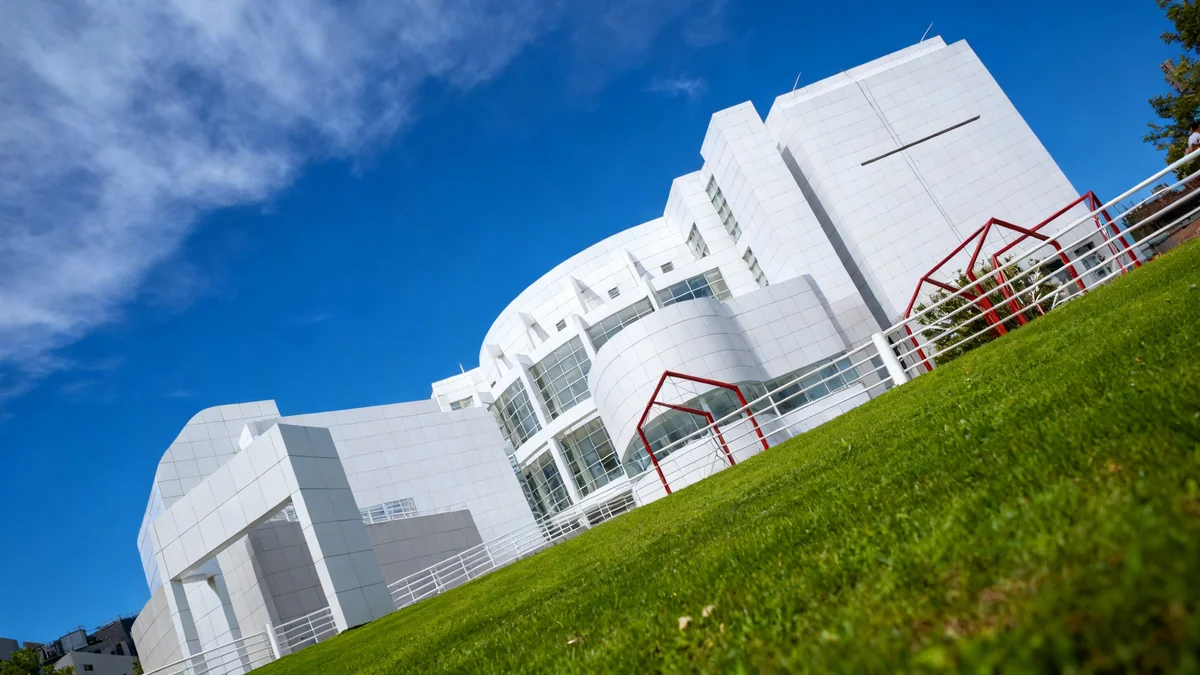
A man identified as Elvis Santos, 34, was arrested this month after allegedly damaging several outdoor sculptures at the Dallas Museum of Biblical Art. Police reported that Santos caused significant destruction before attempting to break into the museum on January 5, a Monday, when the facility was closed to the public.
The incident occurred in broad daylight, around 1 p.m., near the museum's location by North Park Center. The extent of the damage is still under assessment, but authorities estimate it exceeds $300,000.
Key Takeaways
- Elvis Santos, 34, arrested for felony criminal mischief and resisting arrest.
- Damage to outdoor sculptures at Dallas Museum of Biblical Art estimated over $300,000.
- Incident occurred on January 5 while the museum was closed.
- This is not the first vandalism incident at a Dallas museum.
Details of the Vandalism Incident
Dallas police confirmed the arrest of Elvis Santos following the incident. He faces charges of felony criminal mischief, reflecting the high value of the damaged property, and a misdemeanor charge of resisting arrest. Santos remains held in Dallas County Jail, with bond set at $11,000.
The motive behind the attack remains unclear. Museum officials have not yet released a statement or responded to inquiries regarding the incident or a more precise estimate of the damage costs.
Fast Fact
The estimated damage from the vandalism at the Dallas Museum of Biblical Art exceeds $300,000.
Security Measures and Museum Closures
The attempted break-in happened on a Monday, a day when many museums, including the Dallas Museum of Biblical Art, are typically closed. This often means reduced staffing, though security systems are usually active.
The museum's outdoor areas, including its sculpture garden, are generally accessible to the public, which may have allowed the initial damage to occur before the attempted entry into the main building.
About the Dallas Museum of Biblical Art
Founded in 1966, the Dallas Museum of Biblical Art serves as a cultural institution dedicated to exploring the connections between Christian and Jewish faiths through art and historical artifacts. Its collection is diverse, featuring rare maps, manuscripts, oil paintings, contemporary works, and significant biblical archaeology.
The museum houses several distinct galleries, including the National Center for Jewish Art, the Museum of Holocaust Art, and the European Art Treasury. A notable feature is its sculpture garden and a working restoration laboratory, which plays a crucial role in preserving its collection.
Museum History
In 2005, the Dallas Museum of Biblical Art suffered extensive damage from a fire caused by faulty wiring. It underwent significant renovations and reopened in 2010 with expanded gallery space, demonstrating its resilience in the face of adversity.
Prominent Artists and Collections
The museum's collection boasts works by internationally renowned artists. Visitors can find pieces by figures such as Andy Warhol, Marc Chagall, and even historical works attributed to Michelangelo, showcasing a broad spectrum of artistic periods and styles.
The inclusion of such prominent artists underscores the cultural and artistic value of the museum's holdings, making the recent vandalism particularly concerning for the arts community.
Prior Incidents of Museum Vandalism in Dallas
This is not an isolated incident for Dallas cultural institutions. In 2022, another high-profile act of vandalism occurred at the city-owned Dallas Museum of Art. A 21-year-old man broke into that museum and destroyed three ancient Greek artifacts along with a contemporary Native American artwork.
These repeated acts of destruction against cultural heritage raise questions about security measures and the protection of valuable art collections within the city.
"Protecting our cultural heritage is paramount. Incidents like these underscore the ongoing challenges museums face in safeguarding their collections while remaining accessible to the public."
Impact on the Arts Community
Vandalism at museums has far-reaching consequences. Beyond the immediate financial cost of repair and restoration, there is the potential loss of irreplaceable historical and artistic works. Such events can also affect public perception of safety within cultural spaces and potentially deter visitors.
Museums often rely on a delicate balance between security and openness, aiming to welcome the public while protecting their valuable assets. Incidents like these prompt a re-evaluation of these strategies.
The Broader Issue of Art Vandalism
Art vandalism is a serious crime that impacts cultural institutions worldwide. The motives can vary widely, from deliberate acts of destruction to expressions of protest or mental health crises. Regardless of the reason, the damage inflicted can be profound and, in some cases, irreversible.
The restoration of damaged artwork is a specialized and often expensive process, requiring significant expertise and resources. It can take months or even years to fully repair a vandalized piece, if complete restoration is even possible.
- Financial Costs: Repairs, enhanced security, insurance premiums.
- Irreplaceable Loss: Some damage to unique artifacts cannot be fully undone.
- Emotional Impact: Staff, artists, and the public can feel a sense of loss and violation.
- Security Review: Leads to re-evaluation of security protocols and public access policies.
The Dallas community, and the broader arts world, will be watching closely as the investigation into this incident proceeds and the museum assesses the full scope of the damage.