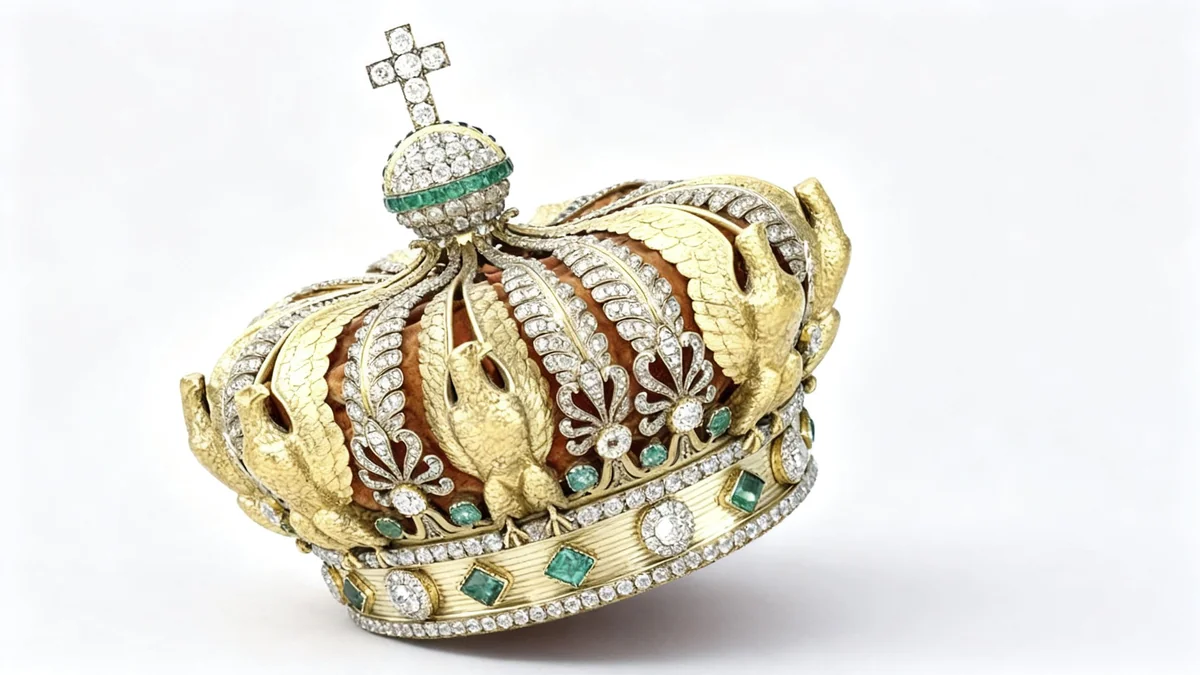




PARIS – The Crown of Empress Eugénie, a priceless 19th-century royal ornament, sustained significant damage during an audacious heist at the Louvre Museum in October. Thieves dropped the crown on the street outside the museum as they fled, leaving it severely disfigured. The Louvre has now released images detailing the extent of the damage and announced plans to begin its restoration.
More than three months after the incident, the museum is preparing to invite restorers to submit proposals for the intricate repair work. A newly formed committee of experts will oversee this delicate process, aiming to bring the historic piece back to its former glory.
Key Takeaways
- Empress Eugénie's Crown was damaged during an October Louvre heist.
- Thieves dropped the crown, causing significant bending and detachment of precious elements.
- The Louvre estimates restoration costs at around 40,000 euros.
- Security flaws at the museum were exposed by the burglary.
- Five people have been charged in connection with the crime, but other stolen jewels remain missing.
The Heist and Its Aftermath
The robbery, which occurred in October, saw nine invaluable royal ornaments stolen from the Louvre. The Crown of Empress Eugénie, however, was the only one recovered, albeit in a damaged state. Burglars dropped it on the sidewalk outside the museum as they made their escape.
Photographs released by the Louvre reveal the severe impact of the fall. The crown's palm-like, diamond-encrusted arches are bent or completely detached. Its bejeweled cross now lies askew, and one of its golden eagles is missing. This incident has highlighted serious security vulnerabilities within the world's most visited museum.
Crown Details
- Commissioned: 1855 by Napoleon III for Empress Eugénie.
- Original Jewels: 1,354 diamonds, 1,136 rose-cut diamonds, 56 emeralds.
- Acquired by Louvre: 1988.
Damage Assessment and Restoration Efforts
Olivier Gabet, the Louvre's decorative arts director, confirmed the museum's commitment to restoring the crown. He explained that almost all of the crown's detached parts have been found, which will simplify the restoration process. The primary cost will be in the extensive hours of delicate repair work required.
The initial estimate for the restoration stands at 40,000 euros, approximately $47,000. This figure primarily covers the labor involved in meticulously reassembling and repairing the intricate piece. Specialists believe the crown was likely crushed as the burglars pulled it through a small slit in its reinforced glass case.
"The crown has become a symbol of hope since its theft and 'miraculous' recovery," said Olivier Gabet. "We expect it to be restored by the end of the year and presented to the public at the Louvre."
The Extent of the Damage
- Four diamond and emerald-decorated palms were detached.
- Approximately 10 of the 1,354 diamonds are now missing.
- One golden eagle is still unaccounted for.
- The bejeweled cross is toppled to one side.
Security Concerns and Ongoing Investigation
The October burglary exposed significant flaws in the Louvre's security system and aging infrastructure. France's culture minister initiated an external investigation into the museum's failings. This incident, along with subsequent strikes by Louvre unions, has led to numerous partial or full museum closures.
The Apollo Gallery, where the crown jewels were displayed, remains closed to visitors. A criminal investigation involving more than 100 police officers has resulted in five individuals being charged in connection with the heist. However, despite these arrests, the other eight stolen royal jewels have not yet been recovered.
French Crown Jewels History
The Crown of Empress Eugénie is part of a small collection of French crown jewels that remain in state possession. Many original jewels were stolen after the French Revolution in 1789. The majority of the remaining collection was auctioned off by the French state in 1887 due to republican sentiment. Eugénie's crown was acquired by the Louvre in 1988, having been previously bequeathed to Princess Marie-Clotilde Napoléon after Eugénie reclaimed it from the French Republic.
A Symbol of Resilience
Empress Eugénie, wife of Napoleon III, commissioned the crown in 1855 for the opening of the universal exhibition in Paris. It was fashioned by the emperor's official jeweler. After Napoleon III's capture by Prussia, Eugénie fled to England, leaving the crown behind. She later successfully sued the French Republic to regain possession of it, highlighting its personal and historical significance.
The crown's recovery, despite its damage, is seen by many as a symbol of hope. The Louvre aims to complete its restoration by the end of the year, allowing the public to once again view this important piece of French history. The missing golden eagle, according to Gabet, might still be found with the other stolen items.
The ongoing efforts to restore the crown and enhance security at the Louvre underscore the institution's commitment to preserving cultural heritage. The incident serves as a stark reminder of the constant vigilance required to protect such invaluable treasures.