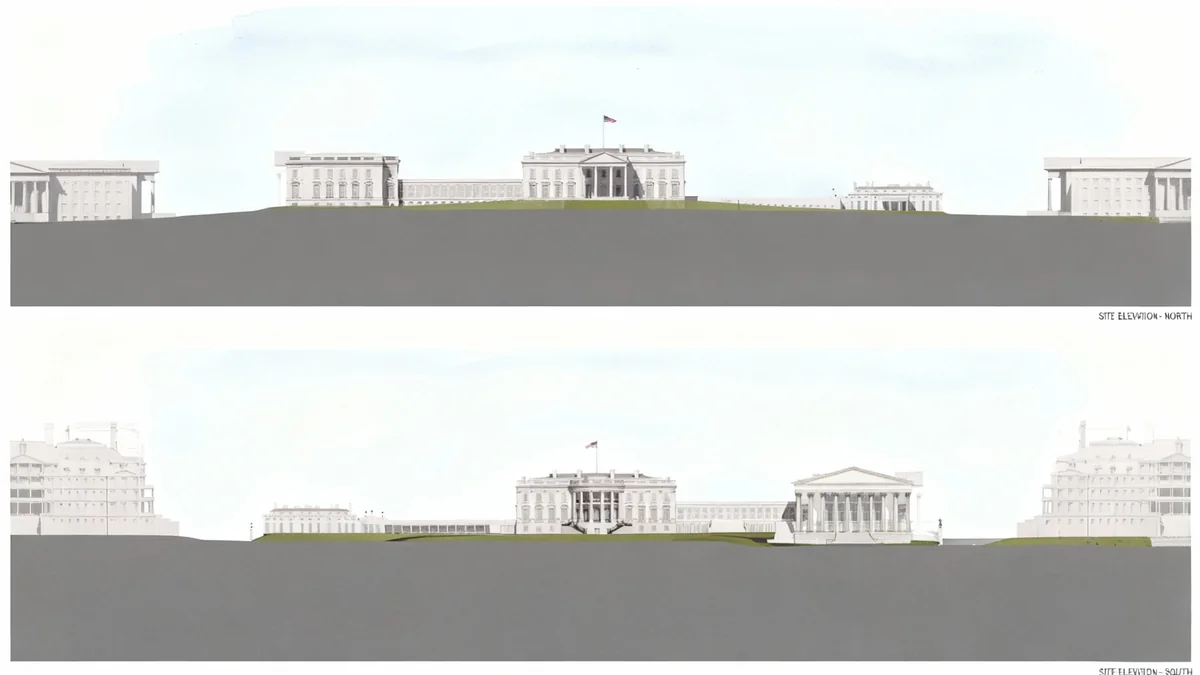
New design plans for the White House ballroom include a significant addition to the West Wing, intended to balance the grand scale of the new ballroom structure. Architect Shalom Baranes presented these updated features, which incorporate requests from former President Donald Trump, to the US Commission of Fine Arts.
Key Takeaways
- New White House ballroom plans feature a monumental portico and pediment, requested by Donald Trump.
- A proposed second story for the West Wing colonnade aims to re-establish architectural symmetry.
- The Commission of Fine Arts, with newly appointed members, expressed concerns about the ballroom's scale.
- Detailed 3D models of the ballroom will be presented at an upcoming commission meeting.
Ballroom Design Embraces Monumental Scale
The latest architectural drawings for the White House ballroom reveal a design that emphasizes grandeur. A planned terrace along the south side of the ballroom will now feature a prominent portico and pediment. These elements, reminiscent of classical structures like the US Supreme Court and Treasury Department, were specifically requested by former President Trump.
According to Baranes, Trump expressed a desire for the terrace to be covered, leading to the inclusion of these monumental features. The portico will be supported by classical Corinthian columns, contributing to a more imposing appearance for the new structure.
Architectural Details
- Portico: Classical roof structure supported by columns.
- Pediment: Triangular gable, often found above a portico.
- Corinthian Columns: Ornate classical columns known for their elaborate capitals.
Height and Visual Primacy Concerns
Baranes stated that the ornamental cornice at the top of the new ballroom would not exceed the height of the White House mansion's cornice. This design choice was intended to maintain the mansion's "visual primacy." However, new renderings suggest the gabled roof of the portico might make the ballroom appear taller than the main White House building.
This potential height disparity has drawn attention from commission members. The visual impact of the new additions remains a key point of discussion.
Proposed West Wing Expansion for Symmetry
To address the significant expansion on the east side with the new ballroom, Baranes suggested a second story for the colonnade connecting the White House mansion with the West Wing. This idea, previously referred to by Trump as a "new upper West Wing," aims to restore architectural balance.
Baranes emphasized the visual necessity of this addition. "Visually, it would make sense to re-establish the symmetry on both sides of the primary pavilion," he explained during his presentation. While the concept has been introduced, no design work has begun on the West Wing addition, and structural feasibility studies are still pending.
"We’ve not begun any design work whatsoever on that. There’s still a question of what that building can support structurally," Baranes stated. "Once we have some information, we’ll start to take on some initial studies. There’s no schedule for doing anything at all on the West Wing."
Commission of Fine Arts Role
The US Commission of Fine Arts is an independent federal agency. It advises on architectural and aesthetic decisions in Washington, D.C. The commission reviews designs for federal buildings and monuments to ensure they align with the city's historic character and aesthetic standards.
Commission Reacts to Grand Designs
The proposed ballroom addition has elicited varied responses, particularly from the US Commission of Fine Arts. Rodney Mims Cook, Jr., the newly appointed chair of the commission, voiced strong objections to the scale of the plans. He described the south facade of the ballroom as "immense" and "overwhelming."
Cook's appointment, along with three other new members, occurred shortly before the meeting. These new members, including Mary Anne Carter, Matthew Taylor, and Roger Kimball, are all considered allies of former President Trump. James McCrery, the original architect for the ballroom project, also joined the board again but recused himself from future ballroom reviews.
Upcoming Review and Models
Commissioners requested Baranes to create both a detailed virtual 3D model and a physical model of the White House ballroom. These models will allow for a more comprehensive review of the design's impact. The next meeting, scheduled for February 19, will feature the presentation of the virtual 3D model, offering a closer look at the proposed changes.
The ongoing discussions highlight the careful balance between modern architectural ambitions and the preservation of the White House's historical integrity. The final design will significantly shape the appearance of one of America's most iconic buildings.