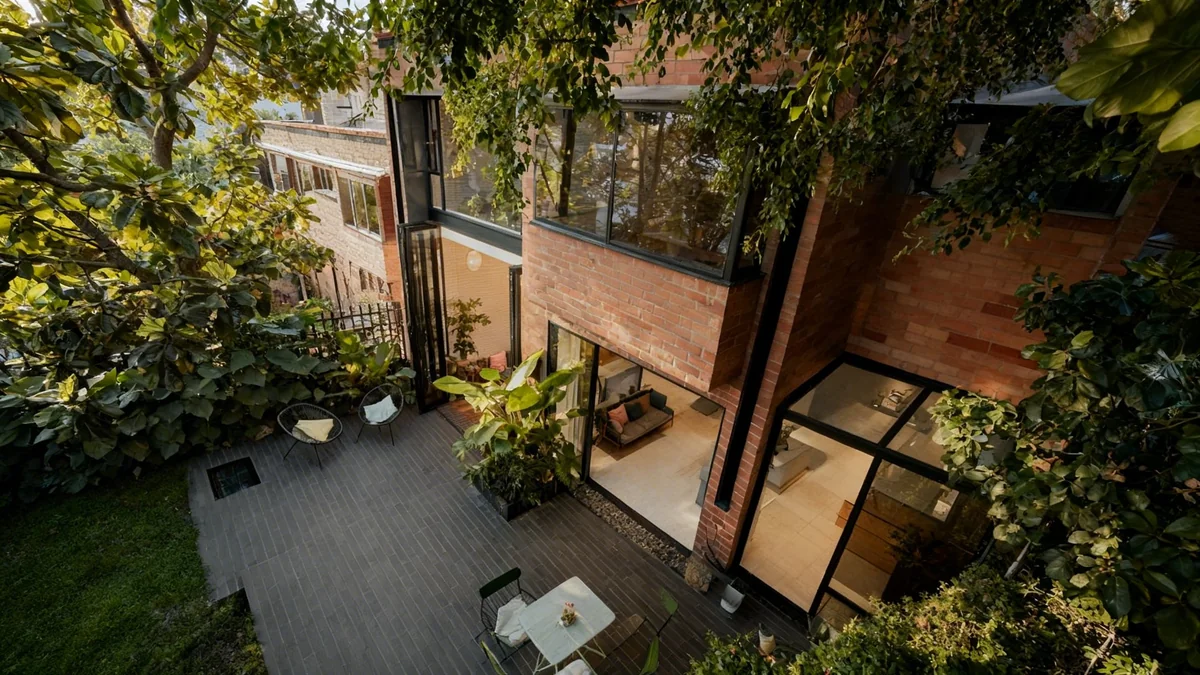
A new farmhouse on the outskirts of Vadodara city in Gujarat, India, offers a unique blend of sustainable living and architectural innovation. Designed to provide a serene escape from urban life, this 1,500 square foot retreat sits on a sprawling 30,000 square foot site, emphasizing a deep connection with its natural surroundings.
The project, completed in 2025, prioritizes ecological sensibilities, integrating locally sourced materials and innovative construction techniques. It creates a tranquil haven for relaxation, showcasing how modern design can coexist with environmental responsibility.
Key Takeaways
- The farmhouse in Gujarat features a strong focus on sustainability and local materials.
- Its design incorporates curved brick walls and exposed textures for a unique aesthetic.
- Fragmented volumes allow natural light and air to flow freely throughout the spaces.
- Interiors extend the architectural language with handcrafted details and natural elements.
- The project aims to provide a retreat that fosters a deep connection with nature.
Sustainable Construction at its Core
Sustainability is a guiding principle for the farmhouse's construction. The design team focused on reducing environmental impact from the ground up. This approach is evident in the material choices and building methods.
For example, ground beams were formed within brick wall cavities. RCC (Reinforced Cement Concrete) slurry was then poured to bind and strengthen these structures. This technique transforms a functional construction process into an expressive architectural feature, highlighting both efficiency and craftsmanship.
Project Snapshot
- Location: Outskirts of Vadodara, Gujarat, India
- Site Area: 30,000 sq ft
- Built-up Area: 1,500 sq ft
- Completion Year: 2025
Material Palette and Craftsmanship
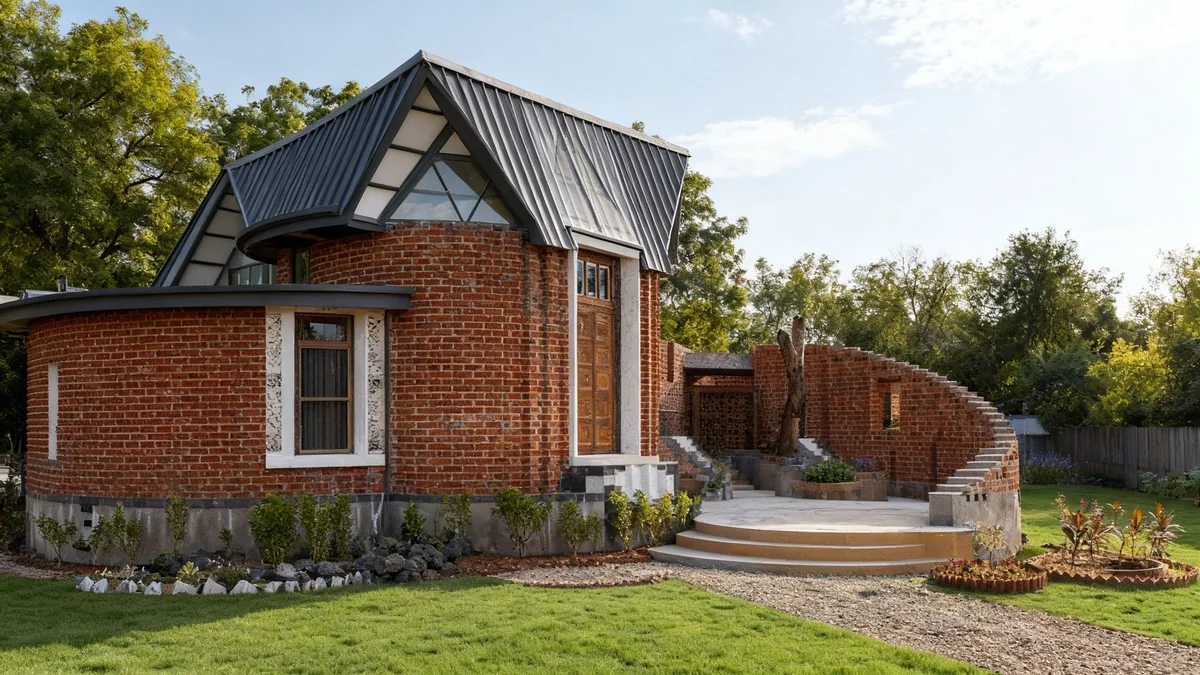
The walls are mainly constructed using various brick bond joineries. These serve a practical purpose by creating self-shaded structures, which is crucial in hot and dry climates. Skilled local artisans shaped the curved brick walls on site. This process seamlessly merged design intent with the physical building, showcasing how material, labor, and geometry define the farmhouse's character.
The farmhouse design celebrates raw textures. It incorporates exposed brick details, locally sourced stone, and recycled materials. This balance helps minimize the environmental footprint while creating a visually rich environment.
"The design weaves geometries, exposed in brick details, locally sourced stone, and recycled materials. This celebrates raw textures and craftsmanship, balancing environmental impact."
Harmonizing Geometry and Nature
The built form of the farmhouse is fragmented into distinct volumes. This allows landscape elements, natural light, and fresh air to flow freely between spaces. The design creates a rhythmic composition where curved and angular geometries coexist.
Courtyards and transitional pathways shape movement through the property. Sloping roof profiles and a glazed central volume are prominent visual and spatial elements. These features draw natural light deep into the interiors, enhancing the connection between the indoor and outdoor environments.
Experiential Journey Through Space
Architecturally, the farmhouse balances soft curves with sharp angular forms. The curves introduce fluidity and movement, while the angles provide structure and contrast. These geometries are oriented around courtyards and transitional zones. This makes moving through the farmhouse an experiential journey rather than a simple linear path.
The sloping roofs respond to local climatic conditions. They also add a dynamic silhouette to the building. At the heart of the design, a central glazed volume acts as an anchor. It pulls abundant natural light into the interiors and connects different functional areas.
Inspired by the Surroundings
The site's location on the outskirts of Vadodara, surrounded by lush green open plots, presented a unique opportunity. The architects aimed for the architecture to respond sensitively to nature. This is reflected in the carefully chosen material palette and the emphasis on spatial openness.
Interiors as Natural Extensions
The interior spaces are conceived as direct extensions of the architectural language. Handcrafted details enrich the character of each room. Patterned flooring, custom-designed elements, and artisanal finishes introduce layers of cultural expression and warmth. These details serve both aesthetic and sensory purposes, aiming to soothe the senses.
Light and shadow constantly animate surfaces throughout the day. This transforms spaces with changing moods and atmospheres, creating a dynamic living environment.
Resort-Inspired Bathrooms
Art is an integral part of the architecture, embedded within the design. The bathrooms, for instance, are designed as resort-inspired sanctuaries. They draw inspiration from aquatic and natural elements. Wall and floor arts depict these themes, and fixtures are carved directly into stone joiners. This creates a unique shower experience. Such thoughtful details aim to engage users, including children, and encourage relaxation.
The selection of materials like stone, reclaimed wood, handcrafted tiles, and pebbled floors invites a dialogue with nature. These elements create rich tactile experiences, dissolving the conventional boundaries between the built form and the natural world. Natural light, ventilation, and carefully framed views further enhance the sense of calmness and immersion in nature.
Design Features
- Curved brick walls for self-shading
- Exposed brick, local stone, and recycled materials
- Fragmented volumes for light and air flow
- Sloping roofs and glazed central volume
- Handcrafted interior details and patterned flooring
- Resort-inspired bathrooms with natural elements
The farmhouse consciously features height variations across its different volumes. These variations invite ample daylight and create functional space segregations. An open pocket at the center of the green space acts as a playful, gated courtyard for users and small children, further enhancing the connection to the outdoors.
This self-sustaining farmhouse stands as a testament to thoughtful design. It demonstrates how architecture can create a harmonious retreat that respects its environment while offering a luxurious and calming experience.