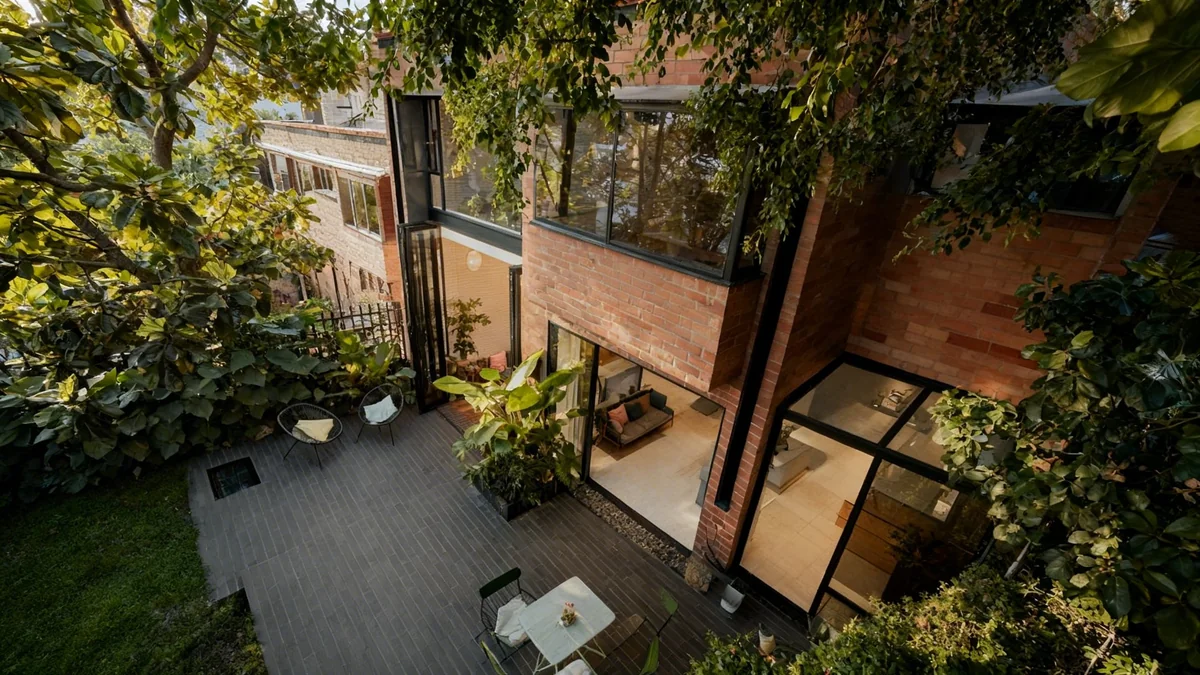

A significant architectural rehabilitation project in Medellín, Colombia, has transformed Casa P. Colina, redefining the relationship between existing structures, natural elements, and modern living. The project, completed in 2025, emphasizes a regenerative approach, integrating the home's history and materials into its contemporary design rather than erasing them.
Key Takeaways
- Casa P. Colina underwent a regenerative transformation in Medellín, completed in 2025.
- The design strategy focused on reusing and updating existing materials and structures.
- New double and triple-height spaces enhance natural light and spatial perception.
- The kitchen was relocated to create a continuous social area linked to a new terrace.
- An interior garden and skylights bring nature deeper into the home.
Regenerative Architecture in Practice
The rehabilitation of Casa P. Colina stands as a model for regenerative architecture. This approach views building transformation as a way to reconcile the natural environment with existing structures. Instead of demolishing and rebuilding, the project rewrites the house's narrative by incorporating its original materials, structures, and memories.
Architects Jaime Cabal and Jorge Buitrago of DARP - De Arquitectura y Paisaje led this ambitious undertaking. Their vision centered on valuing time as a crucial design element. This meant understanding the existing frameworks, carpentry, and structural components as layers of history guiding new decisions.
Project Snapshot
- Location: Medellín, Colombia
- Area: 250 m²
- Completion: 2025
- Lead Architects: Jaime Cabal, Jorge Buitrago (DARP - De Arquitectura y Paisaje)
Rethinking Space and Light
A core aspect of the renovation involved rethinking the home's spatial organization. The original design offered considerable structural flexibility, with approximately 30% of public areas utilizing wooden mezzanines. This inherent adaptability allowed the architects to conceptualize the house as a dynamic, evolving organism.
The reorganization of these levels created striking double and triple-height spaces. These new voids significantly expand the visual perception of the interior and dramatically improve the entry of natural light. The supporting structure remains exposed, intentionally referencing industrial and agricultural aesthetics where the honesty of materials defines the architectural language.
"Redoing without erasing implies reading frameworks, carpentry, and structures as layers of a history that guides contemporary decisions," stated the architects involved in the project. "Reusing, relocating, and resignifying become strategies of continuity."
Functional Updates for Modern Living
Functionally, the design team relocated the kitchen. This strategic move consolidated a new service area, now directly connected to a spacious terrace. This central core seamlessly links the original dining room with other social spaces, creating a continuous flow that aligns with modern domestic living patterns.
A new metal staircase acts as a central articulating piece. It is suspended over the living room's double height, visually and physically connecting the different levels. This staircase organizes transitions and creates a unique spatial experience, becoming more than just a means of circulation; it is a scenographic element that intensifies the relationship between the human body, light, and the structure itself.
The Essence of Regenerative Design
Regenerative design goes beyond sustainability. While sustainability aims to minimize negative impacts, regenerative design seeks to create positive impacts, restoring and enhancing natural systems. In architecture, this means integrating buildings with their ecosystems, improving local biodiversity, and fostering a deeper connection between inhabitants and their environment.
Integrating Nature and Preserving History
Nature plays a fundamental role in structuring the architectural journey through Casa P. Colina. The former service area has been transformed into an interior garden, introducing light and lush vegetation directly into the foyer. From this green entry point, the spatial sequence unfolds towards the main garden, culminating in the bedroom hall.
In the bedroom hall, a strategically placed skylight re-establishes a vital connection with the outside world, creating a serene and calm atmosphere. This thoughtful integration of natural light and greenery throughout the home reinforces the project's core philosophy.
Material Reuse and Narrative Continuity
During the rehabilitation process, a significant effort was made to recover and repurpose original materials. Oak and carob woods from the house's initial floors and structures were meticulously salvaged. These recovered materials were then converted into fixed furniture and loose pieces throughout the renovated home.
This deliberate act of material reuse extends the useful life of the wood and weaves a powerful narrative. It allows the past and present to coexist in a continuous, tangible story within the house. The project demonstrates a profound awareness of time and an understanding that transformation does not require negation.
Materials and Manufacturers
- Concrete Products: BLEND CONCRETE, KONKRETUS
- Recovered Wood: Oak and Carob (from original floors and structures)
A Vision for Urban Contexts
Medellín, like many urban centers, faces the challenge of an aging architectural landscape. Casa P. Colina offers a compelling solution, proposing an architecture that is deeply aware of its history and context. The intervention transforms the existing structure without erasing its character, successfully updating it for contemporary needs.
This project re-establishes the fundamental relationship between space, structure, and nature as a cornerstone of modern dwelling. It serves as an important example for future urban developments, showcasing how thoughtful design can preserve heritage while embracing innovation and ecological principles.