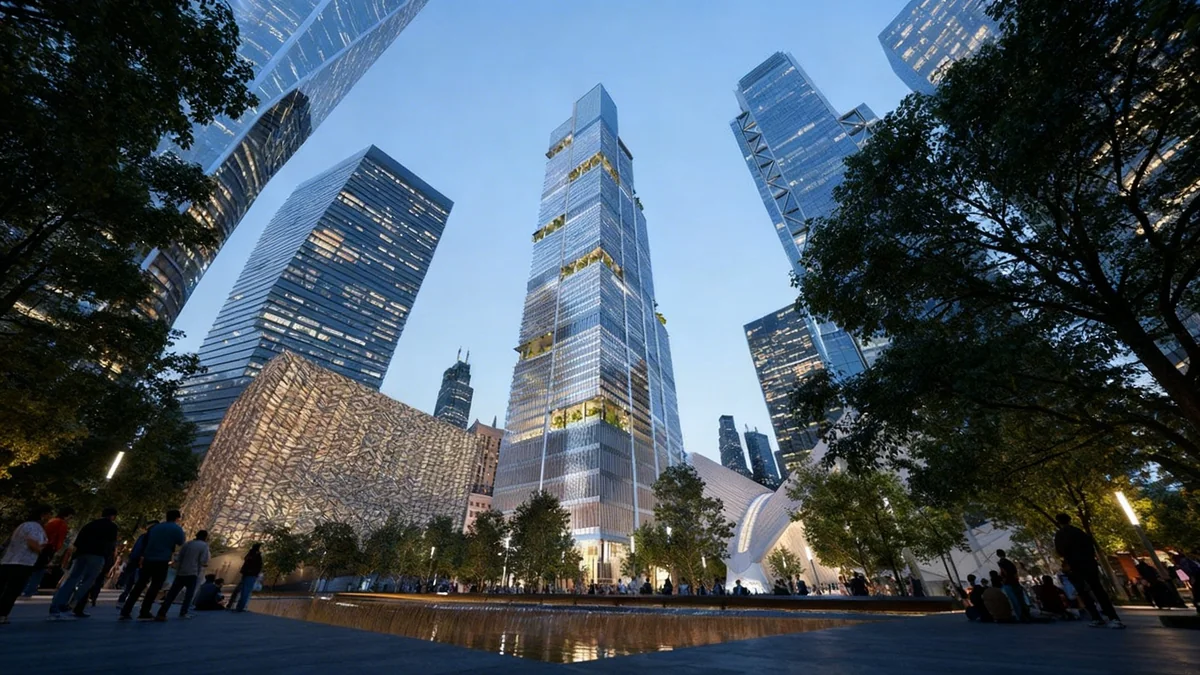
Updated plans for Two World Trade Center, the final commercial tower in the World Trade Center campus, have been unveiled by Foster + Partners and developer Silverstein Properties. This 55-story skyscraper will rise 373 meters at 200 Greenwich Street in Lower Manhattan. It is set to become the global headquarters for American Express, which will be the building's sole occupant.
Construction for the tower is scheduled to begin in spring 2026, with completion anticipated in 2031. The project aims to complete the commercial edge of the master plan, positioning itself directly across from Santiago Calatrava's Oculus transportation hub and next to the Perelman Performing Arts Center.
Key Takeaways
- New design for Two World Trade Center by Foster + Partners.
- Tower will be 373 meters tall with 55 stories.
- American Express will be the sole owner and occupant.
- Construction starts in spring 2026, completion by 2031.
- The building features extensive outdoor green spaces and energy-efficient systems.
A Modern Skyscraper for Lower Manhattan
The updated design for Two World Trade Center presents a stepped composition. Slender volumes rise from a rectilinear base, featuring a series of landscaped terraces and green roofs. This architectural approach creates a distinctive profile within the Manhattan skyline.
The tower encompasses approximately 186,000 square meters of space. It is designed to accommodate up to 10,000 employees. The building's design prioritizes both functionality and aesthetic appeal, integrating seamlessly into the existing World Trade Center campus.
Building Snapshot
- Height: 373 meters
- Stories: 55
- Total Area: 186,000 square meters
- Occupancy: Up to 10,000 employees
- Tenant: American Express (sole owner/occupant)
Outdoor Spaces and Green Design
A significant feature of the new design is the inclusion of extensive outdoor spaces. More than one acre of outdoor area is distributed throughout the building. This includes planted terraces and intermediary amenity levels. These green spaces will offer panoramic views of Manhattan and the Hudson River, providing employees with unique access to nature within an urban setting.
The building's base is defined by a triple-height lobby. This design element reinforces its civic presence and creates a welcoming entry point within the broader campus. The focus on green spaces reflects a growing trend in modern urban architecture to integrate natural elements into high-rise developments.
Sustainable Features and Advanced Technology
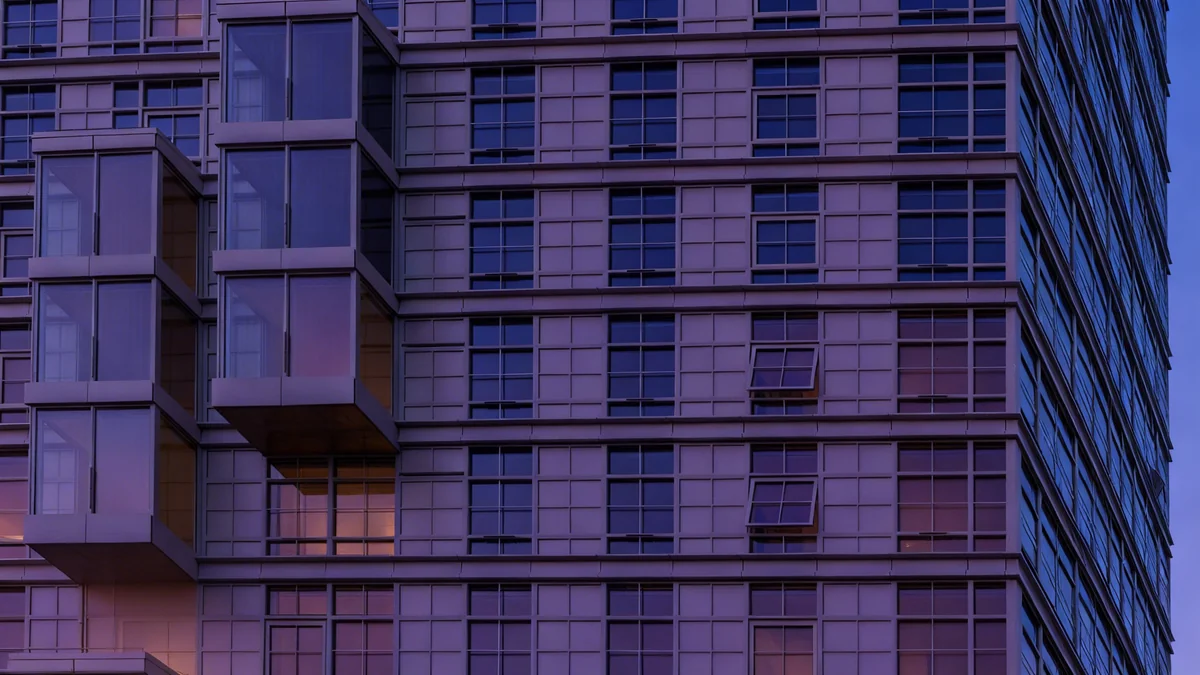
The newly released images highlight a vertically articulated glass façade. This façade consists of floor-to-ceiling glazing and expressed structural mullions. These elements emphasize the tower's upward movement and contribute to its modern aesthetic. The cascading massing steps towards One World Trade Center, creating a visual connection with the neighboring structure while maintaining its unique terraced profile.
Sustainability is a core component of the project. Two World Trade Center is planned as a fully electric building. It will incorporate advanced smart-building technologies and energy-efficient systems. The project is also expected to pursue LEED certification, a globally recognized symbol of sustainability achievement.
"The updated design reflects contemporary workplace strategies and market conditions, emphasizing sustainability and employee well-being."
Project Evolution
The Two World Trade Center project has seen several iterations over nearly two decades. Foster + Partners originally received the commission in 2005 for an 88-story tower. This design included four sloping diamond forms, intended to visually acknowledge the 9/11 Memorial. In 2015, the commission briefly shifted to BIG, which proposed a stacked arrangement of offset volumes.
Following changes in tenancy and market demands, the project returned to Foster + Partners in 2020. This allowed for a significant revision of the design. The current plan aims to meet the evolving needs of modern businesses and the urban environment.
Lower Manhattan's Continued Growth
Two World Trade Center marks the final commercial component of the World Trade Center campus. Its programmatic scale and strategic location reinforce Lower Manhattan's role as a vital center for finance, transit, and culture. The area has seen significant redevelopment and revitalization since 2001.
The construction of this final tower signifies another step in the complete rebuilding of the World Trade Center site. It will add to the dynamic landscape of one of the world's most prominent financial districts.
Impact on the Urban Fabric
The completion of Two World Trade Center will further transform the urban fabric of Lower Manhattan. It will bring thousands of employees to the area, boosting local businesses and services. The integration of public spaces and pedestrian-friendly design elements will enhance the overall experience for residents and visitors.
This development is part of a broader trend of growth and modernization in New York City. Major architectural projects continue to shape the city's skyline and urban environment, reflecting ongoing investment and innovation.
- The tower will stand near the 9/11 Memorial.
- It is adjacent to the Perelman Performing Arts Center.
- The location is central within the World Trade Center campus.
- It connects directly to the Oculus transportation hub.
Timelines and projections for such large-scale developments are always subject to standard development, regulatory, and market conditions. However, the current plans show a clear path forward for this significant addition to the New York City skyline.