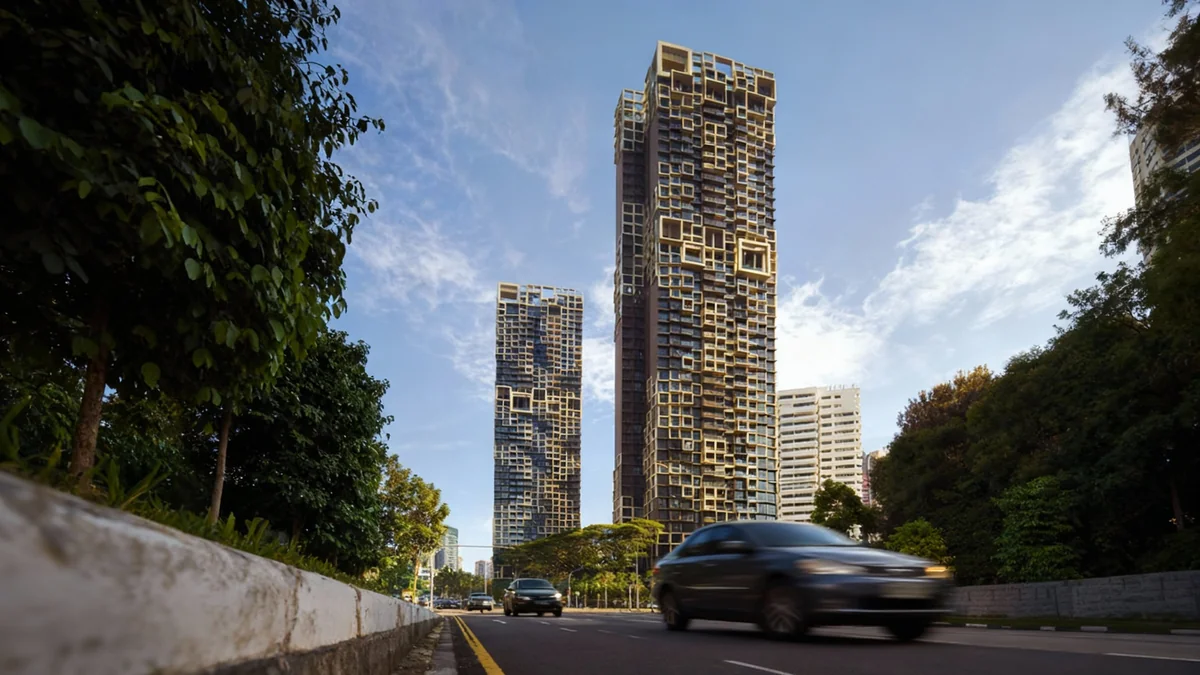
Two striking 36-story residential towers, known as the Irwell Hill Residences, are nearing completion in Singapore, introducing a unique pixelated design to the city's skyline. The project is a collaboration between the Dutch architectural firm MVRDV, responsible for the distinctive façade, and the Singapore-based ADDP Architects, who designed the core modular structure.
Located on Irwell Bank Road, the development showcases how efficient, prefabricated construction can be combined with a creative and individualized aesthetic, aiming to set a new standard for high-density urban living.
Key Takeaways
- Two 36-story residential towers, Irwell Hill Residences, have been completed in Singapore.
- The project combines the efficient modular design of ADDP Architects with a creative pixelated façade by MVRDV.
- The unique exterior design aims to provide visual identity and break the monotony of typical high-rise buildings.
- The design also highlights communal green spaces on the 24th floor and rooftops.
A Fusion of Efficiency and Artistry
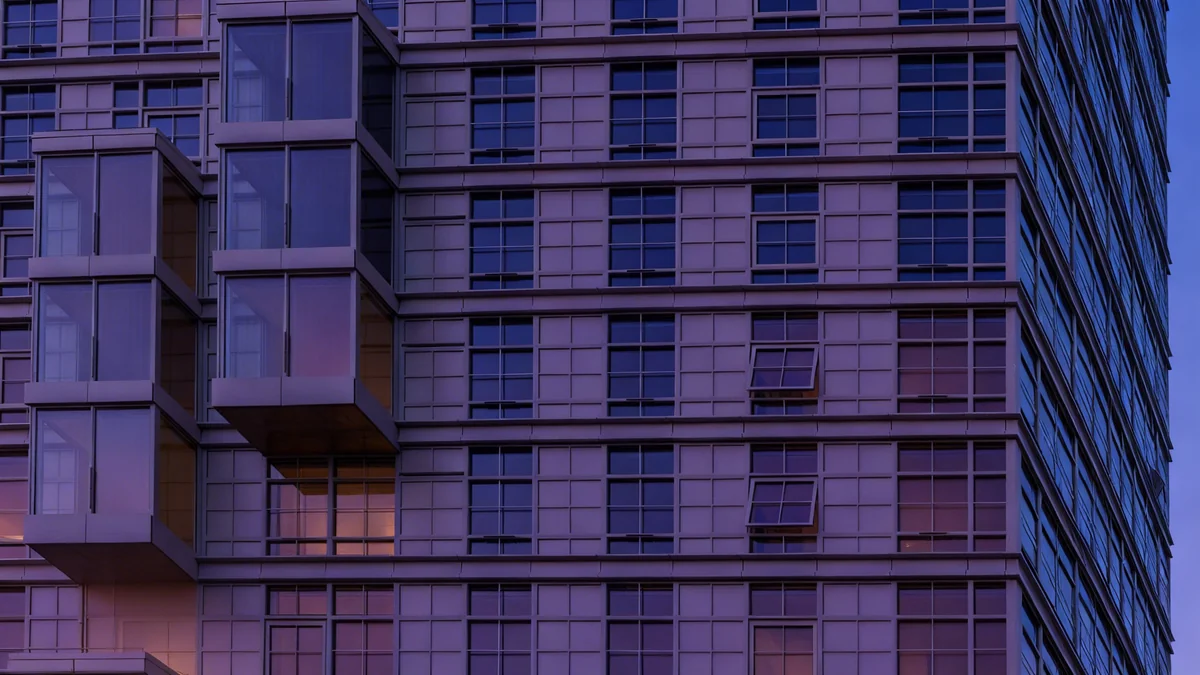
The foundation of the Irwell Hill Residences is a highly efficient building plan developed by ADDP Architects. The firm utilized prefabricated, modular construction methods, a technique known for speeding up building timelines and ensuring quality control. This approach provides a cost-effective and practical framework for large-scale residential projects.
However, instead of a uniform exterior, the project developers brought in MVRDV to infuse the towers with a distinct character. The Dutch firm is known for its playful and innovative approach to architecture, and their contribution was a vibrant, pixelated façade that gives the buildings a dynamic appearance.
The Concept Behind the Pixels
The façade is not random; it is a carefully composed pattern of projecting and receding modules that create a textured, three-dimensional effect. This "pixelation" breaks up the large vertical surfaces of the towers, preventing them from appearing as monolithic blocks.
According to the design team, this approach adds a sense of liveliness and variety. The pattern also subtly highlights key features of the building, drawing the eye towards the communal green spaces integrated into the structure.
Project at a Glance
- Project Name: Irwell Hill Residences
- Location: Irwell Bank Road, Singapore
- Height: Two 36-story towers
- Completion Year: 2025
- Key Architects: MVRDV (Façade), ADDP Architects (Core Building)
Integrating Greenery into High-Rise Living
A significant feature of the Irwell Hill Residences is the integration of nature within the vertical structure. The design intentionally carves out space for communal gardens and recreational areas at height, offering residents a retreat from the dense urban environment below.
The pixelated façade plays a crucial role here, framing the green spaces located on the 24th floor and the rooftops. These elevated parks provide panoramic views of the city while fostering a sense of community among residents.
The landscape architecture, managed by Ecoplan, ensures that these green oases are lush and sustainable, contributing to the overall well-being of the inhabitants and enhancing the building's environmental credentials.
The Rise of Prefabricated High-Rises
Prefabricated modular construction involves manufacturing building components, or modules, off-site in a controlled factory environment. These modules are then transported to the construction site and assembled. This method is gaining popularity in dense cities like Singapore for its efficiency, reduced on-site disruption, and consistent quality. The Irwell Hill Residences project demonstrates that this practical construction technique does not have to result in generic or uninspired architecture.
A Collaborative Architectural Vision
The success of the Irwell Hill Residences lies in the seamless collaboration between the two architectural firms. ADDP Architects provided the robust and efficient structural backbone, while MVRDV layered on an artistic and human-centric exterior.
Key Personnel and Partners
The project was guided by a team of experienced professionals. Nathalie de Vries served as the Lead Architect from MVRDV, working with a dedicated design team to bring the pixelated concept to life. The project also involved:
- Structural Engineering: TW-Asia Consultants Pte Ltd
- MEP (Mechanical, Electrical, Plumbing): United Project Consultants Pte Ltd
- Interior Architecture: Index Design Pte Ltd
- Landscape Architecture: Ecoplan
This collaborative effort ensures that the building is not only visually striking but also structurally sound, functional, and comfortable for its residents.
Setting a Precedent for Future Housing
The Irwell Hill Residences project serves as a compelling case study for the future of urban residential design. It challenges the notion that cost-effectiveness and architectural individuality are mutually exclusive.
By marrying a modular base with a bespoke façade, the architects have created a model that could be adapted for other high-density housing projects around the world. It shows that with thoughtful design, residential towers can become more than just places to live—they can be landmarks that contribute positively to a city's visual identity.
As Singapore continues to grow and densify, projects like this offer a blueprint for creating vibrant, livable, and aesthetically pleasing vertical communities.