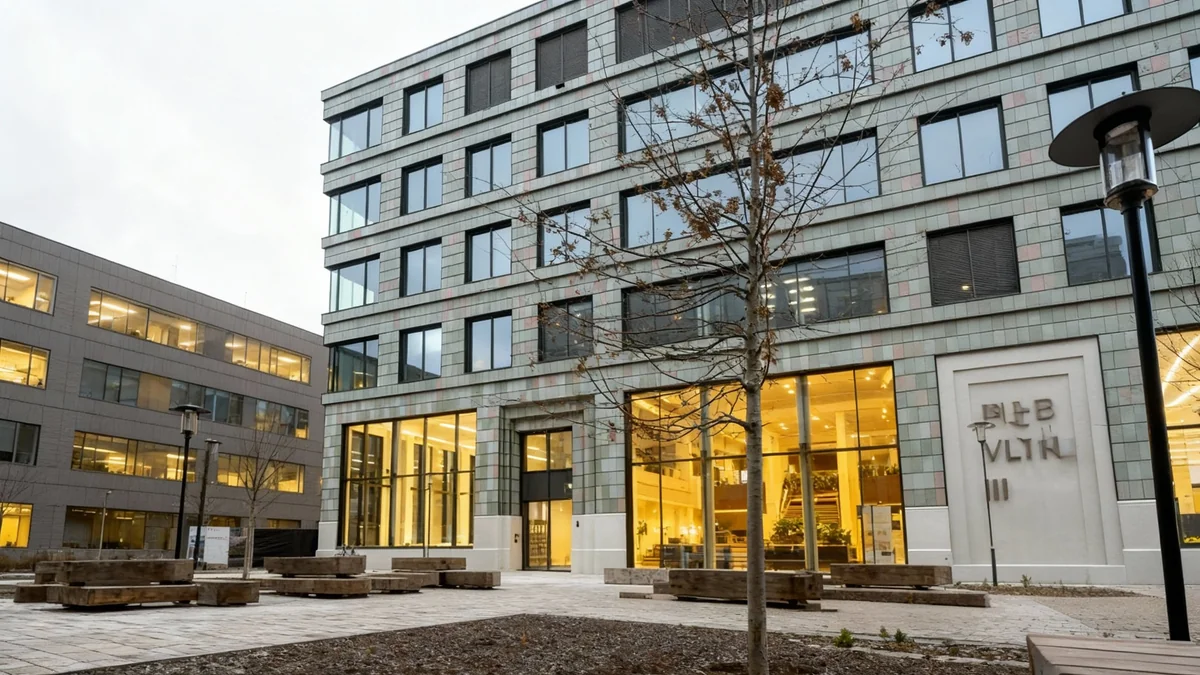
A new laboratory building in the central Netherlands now features a facade made entirely from recycled post-consumer plastic waste. This innovative project, known as Plus Ultra III, marks the first timber laboratory structure in the Netherlands. It utilizes a unique cladding system developed by Pretty Plastic, a Dutch manufacturer.
The building is situated on the Wageningen University and Research Campus. It demonstrates a significant step forward in sustainable construction practices, combining timber and recycled materials to create a functional and environmentally conscious facility.
Key Takeaways
- Plus Ultra III is the Netherlands' first timber laboratory building.
- Its facade uses tiles made from 30,987 kilograms of recycled post-consumer plastic.
- The cladding system, 'Basic Third,' is designed for simple, modular installation.
- Tiles are made from 100 percent recycled PVC, primarily from construction waste.
- The project highlights circular design principles in large-scale utility buildings.
A Milestone in Sustainable Construction
The Plus Ultra III building spans 8,500 square meters. Its primary load-bearing structure consists almost entirely of engineered timber. This choice of material significantly reduces the building's carbon footprint compared to traditional construction methods.
The facade is covered with 'Basic Third' tiles, a material specifically engineered by Pretty Plastic. These tiles are made from 100 percent recycled polyvinyl chloride (PVC), sourced from waste materials like old window frames and drainpipes.
Fact Check
- The Plus Ultra III building used 30,987 kilograms of post-consumer plastic waste for its facade.
- It is the first timber laboratory building constructed in the Netherlands.
Proof of the Sum, a Dutch studio, designed the building, while Kadans Science Partner developed it. The collaboration aimed to create a facility that is both highly functional and deeply committed to environmental responsibility.
The 'Basic Third' Cladding System
Hester van Dijk, co-founder of Pretty Plastic, emphasized the practicality of the 'Basic Third' cladding. "The Basic Third cladding was developed as a highly practical and scalable facade system," Van Dijk stated. "Its overlapped shingle configuration allows for fast and straightforward installation."
The tiles feature a simplified installation method compared to earlier Pretty Plastic products. They are mechanically fixed with screws to a timber batten system. This creates a robust, replaceable, and efficient connection to the underlying timber structure.
Background on Pretty Plastic
Pretty Plastic was founded by architects Overtreders W and Bureau SLA. The company focuses on transforming plastic waste into durable, aesthetic building materials. 'Basic Third' is their third generation of plastic tile design, aiming for broader architectural application.
The modular sizing of the tiles minimizes cutting waste during installation. This contributes to the overall efficiency and sustainability of the construction process. The standard version of the tiles offers three vertical strips and is available in 12 different colors.
Designing for Circularity
The use of fully demountable tiles on a timber facade helps to create buildings with a circular design. This means materials can be reused or recycled at the end of the building's life cycle, reducing waste and conserving resources.
Van Dijk sees significant potential for wider adoption of this tile design. "The dimensions of the Basic Third tile make it suitable for large-scale utility buildings, while the mould allows designers freedom in form and colour to tailor the facade to a specific architectural concept," she explained.
The integration of recycled plastic cladding with a timber structure creates a building that embodies principles of environmental stewardship. This approach could influence future designs for laboratories and other large-scale facilities across the globe.
Visualizing the Impact
Beyond its functional aspects, the Plus Ultra III building also features a bright, inviting atrium. This design choice aims to create an appealing and comfortable environment for researchers and staff. The aesthetic appeal of the recycled plastic tiles demonstrates that sustainable materials do not compromise design quality.
Previous applications of Pretty Plastic tiles include a permanent music pavilion designed by Dutch studio Grosfeld Bekkers Van der Velde Architecten. This history shows a growing acceptance and integration of recycled plastic in architectural projects.
The project at Wageningen University highlights a practical solution for reducing plastic waste in the construction sector. It also showcases the versatility of timber as a primary structural material for complex buildings like laboratories.
Future Implications for Architecture
The successful completion of Plus Ultra III suggests a promising future for combining sustainable materials in large-scale construction. The focus on readily available post-consumer waste, particularly PVC from construction, addresses a significant environmental challenge.
Architects and developers increasingly seek ways to reduce the environmental impact of their projects. Solutions like the 'Basic Third' cladding system offer a viable path forward. They balance durability, aesthetic flexibility, and ecological responsibility.
The ability to easily replace individual tiles also adds to the long-term sustainability of the facade. This maintenance feature extends the lifespan of the building's exterior and further supports circular economy principles.
The project stands as an example of how innovation in material science and architectural design can lead to more sustainable and resource-efficient buildings. It provides a blueprint for future developments aiming to minimize their ecological footprint.