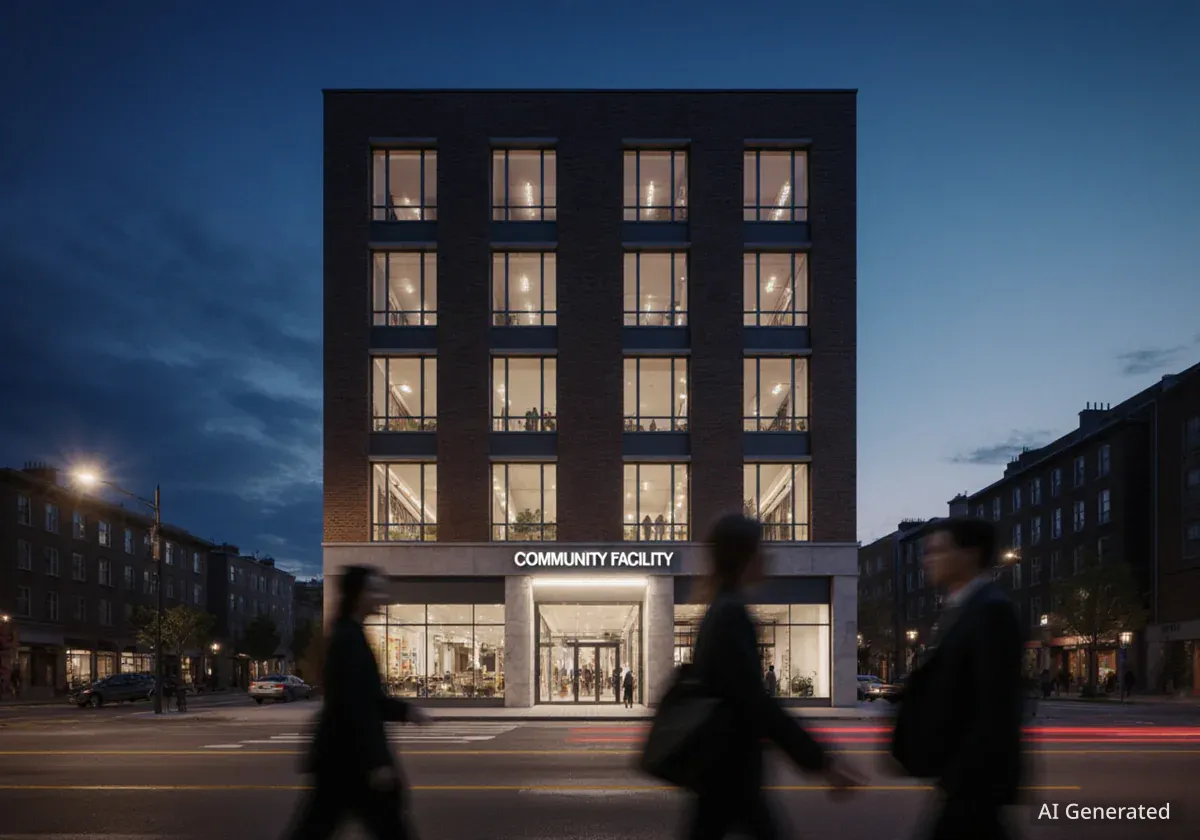
A new nine-story mixed-use building is set to rise at 27 East 4th Street in Manhattan’s Noho Historic District Extension. Renderings for the project, designed by DXA Studio, reveal a 105-foot-tall structure that will incorporate retail spaces and a community facility. This development will introduce a modern aesthetic while respecting the area's historic character.
The site, located between Lafayette Street and Bowery, sits directly next to the notable Merchant’s House Museum. This proximity highlights the careful balance between new construction and the preservation of historic landmarks, a common challenge in Manhattan's vibrant neighborhoods.
Key Takeaways
- New nine-story mixed-use building at 27 East 4th Street in Noho.
- Designed by DXA Studio, standing 105 feet tall.
- Includes retail space and a community facility.
- Features earth-toned glass fiber reinforced concrete (GFRC) and brick façade.
- Located next to the Merchant’s House Museum.
Architectural Vision for 27 East 4th Street
The design by DXA Studio shows a building that thoughtfully integrates with its surroundings. It matches the height of its western neighbor, ensuring a consistent streetscape. The main southern elevation features four distinct cornice lines, spaced at different intervals, adding visual interest and breaking up the building's verticality.
The façade will primarily consist of earth-toned glass fiber reinforced concrete (GFRC) and brick. This material choice aims to blend the new structure with the historic buildings in the Noho district. A grid of large arched windows will punctuate the façade, allowing ample natural light into the interior spaces.
An interesting detail is the eastern lot-line wall, which will showcase a grid of smaller arched windows. The top of the building will feature a short bulkhead, clad in corrugated aluminum, adding a subtle industrial touch to the overall design. These elements combine to create a distinct yet harmonious presence in the neighborhood.
Design Details
- Height: 105 feet
- Materials: Earth-toned GFRC, brick, corrugated aluminum
- Window Style: Large arched windows on the main façade, smaller arched windows on the eastern wall
- Cornice Lines: Four at varying intervals
Integrating with Noho's Historic Fabric
The Noho Historic District Extension is known for its distinctive architecture and cultural significance. New developments in this area must adhere to strict guidelines to maintain the neighborhood's unique character. The choice of brick for the window arches and cornices, with intricate bond patterns, demonstrates a commitment to this principle.
Renderings provide a closer look at these brick details, highlighting the craftsmanship intended for the building. This attention to traditional building techniques, combined with modern materials like GFRC, represents a contemporary approach to historic preservation.
The site currently holds a one-story commercial building. Its replacement with a nine-story structure marks a significant change for the block. This transformation reflects ongoing development trends in Manhattan, where older, smaller buildings are often replaced with denser, mixed-use projects to meet increasing demand for space.
"The design aims to respect the architectural heritage of Noho while introducing a modern, functional space for the community," a project representative noted during early discussions.
Amenities and Community Impact
Beyond its exterior, the building plans include practical amenities for its occupants. A rear courtyard, accessible from the northern elevation, will feature picnic tables. This outdoor space offers a quiet retreat for tenants and users of the community facility, fostering a sense of shared space within the urban environment.
The inclusion of a community facility suggests a commitment to public benefit, providing services or spaces for local residents. The specific nature of this facility has not yet been detailed, but its presence is a key component of the development's contribution to the neighborhood.
Noho's Dynamic Landscape
Noho, short for North of Houston Street, is a historic and trendy neighborhood in Lower Manhattan. It is characterized by its cast-iron buildings, cobblestone streets, and a mix of residential, commercial, and artistic spaces. The area is known for its vibrant atmosphere and proximity to cultural institutions and dining options.
Transportation and Accessibility
The location of 27 East 4th Street offers excellent access to public transportation, a critical factor for any new development in Manhattan. The site is conveniently located three blocks north of the Broadway–Lafayette Street/Bleecker Street station.
This station serves multiple subway lines, including the 6, B, D, F, and M trains, connecting residents and visitors to various parts of the city. Additionally, the R and W trains are accessible at the 8th Street–NYU station, further enhancing connectivity. This robust transit infrastructure supports the mixed-use nature of the building, making it attractive for both retail and community functions.
- Subway Access:
- Broadway–Lafayette Street/Bleecker Street (6, B, D, F, M trains)
- 8th Street–NYU (R, W trains)
Future Steps and Regulatory Review
The proposed development is currently awaiting review by the Landmarks Preservation Commission. This step is crucial for any project within a historic district, ensuring that the design meets the aesthetic and preservation standards set for the area. The Commission's decision will determine the project's timeline and any potential modifications required.
New York City continues to see significant development activity. The approval of the 'City of Yes' Housing Creation Plan, which aims to add 50,000 new homes, underscores the ongoing need for diverse housing and commercial options. Projects like 27 East 4th Street contribute to this broader urban evolution.
The careful planning and detailed design of this building reflect the complex challenges and opportunities in developing within one of Manhattan's most cherished historic areas. Its progress will be closely watched by architectural enthusiasts and local community members alike.