New designs for the White House East Wing ballroom have been submitted, showcasing updated architectural details and significant changes from earlier proposals. The plans will go before the National Capital Planning Commission for approval on March 5.
These latest renderings offer the first detailed look at a new garden intended to replace the Jacqueline Kennedy Garden, which was demolished with the original East Wing structure. The project continues to draw attention for its scale and potential impact on the historic White House.
Key Takeaways
- Final East Wing plans submitted for March 5 approval.
- South portico pediment removed; east portico pediment remains, standing four feet taller than the executive residence roof.
- New garden design includes grand staircase, stone paths, and replanted trees.
- West-facing ballroom windows increased from eight to nine.
- Main pathway around the South Lawn will become asymmetrical.
Architectural Changes to the East Wing
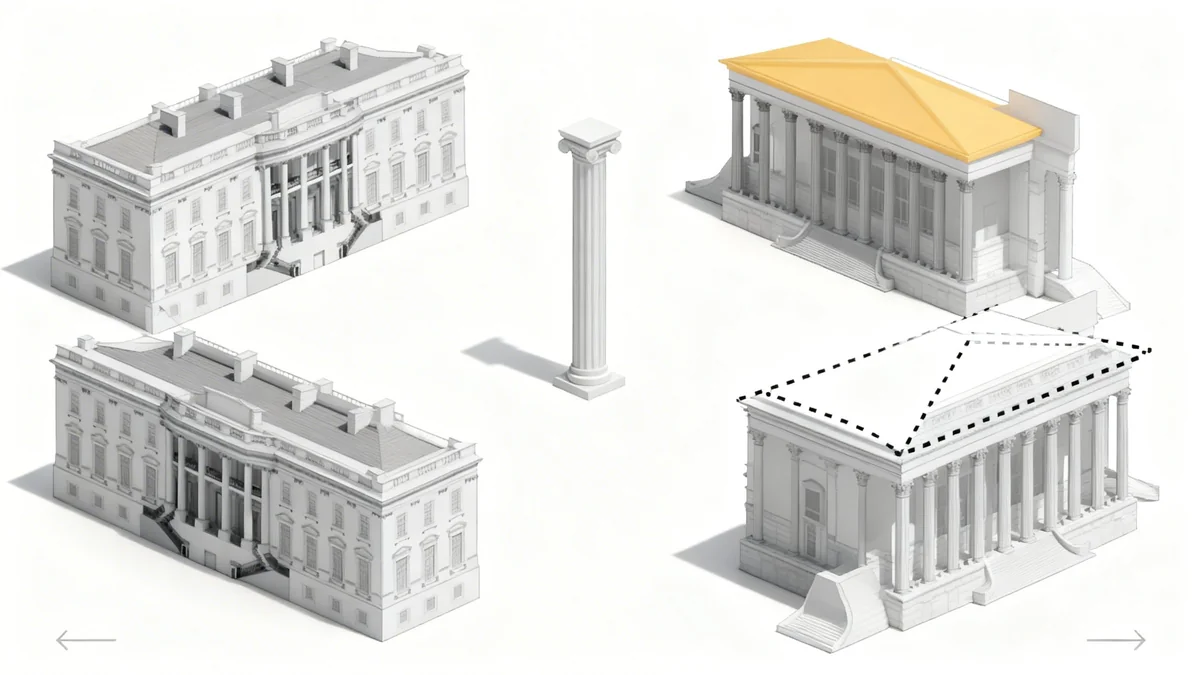
The updated designs, prepared by Shalom Baranes Associates, the new architect for the project, reveal several key modifications. One notable change involves the pediments, the triangular gables often seen above porticoes.
Earlier designs featured a pediment on both the east and south porticoes. However, the latest submission shows the pediment on the south portico has been removed entirely. The pediment on the east portico remains, but its height is significant.
Design Fact
The east portico pediment will stand approximately four feet taller than the roofline of the existing executive residence. This height has been a point of discussion among critics.
Critics have voiced concerns that the proposed design could visually overpower the historic White House structure. The scale of the new East Wing has been a consistent aspect of the plans, with the overall footprint remaining unchanged from January's submissions.
Window and Doorway Revisions
Further refinements are evident in the window and doorway configurations. The number of arched windows on the ballroom level, facing west, has increased from eight to nine. This adjustment could alter the natural light entering the expansive space.
Additionally, the first-floor windows have undergone a redesign. These new designs incorporate more doorways, providing increased access points to the newly planned East Wing garden. This suggests a greater integration between the interior spaces and the outdoor area.
Introducing the New East Wing Garden
Perhaps the most anticipated element of these latest renderings is the detailed inclusion of the new garden. This garden is designed to replace the former Jacqueline Kennedy Garden, which was part of the original East Wing structure that was demolished.
Historical Context
The Jacqueline Kennedy Garden was a beloved feature of the White House grounds, known for its elegant design and historical significance. Its demolition paved the way for the current East Wing expansion project.
The new garden appears significantly larger than its predecessor. Renderings show a prominent grand staircase leading from the new East Colonnade directly into the garden. Stone-paved paths will connect various sections of the garden to the first floor of the new East Wing.
Plans indicate the garden will feature a circular brick area. Trees from the old garden are expected to be replanted within the new design, aiming to preserve some of the original landscape's character. The fountain from the former garden will also be restored and reinstalled.
"The inclusion of the grand staircase and the thoughtful reincorporation of elements like the old garden's fountain suggest a blend of new design with respect for the site's history."
Impact on the South Lawn Pathway
The sheer size of the proposed East Wing has necessitated changes to the surrounding landscape, particularly the main pathway around the South Lawn. Renderings confirm that this pathway will no longer maintain its original symmetrical layout.
The altered path will accommodate the expanded footprint of the new East Wing, impacting the overall visual balance of the South Lawn area. This modification highlights the extensive nature of the current construction project and its broader effects on the White House grounds.
Project Scale
The final designs show the same overall footprint as the plans released in January, indicating that calls to reduce the building's size have not been incorporated into the latest submission.
Architects previously mentioned that the White House was considering a "modest one-story addition" to the West Colonnade. This potential addition aimed to restore a sense of symmetry to the original central pavilion, suggesting an awareness of the visual imbalance created by the large East Wing.
The National Capital Planning Commission's meeting on March 5 is expected to be a pivotal moment for the project. A board largely controlled by allies of the current administration is anticipated to approve the new designs, moving the East Wing expansion closer to realization.
Ongoing Discussions and Future Outlook
The East Wing project has generated considerable discussion since its inception. Concerns have focused on the architectural integrity of the White House, the preservation of historic gardens, and the overall scale of the proposed additions.
The updated plans attempt to address some aesthetic aspects, such as the garden's details and window changes, while maintaining the significant footprint. The decision on March 5 will determine the next steps for this ambitious White House development.
Observers will watch closely to see how the new East Wing integrates with the existing historical architecture and how the new garden redefines a cherished part of the presidential grounds. The project represents a significant transformation of a globally recognized landmark.