In the quiet French village of Ennery, architect François Leite has completed a four-year restoration of an early 19th-century stone farmhouse. The project, intended as a 'perfect cocoon' for his parents, involved transforming a crumbling property into a modern, comfortable home while preserving its historical character.
Key Takeaways
- Architect François Leite restored a 2,000-square-foot stone farmhouse in Ennery, France.
- The project aimed to create a comfortable home for his parents while honoring local heritage.
- The restoration took four years, from 2018 to 2022.
- The exterior now reflects its 19th-century appearance, using local limestone.
- The interior blends modern design elements with vintage pieces and contemporary art.
A Vision for Everyday Heritage
The journey began on a rainy autumn day in 2018 when Leite, then 33, visited the property with his parents. He found a dilapidated stone farmstead, its roof covered in cheap industrial tiles and its garden paved with concrete. The main house was in a state of collapse after years of neglect.
Despite the grim initial impression, Leite saw potential. He was drawn to Ennery's unique architectural style, characterized by unadorned, rough-cut limestone blocks known as 'moellons'. This monochromatic palette appealed to his vision for a respectful renovation.
Project Snapshot
- Location: Ennery, Vexin Regional Park, France
- Original Structure: Early 19th-century stone farmstead
- Property Size: 2,000 square feet, including two annexes and a well
- Restoration Duration: Four years (2018-2022)
- Architect: François Leite (opened his own studio in 2023)
Preserving Local Character
Leite's goal was not to erase the past but to integrate it with modern living. He described the project as a chance to "talk about and transform this kind of ordinary, everyday heritage." The family had deep roots in the region; Leite grew up in nearby Normandy, and his parents, Catherine (67) and Fernando (66), owned an automobile dealership close to Ennery.
The restoration focused on bringing the exterior back to its historical appearance. This meant removing the modern additions and carefully repairing the stone facade. The result is a home that now looks much as it would have two centuries ago, blending seamlessly into the village's timeless aesthetic.
"It was rainy, and everything, even the soil, was gray," Leite recalled of his first visit. "It wasn’t the best occasion to visit a rather lugubrious house."
The Village of Ennery
Ennery itself is a small, dense village located on the edge of the sprawling Vexin regional park, less than an hour northwest of Paris. With only a few thousand residents, it offers a peaceful retreat. The town has essential amenities like a butcher, a pharmacy, and a few small restaurants, contributing to its quiet, rural charm.
Leite noted that this type of classic stone village is often associated with vacations by many French people. The village's calm atmosphere and historical architecture make it a unique location, offering a sense of escape while still being accessible to the capital.
Interior Design and Artistic Touches
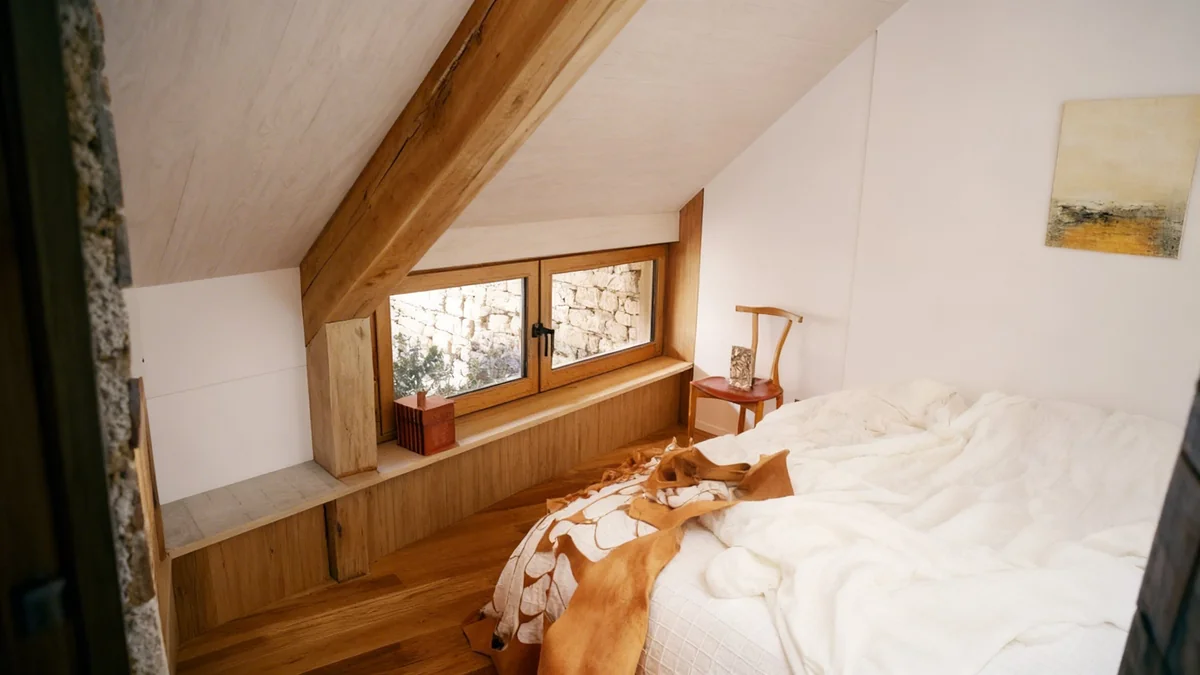
Inside the 2,000-square-foot property, Leite created a contemporary living space. This included the main house and two small annexes, all dating from the early 19th to the early 20th centuries. The interior design reflects a careful balance of modern elements and vintage pieces.
In the primary bedroom, for example, a painting by François Cante-Pacos, titled “7:30 p.m. on the Beach,” adds a vibrant, contemporary touch. This artwork, created in 2020, is courtesy of the artist and Galerie Delmaire. Adjacent to the painting stands a vintage chair by Oscar Tusquets, re-editioned by BD Barcelona, showcasing a blend of classic design and modern reinterpretation.
Architectural Style and Materials
The Vexin regional park region is known for its distinctive use of local limestone. Buildings are often constructed with 'moellons,' rough-cut blocks that give structures a sturdy, unadorned appearance. Historically, these might have been plastered over in more affluent areas, but in villages like Ennery, they define the authentic, rustic charm.
Leite's design choices emphasize functionality and comfort, creating a true "cocoon" for his parents. The open spaces and thoughtful arrangement of furnishings contribute to a serene and inviting atmosphere. The overall aesthetic is one of understated elegance, allowing the natural light and the textures of the original stone to shine through.
From Urban Architecture to Personal Projects
Before embarking on this personal project, François Leite had a career in large-scale urban architecture. In 2023, he made the decision to open his own studio, focusing on projects that allowed for a more personal and detailed approach, like the Ennery farmhouse.
This shift reflects a growing trend among architects to engage with smaller, more intimate projects that have a direct impact on individuals and communities. The Ennery farmhouse stands as a testament to Leite's ability to blend historical preservation with modern design principles, creating a home that is both rooted in its past and ready for the future.
The transformation of this crumbling farmstead into a vibrant, comfortable residence highlights the value of preserving historical structures. It also shows how contemporary design can enhance traditional spaces without sacrificing their inherent character. This project offers a compelling example of sustainable renovation and thoughtful architectural practice in rural France.