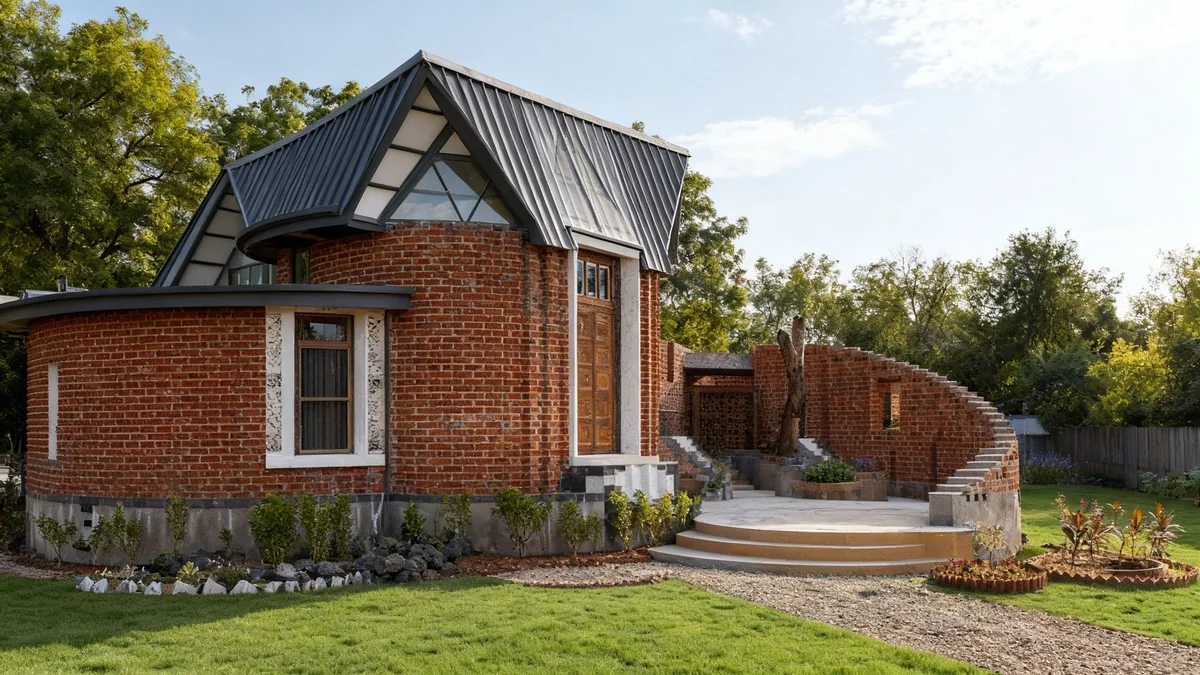
A new residence, Casa Chavarria, in Puntarenas, Costa Rica, has redefined tropical living by making its central interior garden a functional element rather than just a decorative one. This innovative design regulates ventilation, daylight, and privacy throughout the home, creating a seamless connection between indoor and outdoor environments.
Key Takeaways
- Casa Chavarria uses a central garden for environmental control and spatial organization.
- The design creates a gradual transition from open to private spaces.
- Materials like concrete, wood, and brick support passive climate strategies.
- The home prioritizes integration with nature over framed views.
Garden as the Core of Design
Carazo Arquitectura, the firm behind Casa Chavarria, positioned the interior garden at the heart of the 97 square meter dwelling. This strategic placement allows the garden to actively manage the home's climate and light conditions. It acts as a natural air conditioning system, drawing breezes through the house.
The garden also provides varying degrees of privacy for different rooms. Spaces closer to the garden benefit from filtered light and natural sounds, while more secluded areas maintain their quietude. This design choice moves beyond traditional landscaping, making nature an integral part of the building's function.
"The garden functions simultaneously as a point of transition and as a spatial anchor within the dwelling," explains Carazo Arquitectura.
Seamless Transitions Between Spaces
The architectural approach emphasizes a smooth transition between open and enclosed areas. The design avoids abrupt changes, instead using a series of porous boundaries. These boundaries allow exterior conditions to gently permeate the interior, blurring the lines between inside and out.
This creates a distinctive spatial rhythm. Moving through Casa Chavarria involves passing through layered thresholds that gradually shift from public gathering spots to more intimate, private rooms. The goal is to integrate the outdoor and indoor environments without relying on fixed, framed views of nature.
Project Fact
The entire Casa Chavarria project covers an area of 97 square meters, making efficient use of space.
Material Choices Support Environmental Strategy
The selection of building materials plays a crucial role in the home's passive environmental strategies. Carazo Arquitectura utilized exposed concrete, teak wood, and modular brick. These materials are not just aesthetically pleasing; they are functional components of the design.
Exposed concrete helps moderate internal temperatures, while teak wood adds warmth and natural texture. Modular brick partitions are particularly effective in mediating openness and enclosure, allowing for controlled airflow and light filtration. These choices ensure the house remains comfortable year-round.
The materials work together to create an environment where light and air are constantly filtered and regulated. This contributes significantly to the dwelling's overall environmental comfort, reducing the need for artificial cooling or heating.
Nature as an Organizing Architectural Element
Casa Chavarria stands out by treating nature as an organizing architectural element, rather than just a visual backdrop. Vegetation, light, and air are not merely present; they actively shape the spatial experience of the house. This deep integration defines how residents interact with their living spaces.
The design team focused on how these natural elements contribute to environmental comfort. They also considered how they define the way the dwelling is occupied. This holistic approach ensures that the house feels connected to its tropical surroundings in a meaningful and functional way.
Context: Sustainable Design in Costa Rica
Costa Rica is known for its rich biodiversity and commitment to environmental conservation. Architectural projects in the region often incorporate sustainable design principles, leveraging natural resources like sunlight and air for passive climate control. This aligns with a growing global trend towards eco-conscious building practices.
A New Model for Tropical Living
Casa Chavarria offers a compelling model for sustainable and integrated living in tropical climates. By placing a functional garden at its core and carefully selecting materials, the residence achieves a harmonious balance between built structure and natural environment.
The gradual transitions and porous boundaries enhance the living experience, allowing residents to feel connected to nature without sacrificing comfort or privacy. This project demonstrates how thoughtful architectural design can create spaces that are both beautiful and environmentally responsible.
- The central garden provides natural ventilation.
- Daylight is carefully managed through porous boundaries.
- Privacy levels are adjustable based on spatial arrangement.
- Local materials support passive environmental strategies.