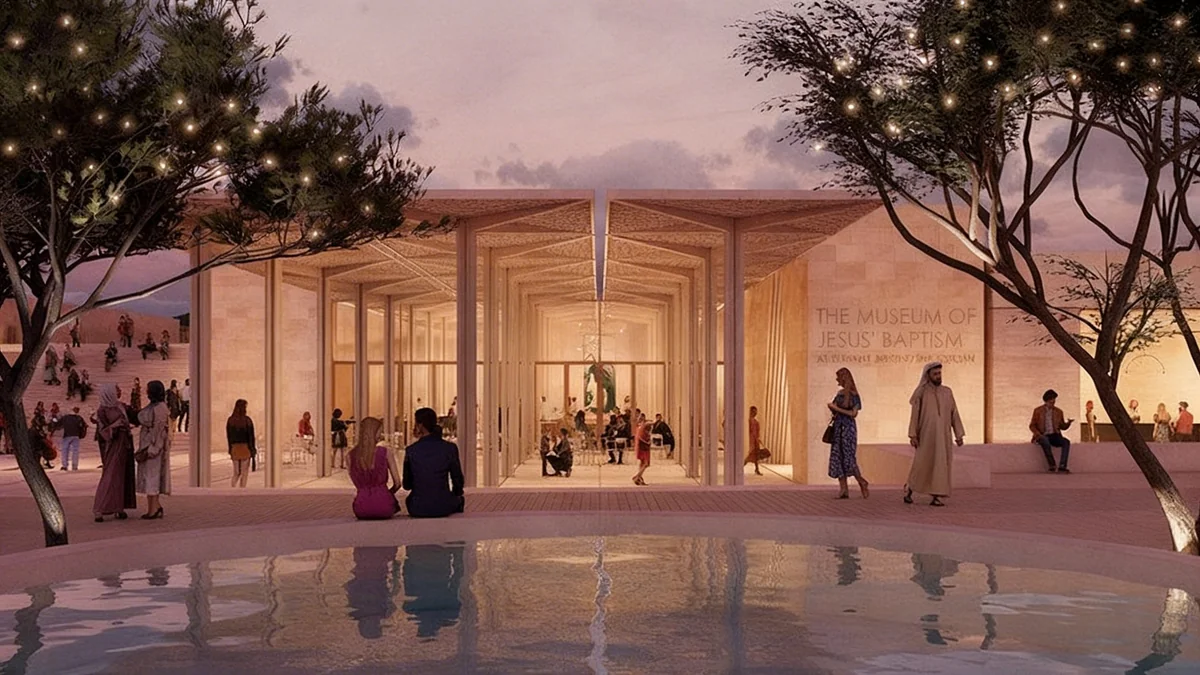
The international design competition for the Museum of Jesus' Baptism at Bethany, Jordan, has concluded, with Níall McLaughlin Architects (NMLA) announced as the winner. This significant project will be located at Al-Maghtas, also known as "Bethany Beyond the Jordan," a UNESCO World Heritage Site on the east bank of the Jordan River, traditionally recognized as the place where John the Baptist baptized Jesus. The museum is planned to open in 2030, coinciding with the bimillennial of Christ's baptism.
Key Takeaways
- Níall McLaughlin Architects won the international design competition.
- The museum will be built at Al-Maghtas, a UNESCO World Heritage Site in Jordan.
- It aims to open in 2030, marking the 2000-year anniversary of Jesus' baptism.
- The design emphasizes an immersive journey and sustainable construction.
- The project seeks to be a global cultural and spiritual landmark.
A Sacred Site's New Landmark
Al-Maghtas holds deep religious significance, drawing Christian pilgrims from around the world. The new museum aims to enhance the visitor experience while providing a space for reflection, learning, and cultural exchange. It forms part of the larger Baptism Development Zone, underscoring Jordan's commitment to preserving and presenting this important historical and spiritual location.
The competition, managed by Malcolm Reading Consultants, spanned six months. It brought together multidisciplinary teams led by prominent architects. Their task was to create a museum and landscape project that respected the sacred character of the site.
Did You Know?
The site of Al-Maghtas is recognized by UNESCO as a World Heritage Site, highlighting its universal value and significance for humanity.
NMLA's Visionary Design
Níall McLaughlin Architects' winning proposal stood out for its immersive narrative and sensitive integration with the landscape. The design focuses on an east-west journey, guiding visitors through a carefully crafted sequence of spaces.
The journey begins in an arid wilderness garden, leading visitors into the museum building. Inside, a water-filled rift symbolizes the Jordan River, a central element of the site's history. The sequence concludes in a lush, planted garden, offering a contemplative end to the experience.
"Our design creates a journey that is both spiritual and deeply connected to the natural environment of Al-Maghtas," a representative from Níall McLaughlin Architects stated.
Architectural and Site Strategy
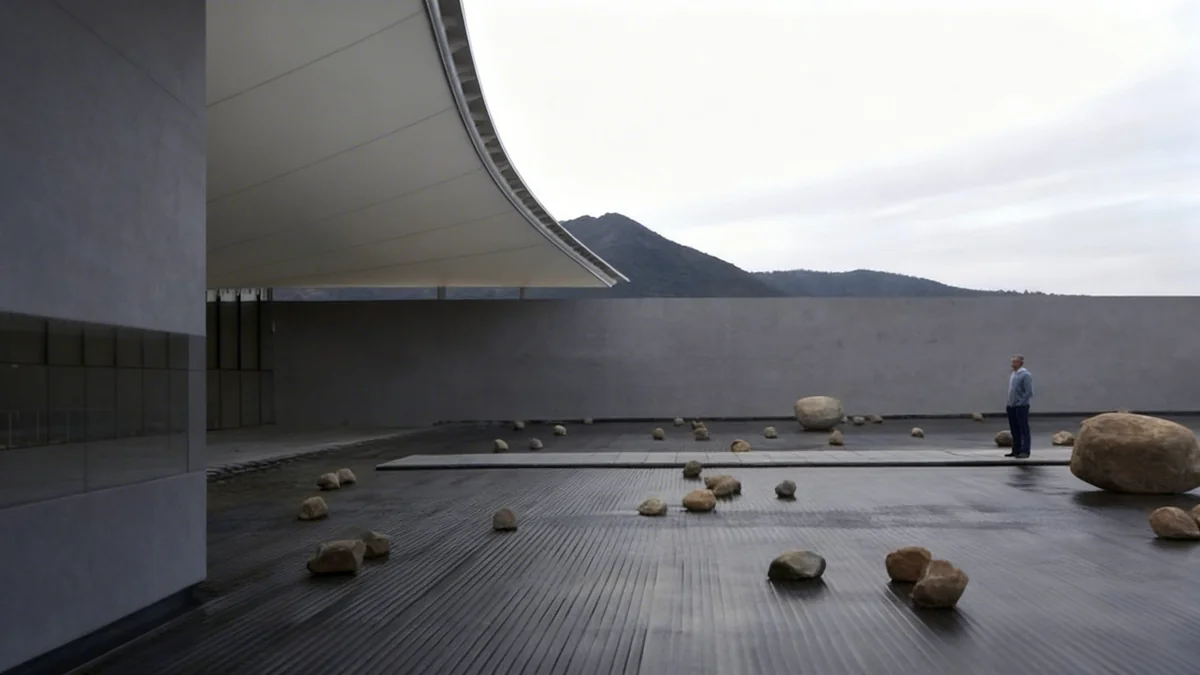
The architectural strategy reinforces this narrative. The eastern entrance and western exit align across a public square. An open, stepped landscape rises gradually onto the roof, allowing visitors to walk across the building as part of the public realm. This elevated route provides panoramic views of the Jordan Valley and the ancient pilgrimage path leading to the Baptism Site.
The building itself is designed as a low-lying structure, embedding it within the natural terrain. It will utilize locally sourced stone and rammed earth construction techniques. This approach draws inspiration from traditional Jordanian vernacular architecture, ensuring the museum harmonizes with its surroundings.
Project Background
The Foundation for the Development of the Lands Adjacent to the Baptism Site launched this international competition. The goal was to create a museum that would serve as a globally significant cultural destination upon its completion in 2030.
Sustainability and Local Craftsmanship
A key aspect of NMLA's proposal is its strong emphasis on social responsibility and low-carbon construction. The design prioritizes the use of local labor, skills, and materials. This not only reduces the environmental footprint of the project but also supports regional knowledge and craftsmanship, fostering a sense of community ownership.
The NMLA team is supported by a robust group of consultants. Engicon serves as the local consultant, providing essential regional expertise. Arup contributes its knowledge for daylight and shadow studies, ensuring optimal lighting conditions within the museum spaces.
Landscape and Exhibition Design
Kim Wilkie Landscape leads the landscape strategy, which includes the introduction of walled gardens. These gardens will be planted with native and scented species, allowing the surrounding wilderness to frame the museum building. This thoughtful integration of nature enhances the visitor's connection to the sacred site.
Nissen Richards Studio is responsible for the exhibition design. They plan to use variations in light, sound, and material to create an immersive atmosphere. The exhibitions will be structured around three core themes: wilderness, water, and witness, guiding visitors through the historical and spiritual significance of the site.
Competition Finalists
- AAU Anastas
- heneghan peng architects
- Studio Anne Holtrop
- Tatiana Bilbao ESTUDIO
- Toshiko Mori Architect
- Trahan Architects
An International Collaboration
An international Advisory Panel oversaw the competition. This panel comprised experts in architecture, landscape design, heritage preservation, and museum practice. Notable members included Tharwat Almasalha, Barry Bergdoll, and Alia Al-Senussi, among others.
The Foundation will now work closely with the Níall McLaughlin Architects-led team. This collaboration will involve UNESCO, local communities, and various international stakeholders. The aim is to advance the design and ensure the museum becomes a globally significant cultural destination, ready for its anticipated opening in 2030.
This project represents a significant endeavor to honor a site of immense spiritual and historical importance. The careful design and emphasis on sustainability ensure that the Museum of Jesus' Baptism will serve as a respectful and inspiring addition to Bethany Beyond the Jordan for generations to come.