A new mobile cabin, named The Oculus, has launched in Byron Bay, Australia, offering a compact and versatile living solution. Designed by architect Hayley Pryor in collaboration with local builder Chris King, this 21-square-meter dwelling blends the familiar aesthetics of an Australian shed with modern, adaptable features, making it road-legal and relocatable.
The innovative design aims to serve various needs, from a cozy standalone home or holiday retreat to a functional garden studio, emphasizing minimal living without sacrificing comfort or connection to nature.
Key Takeaways
- The Oculus is a 21-square-meter mobile cabin designed for versatile living.
- Its design draws inspiration from traditional Australian sheds, featuring timber and corrugated metal.
- A large central skylight, the 'Oculus,' provides natural light and stack ventilation.
- Built-in furniture and smart storage solutions maximize interior space efficiency.
- The cabin is road-legal and designed for natural climate control through passive strategies.
Inspired by Australian Sheds
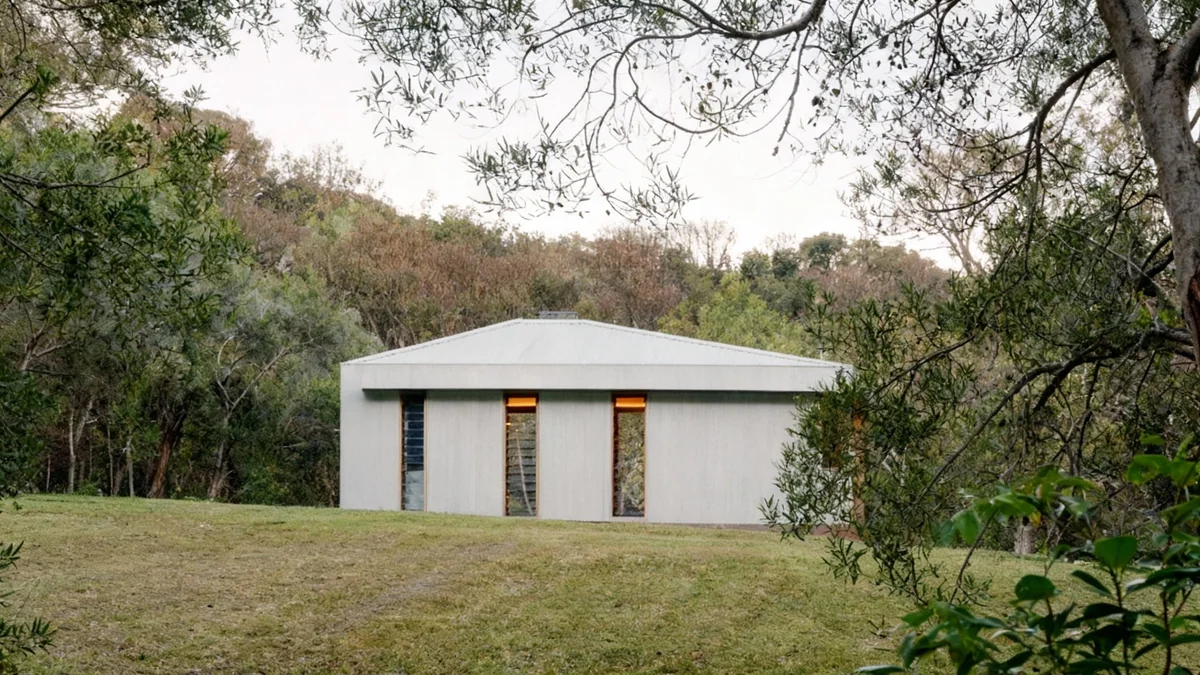
Architect Hayley Pryor conceptualized The Oculus by reinterpreting the iconic Australian shed. This design choice provides a sense of familiarity and robustness. The exterior combines durable timber with a finely corrugated metal roof, reflecting a classic rural aesthetic.
The roof's apex houses the cabin's signature feature: a large central skylight. This 'oculus' not only floods the interior with natural light but also functions as a passive climate control device, opening to create a stack ventilation effect.
"Drawing on the familiarity of the Australian shed and reinterpreting it through form, light and ventilation, the design results in a flexible retreat for minimal living," Hayley Pryor stated.
Quick Fact
The Oculus cabin measures 21 square meters, designed to be compact yet highly functional for various living arrangements.
Smart Design for Natural Comfort
The design prioritizes passive strategies for natural heat management. Cross-ventilation, operable windows, and removable eaves work together to keep the interior comfortable without relying heavily on artificial cooling. This thoughtful approach highlights a commitment to sustainable living.
The elevated skylight plays a crucial role beyond illumination. It frames views of the sky and actively contributes to the cabin's natural ventilation system, ensuring fresh air circulation throughout the space.
Background on Mobile Homes
Mobile cabins and tiny homes are gaining popularity worldwide as people seek more flexible, sustainable, and affordable housing options. These dwellings often feature innovative space-saving designs and prioritize environmental considerations in their construction and operation.
Optimizing Interior Space
Inside, the cabin features a cohesive and unified interior lined with refined plywood. This material extends from the walls into custom joinery, creating integrated furniture that serves multiple purposes. Built-in elements help define distinct zones for sleeping, living, dining, and kitchen activities.
The daybed, benches, and counters all incorporate clever storage solutions, maximizing every inch of the compact space. This integrated approach ensures that the cabin feels spacious and uncluttered despite its small footprint.
- Sleeping Area: Features a built-in daybed that can double as seating.
- Living Zone: Designed for relaxation and opens directly to the outdoors.
- Dining Space: Integrated counters provide a functional eating area.
- Kitchen: Compact and efficient, with ample storage for essentials.
- Bathroom: Accessed via a sliding door, including external storage.
Road-Legal and Ready for Relocation
The Oculus is the first made-to-order model from Retreat House, a mobile home company founded by builder Chris King. Its design ensures it is road-legal, allowing owners to relocate it as needed. This flexibility makes it ideal for those seeking a changeable lifestyle or a transportable retreat.
Large plywood shutters on the exterior provide additional natural ventilation and privacy. At the front, a substantial sliding glass door seamlessly connects the living space to an outdoor terrace, extending the usable area.
Clever Terrace Integration
The terrace is sheltered by the roof's large metal eaves. When the cabin needs to be transported, these eaves slide into custom-welded brackets, streamlining the structure for road travel. This demonstrates the thoughtful engineering behind its mobile capabilities.
The choice of materials, including locally sourced hardwood timbers and corrugated sheeting, ensures both durability and a familiar aesthetic. These materials are balanced with the warm, simple plywood interiors, reinforcing the cabin's modest and functional character.
The Oculus represents a significant step in compact, mobile living, combining architectural elegance with practical functionality for a diverse range of users. It offers a new perspective on how small spaces can be designed to enhance quality of life and environmental responsibility.