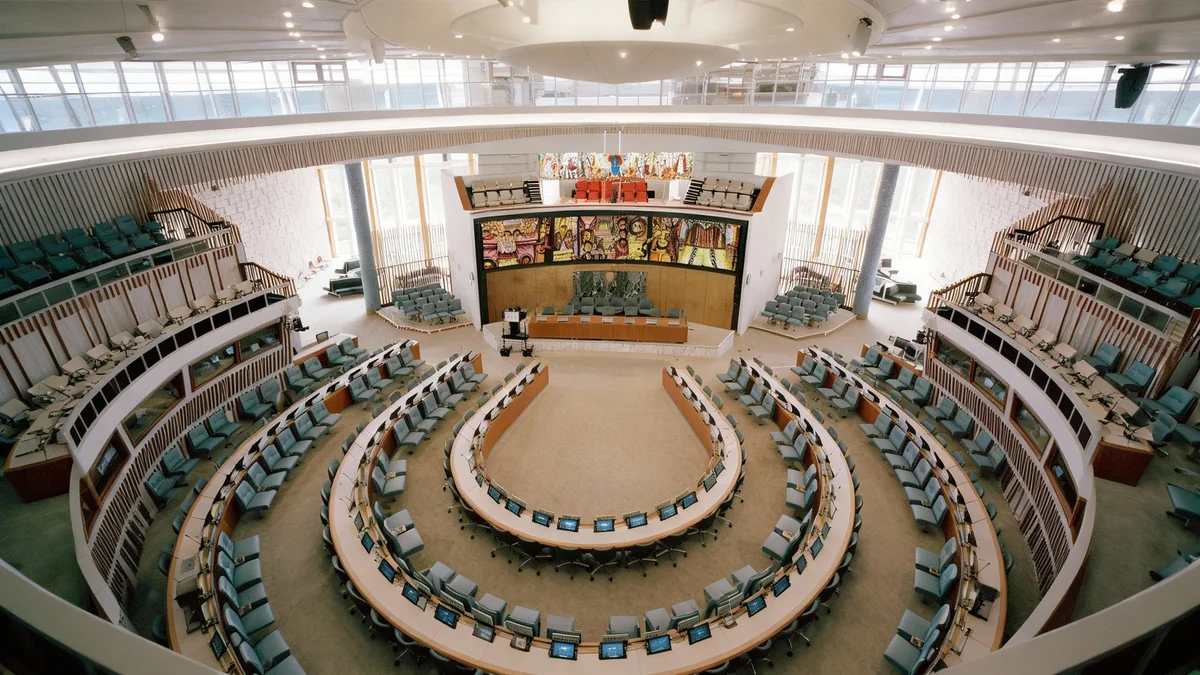

Africa Hall in Addis Ababa, Ethiopia, has received the prestigious 2026 World Monuments Fund/Knoll Modernism Prize. The award recognizes the extensive ten-year conservation effort led by the Australia-based architecture firm Architectus, which meticulously restored the iconic building to its original grandeur while integrating modern necessities.
This marks the first time an African project has won the prize since its inception in 2008, highlighting the growing global recognition for architectural preservation on the continent.
Key Takeaways
- Africa Hall, designed by Arturo Mezzedimi, won the 2026 World Monuments Fund/Knoll Modernism Prize.
- Architectus led the ten-year, $57 million restoration project.
- The building is a symbol of African decolonization and diplomacy, hosting the founding of the Organisation of African Unity.
- The restoration balanced original design integrity with modern accessibility and technology.
- This is the first African project to win the prize since 2008.
A Beacon of African Modernism
Africa Hall stands as a monumental example of Modernist architecture, deeply intertwined with the history of African decolonization and national autonomy. Completed in 1961, the building was commissioned by Ethiopia's last emperor, Haile Selassie. It quickly became a crucial diplomatic hub, notably hosting the founding of the Organisation of African Unity in 1963, the precursor to today's African Union.
Barry Bergdoll, the jury chair for the prize and a professor at Columbia University, emphasized the building's significance.
“Africa Hall stands as one of the most important expressions of Modern architecture on the continent, a building that brought together international ideas and local identity at a pivotal moment in the region’s history of decolonisation and national autonomy,” Bergdoll stated. “From its placement at one of the most prominent sites in the capital of Ethiopia (the only African country never to have been colonised), the architecture combined a functionalist rationality of structure and purpose with the aura of Modernism's optimism in the future.”
Interesting Fact
Africa Hall incorporates a stunning triptych of stained-glass windows by the renowned Ethiopian artist Afewerk Tekle (1932-2012). These windows, titled Total Liberation of Africa, are a central artistic feature, celebrating the continent's journey towards independence.
The Meticulous Restoration Process
The conservation project began in 2014 and spanned a decade, culminating in its official inauguration in October 2024. The total cost reached an estimated $57 million. Architectus, the lead firm, faced the complex challenge of preserving the original vision of Italian architect Arturo Mezzedimi while integrating contemporary technologies and ensuring modern accessibility standards.
The restoration involved a significant collaborative effort. Architectus worked closely with local experts to address the building’s concrete structure. Millions of individual tiles in its intricate mosaics underwent careful restoration. Hundreds of pieces of original Mezzedimi-designed furniture were also brought back to their former glory.
Collaboration Across Generations
A unique aspect of the project involved collaboration with the descendants of the original creators. Architects from the project teamed up with Mezzedimi’s grandson, also an architect, for historical design research. Similarly, Tekle’s grandson, an artist himself, assisted in the precise replacement and restoration of the stained-glass windows.
The scope of work extended beyond the interior. The exterior elements, including the fountains, gardens, and monumental stairs, were also meticulously restored, ensuring the entire complex reflected its intended grandeur.
Historical Context
Ethiopia holds a unique place in African history as the only country on the continent never to have been formally colonized. This status imbues Africa Hall with even greater symbolic power, representing self-determination and pan-African unity.
Impact and Future Significance
The successful restoration of Africa Hall ensures its continued role as a vital center for African diplomacy and a living monument to Modernist architecture. The project demonstrates how thoughtful conservation can bridge historical integrity with modern functionality.
Bergdoll further commented on the outcome:
“The recent restoration has allowed the clarity of Messedimi’s design to speak again, revealing the ambition, craftsmanship and symbolic power that have made the building a landmark of Modernism and a continuing stage for African diplomacy.”This award celebrates not only the architectural achievement but also the cultural and historical importance of the building to the African continent.
First Stewardship Award for Modernist Homes
In addition to the main prize, the jury introduced its inaugural Stewardship Award for Modernist Homes. This new category aims to recognize exceptional conservation projects for private residences of architectural significance.
The first recipient of this award is the Umbrella House in Sarasota, Florida. Designed by architect Paul Rudolph in 1953, the house is a prime example of Sarasota Modernism, blending international style with local aesthetics and climate-responsive design. The Hall Architects-led project meticulously reconstructed the house’s iconic roof shade, which a hurricane had destroyed in 1966. The Umbrella House earned a listing on the National Register of Historic Places in 2019.
- The World Monuments Fund/Knoll Modernism Prize received 73 submissions from 28 countries this year.
- The award ceremony for both prizes will take place on February 18 in Palm Springs, California.
The recognition of both Africa Hall and the Umbrella House highlights a growing global commitment to preserving Modernist architectural heritage, ensuring these significant structures continue to inspire future generations.