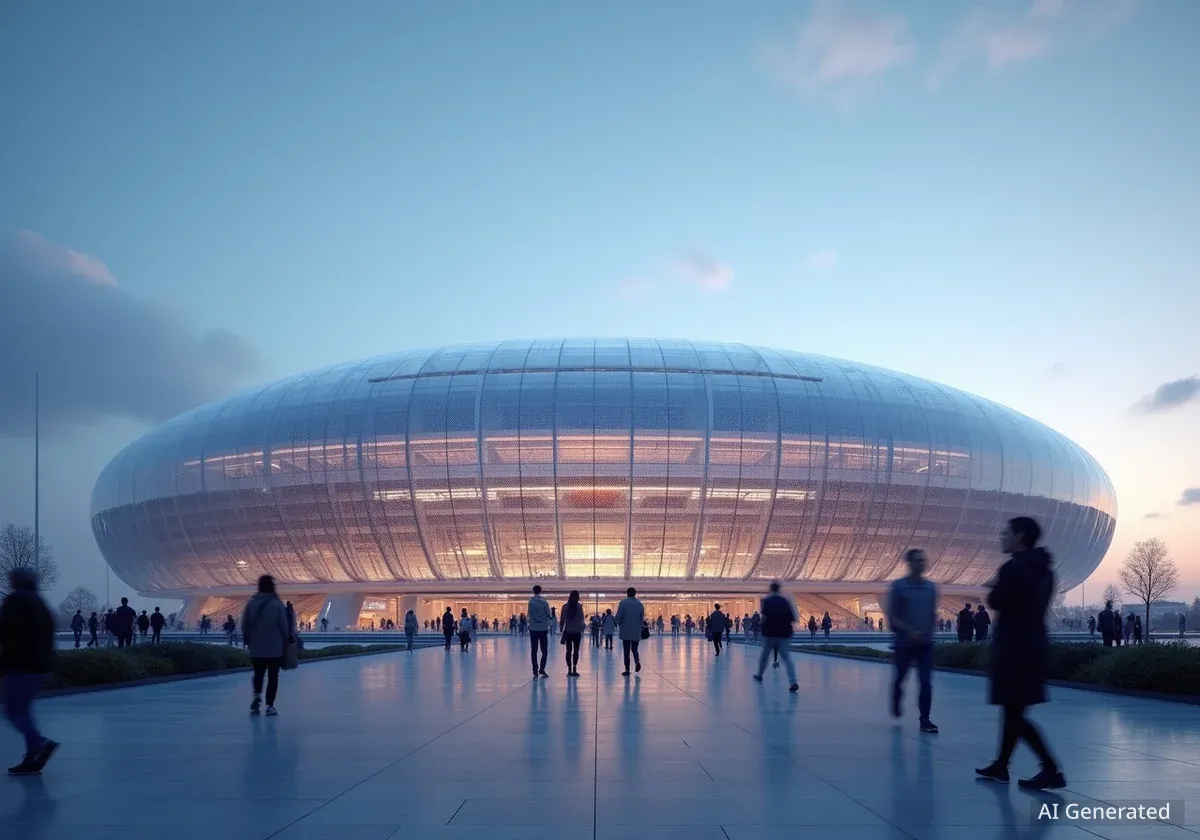



The Washington Commanders have publicly released the initial architectural renderings for their upcoming stadium, a project expected to redefine the team's future. This new facility, planned for completion by the 2030 NFL season, promises a modern experience while honoring the team's historical roots.
Key Takeaways
- New 70,000-seat transparent domed stadium unveiled.
- Design pays homage to RFK Stadium, former home.
- Project aims for a 2030 completion, costing nearly $4 billion.
- Washington D.C. officials hope to host major events like the Women's World Cup and a Super Bowl.
- Stadium will anchor a larger mixed-use development.
A Glimpse into the Future of Washington Football
The newly released renderings showcase a striking 70,000-seat transparent domed stadium. Its design features sides that rise dramatically, offering clear views of iconic Washington D.C. landmarks such as the U.S. Capitol and the Washington Monument. This architectural choice aims to integrate the stadium directly into the city's monumental landscape.
The exterior of the new facility prominently displays steel beams. This design element intentionally evokes the look of RFK Stadium, which served as the franchise's home from 1961 to 1996. The connection to RFK is significant, as the team enjoyed a period of considerable success there, including three Super Bowl victories.
Stadium Fast Facts
- Seating Capacity: 70,000
- Estimated Cost: Nearly $4 billion
- Target Completion: 2030 NFL Season
- Design Firm: HKS (also designed SoFi, U.S. Bank, AT&T Stadiums)
Reconnecting with a Storied Past
During their time at RFK Stadium, the Commanders, then known by a different moniker, were a dominant force in the NFL. They appeared in five Super Bowls, winning three, and experienced only five losing seasons over 26 years. This contrasts sharply with their tenure at their current home, Northwest Stadium in Landover, Maryland, where they have recorded only eight winning seasons since 1997.
The new stadium's interior design focuses on maximizing crowd noise. This strategic acoustic engineering aims to recreate the formidable home-field advantage that was a hallmark of the team's era at RFK. Fans often remember the electric atmosphere of those games.
"The renderings are worthy of its extraordinary site along DC's Monumental Axis and truly embodies the spirit and character of the District," stated Mark Clouse, Washington team president. This sentiment underscores the ambition behind the project.
A Multi-Billion Dollar Vision for the Future
The entire project carries an estimated price tag of nearly $4 billion. This substantial investment reflects the team ownership's commitment to creating a world-class facility. Washington owner Josh Harris, along with D.C. city officials, has openly expressed their desire to bid for major international events.
These potential events include the Women's World Cup in 2031 and future Super Bowls. Securing such high-profile competitions would bring significant economic benefits and global recognition to the city and the region. The stadium is not just for football; it is positioned as a hub for large-scale entertainment and sports.
Architectural Expertise
The Commanders have enlisted the renowned firm HKS to design the new stadium. HKS is a global architectural powerhouse with a portfolio that includes some of the most iconic sports venues in the United States. Their previous projects include SoFi Stadium in Los Angeles, U.S. Bank Stadium in Minneapolis, and AT&T Stadium in Arlington, Texas. This selection highlights the team's commitment to cutting-edge design and proven expertise.
Beyond the Field: A Community Hub
The new stadium will not stand alone. It is designed to be the anchor of a comprehensive mixed-use development project. This larger vision includes a variety of other buildings, currently represented as placeholders in the renderings, which will contribute to a vibrant new district.
A significant portion of the 180-acre site, at least 30%, will be dedicated to public recreational facilities. This commitment to public space ensures that the development will benefit the wider community, offering green areas and amenities for residents and visitors alike. The integration of public facilities aims to make the area a destination beyond game days.
This holistic approach to development suggests a long-term strategy to create a dynamic urban environment. The project aims to become a landmark not just for sports, but for community engagement and urban renewal in the Washington D.C. area.
Impact on Local Economy and Tourism
The construction and operation of a nearly $4 billion stadium and its surrounding development are expected to generate a substantial economic impact. Thousands of construction jobs will be created during the building phase. Once operational, the stadium and mixed-use complex will support a considerable number of permanent jobs in hospitality, retail, security, and event management.
The potential to host major events like the Women's World Cup and a Super Bowl would attract millions of tourists. These visitors would contribute to the local economy through spending on hotels, restaurants, transportation, and other services. This influx of tourism could provide a significant boost to the region's businesses and tax revenues.
The stadium's prominent location and architectural appeal also position it as a new tourist attraction, drawing visitors interested in its design and its connection to the city's landscape. This development represents more than just a sports venue; it is a strategic investment in the future economic and cultural vitality of Washington D.C.