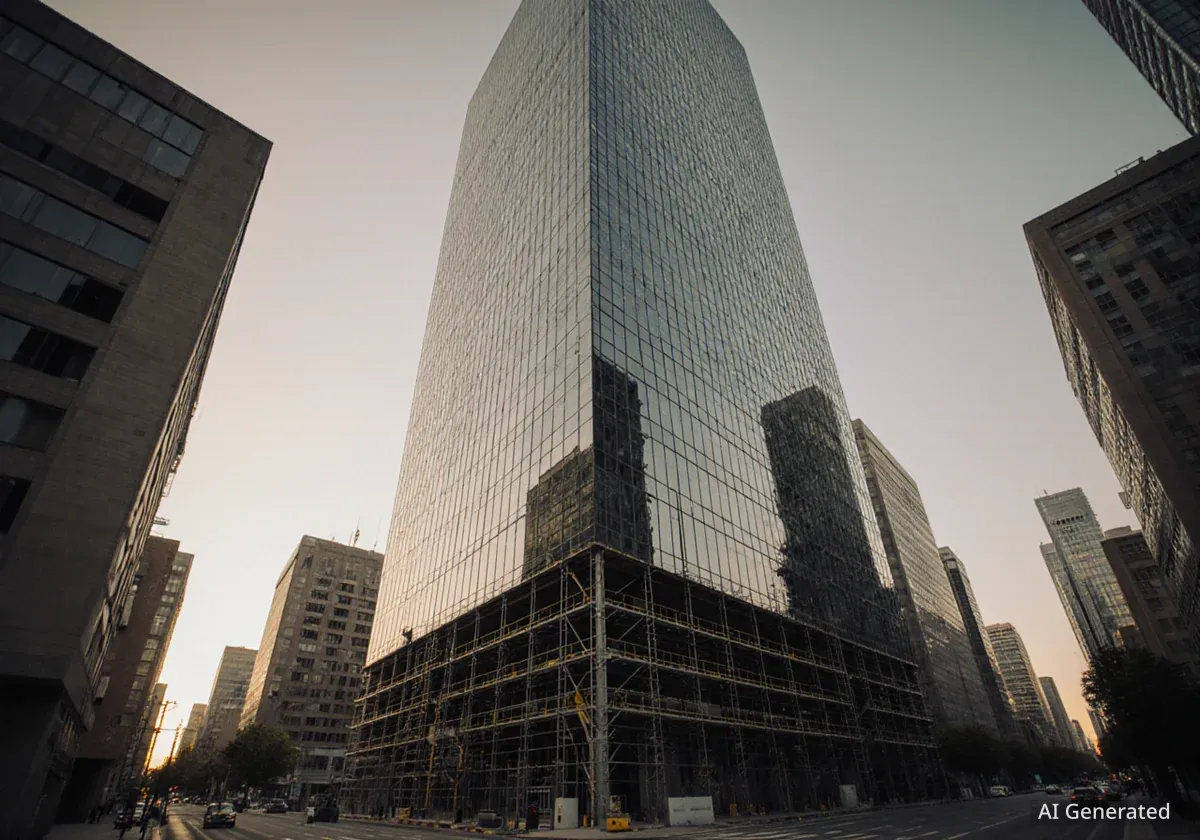

A monumental plan is taking shape for one of downtown St. Louis's most prominent vacant buildings. The 44-story former AT&T Tower at 909 Chestnut St. is the focus of a proposal to convert the massive office space into a vibrant residential hub.
Developer Charles Goldman is spearheading the ambitious project, which carries an estimated cost of over $350 million. The plan aims to introduce 600 new apartments, along with retail and restaurant spaces, breathing new life into a structure that has sat empty for more than eight years.
Key Takeaways
- A proposal seeks to convert the 44-story former AT&T Tower in St. Louis into 600 residential units.
- The project's estimated cost exceeds $350 million and includes plans for ground-floor retail and restaurant space.
- Developer Charles Goldman is seeking city and state financial incentives to support the large-scale conversion.
- The plan reflects a broader trend of repurposing vacant office buildings as demand for commercial space declines.
A New Vision for a Downtown Landmark
For nearly a decade, the imposing concrete and glass tower has been a silent fixture in the St. Louis skyline. As Missouri's fourth tallest building and its largest by square footage, its vacancy has been a significant challenge for downtown revitalization efforts.
Now, a new vision aims to transform it from a relic of corporate office culture into a modern living space. The proposed conversion would overhaul the building's interior to create hundreds of apartments, addressing the growing demand for downtown housing while tackling the city's surplus of empty commercial real estate.
The Challenge of Vacant Offices
The proposal for the AT&T Tower comes as cities across the country grapple with historically high office vacancy rates. The shift to remote and hybrid work models has left many large commercial buildings underutilized, prompting developers and city planners to explore adaptive reuse projects like residential conversions.
City officials, including Alderman Rasheen Aldridge, have toured the site to understand the scope of the project. The conversation reflects a growing urgency to find solutions for the city's vacant properties. "There’s so much momentum happening downtown and in the region as a whole," Aldridge noted. "We have a lot of vacant buildings downtown so how do we have those conversations?"
Details of the Proposed Transformation
The plan outlined by Charles Goldman is one of the most significant redevelopment proposals in the city's recent history. The creation of 600 residential units would dramatically increase the housing supply in the city's core.
Beyond the apartments, the project includes essential amenities designed to create a self-contained community within the tower. Plans call for the integration of onsite parking and what are described as world-class residential amenities. The addition of new restaurant and retail options on the lower floors is intended to serve both residents and the wider downtown community.
By the Numbers: AT&T Tower Project
- Height: 44 stories
- Proposed Units: 600 apartments
- Estimated Cost: Over $350 million
- Time Vacant: More than 8 years
The sheer scale of the building presents both a unique opportunity and a considerable challenge. Converting a structure designed exclusively for office use into functional, desirable living spaces requires extensive architectural and engineering work, contributing to the project's high price tag.
Securing a Financial Foundation
A project of this magnitude requires a complex financial strategy. Goldman has been transparent about the need for public-private partnerships to make the numbers work. The development team is actively seeking incentives from both the city of St. Louis and the state of Missouri to help offset the more than $350 million cost.
A key part of this effort involves working with state legislators on a proposal to create new tax credits specifically for converting commercial buildings to residential use. Such incentives are seen as crucial for encouraging developers to take on these difficult and expensive projects.
"As a city and as a state if we can drive demand through public safety and public infrastructure improvements and creating a more predictable framework for development tools, St. Louis Missouri may be uniquely poised for growth," Goldman explained.
He emphasized that a stable and supportive environment for development is essential to attract the necessary capital and jobs to the region. The success of the AT&T Tower conversion could serve as a model for other vacant properties in the city.
A Potential Catalyst for Downtown St. Louis
Proponents believe the project could be a game-changer for downtown, creating a new center of gravity and bringing hundreds of new residents to the heart of the city. This influx of people would support existing businesses and attract new ones, contributing to a more vibrant 24/7 neighborhood.
Goldman sees the project as part of a larger puzzle for the city's future. He believes that with a strong foundation of public safety, infrastructure, and smart development policies, St. Louis can achieve significant growth.
"St. Louis has great potential and I think it’s poised for greatness," Goldman stated, expressing confidence in the city's trajectory. If the financial and logistical hurdles can be cleared, the transformation of 909 Chestnut St. could mark a pivotal new chapter for downtown St. Louis.