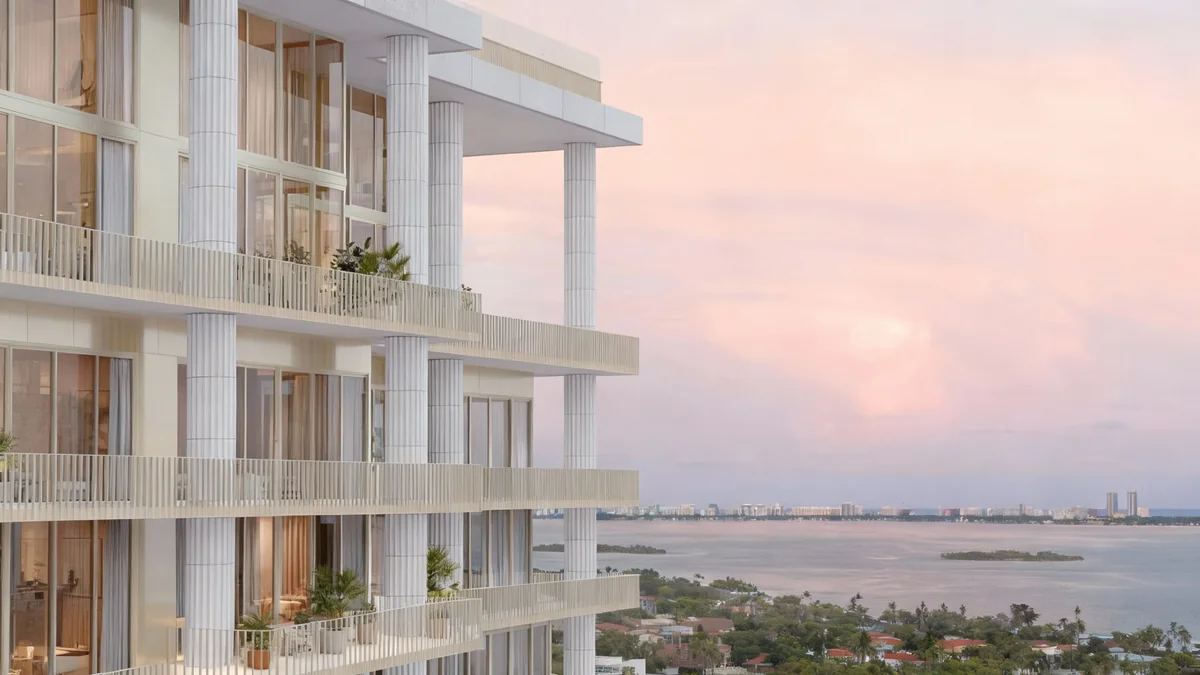




The vibrant Miami Design District is set to welcome its first residential development with the unveiling of the Miami Design Residences tower. This 26-story skyscraper, designed by the acclaimed David Chipperfield Architects, will introduce 143 luxury condominiums and a dedicated hotel section to the area.
Key Takeaways
- Miami Design Residences marks the first residential offering in the Design District.
- The 26-story tower features fluted ceramic columns designed to capture Miami's light.
- David Chipperfield Architects, a Pritzker Prize winner, leads the design.
- The project includes 143 condominiums and a luxury hotel.
A New Landmark for Miami's Design District
The Miami Design Residences tower will stand at 39 NE 39th Street, spanning nearly two acres. This development is a significant step for the Miami Design District, an area previously known for its retail and cultural projects.
The design comes from London-based David Chipperfield Architects, a firm recognized globally for its architectural clarity. David Chipperfield himself received the prestigious Pritzker Architecture Prize in 2023, underscoring the firm's reputation for excellence.
Project at a Glance
- Location: 39 NE 39th Street, Miami
- Height: 26 stories
- Residential Units: 143 condominiums
- Amenities: Luxury hotel levels, terraces, double-height lobby
- Architect: David Chipperfield Architects
Distinctive Ceramic Cladding and Terraced Design
Renderings of the Miami Design Residences show a building composed of two main volumes. A striking feature of the skyscraper is its exterior, which is entirely wrapped in terraces. White-colored, fluted ceramic columns run the full length of the building, creating a unique visual texture.
The design team emphasized the purpose of these columns. They are specifically crafted to "capture and reflect Miami's distinct light," giving the building a dynamic appearance throughout the day. Planters are also strategically placed around the terraces, adding greenery to the urban vertical landscape.
"The design is guided by David Chipperfield Architects' signature architectural clarity and expressed through bespoke ceramic exterior columns designed to capture and reflect Miami's distinct light," stated the development team.
The tower's crown and lobby areas will feature double-height floors, enhancing the sense of grandeur and openness. This attention to detail extends to the interiors, which will include custom cabinetry and other bespoke elements designed to align with the Design District's modern spirit.
The Miami Design District's Evolution
The Miami Design District has transformed into a major cultural and retail hub. It hosts a range of high-end stores and art installations. Recent additions include a retail development by Kengo Kuma and new stores for luxury brands like Bvlgari and Cartier. The introduction of residential spaces marks a new phase in the district's growth, creating a live-work-play environment.
Collaborative Development and Future Impact
The project is a collaborative effort involving several prominent firms. Local firm Fort Partners is leading the development, alongside equity firm Raycliff Capital, the local Miami Design District Associates, and global investment firm Constellation Hotels Holding.
This residential tower represents David Chipperfield's first residential project in Florida. Its construction is currently underway, adding to Miami's rapidly expanding skyline. The city is experiencing a boom in skyscraper construction, with several other notable projects in progress.
These include Miami's first supertall skyscraper and an Arquitectonica tower featuring a unique "solar backbone." The Miami Design Residences will contribute significantly to the city's architectural landscape, blending luxury living with a distinctive design aesthetic.
The development aims to enhance the district's appeal, providing residents with direct access to its avant-garde atmosphere, high-end shopping, and cultural experiences. This move to integrate residential offerings into the Design District reflects a broader urban trend toward creating self-contained, vibrant communities.
The use of materials like ceramic, combined with a focus on light and natural elements, positions the Miami Design Residences as a thoughtful addition to the city's modern architecture. It underscores a commitment to design quality in a rapidly evolving urban environment.
The project's success could further cement the Miami Design District's reputation as a prime location for luxury lifestyle and cutting-edge design, attracting both residents and visitors alike.