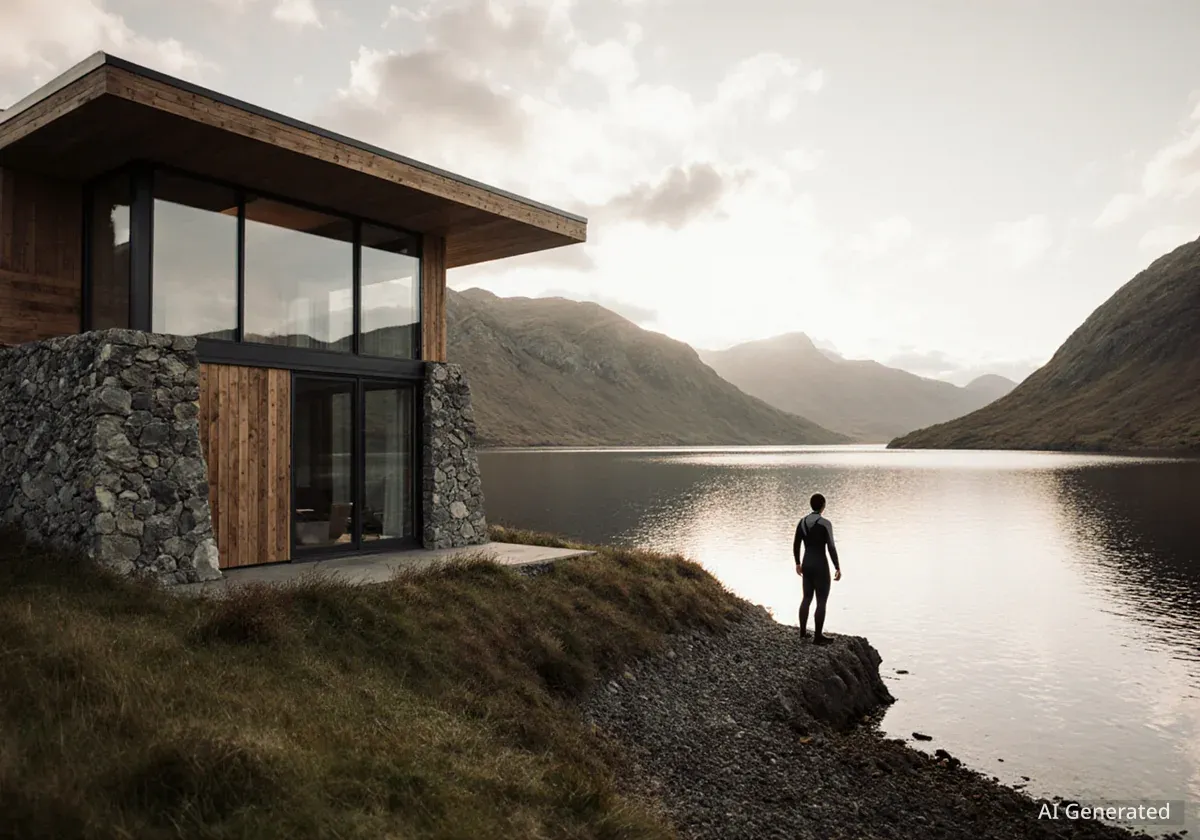




Anne Buchan, 64, and her partner Jim Williamson, 56, have fulfilled their long-held ambition of building a custom home on Scotland's scenic west coast. The couple invested approximately £330,000 to construct their two-bedroom, 1,200 sq ft property overlooking Loch Carron, near the village of Plockton. This move represents a significant lifestyle change from their previous life in Peterhead, an east coast hub for the oil and gas industry.
Key Takeaways
- Couple built a custom home on Scotland's west coast for £330,000.
- The property is a 1,200 sq ft, two-bedroom house with a home office.
- They secured a unique lochside plot after a previous croft offer fell through.
- The home features solar panels, underfloor heating, and triple glazing for efficiency.
- The west coast location offers a microclimate and vibrant cold-water diving opportunities.
From East Coast Industry to West Coast Tranquility
Before their move, Buchan worked as a civil engineer and Williamson as a rope access specialist in Peterhead. Their shared passion for cold-water scuba diving drew them to Scotland's west coast four times a year. Buchan noted the area's superior scenery and weather as key attractions.
The perception of cold-water diving as dark and gloomy is often mistaken. According to Buchan, the underwater environment on the west coast is vibrant and diverse. Divers can encounter colorful species such as lumpsuckers, scorpion fish, and pipefish. The area also hosts nudibranchs, lobsters, various crabs, crayfish, and unique corals like dead man's fingers and maerl.
Diving Delights
- Colorful Fish: Lumpsuckers, scorpion fish, pipefish.
- Invertebrates: Nudibranchs (sea slugs), lobsters, multiple crab species, crayfish.
- Marine Flora: Dead man's fingers (coral), anemones, maerl (coral-like seaweed).
The Search for the Perfect Plot
The pandemic accelerated their plans to relocate. Working from home became more common, allowing them to pursue their dream in 2020. However, finding land on the west coast proved challenging. "Finding a plot of land on the west coast is quite hard, because almost everybody wants to live there since Covid — it’s become very popular," Buchan explained.
Buchan proactively searched local authority portals for plots with existing planning permission. She contacted applicants to express her interest, ensuring she would be remembered if a plot became available. This persistent approach eventually paid off.
Overcoming Crofting Rules and Design Challenges
In 2021, a solicitor offered them a croft on the Lochcarron estate. This land, near Plockton, consisted of two half-acre plots. Crofting rules required buyers to keep animals or grow vegetation, and the land ownership remained with the estate. "Obviously we weren’t too keen on that," Buchan stated.
Six months later, the solicitor contacted them again. A crofter had bought one plot, and the other half, located on the shore, could be "decrofted," meaning it would be fully owned. The couple paid £100,000 for this half-acre plot.
What is Crofting?
Crofting is a traditional system of land tenure unique to the Scottish Highlands and Islands. Crofters typically rent small plots of land from a landlord, often in communities called 'crofting townships.' They have the right to cultivate the land and keep livestock, but strict rules govern its use and transfer. Decrofting allows a crofter to purchase their tenancy, converting it to full ownership, subject to certain conditions.
Customizing the Dream Home
The purchased plot came with planning permission for a four-bedroom, 1,600 sq ft stone house with a turf roof. The couple engaged Highlands-based architect Fraser Stewart to modify these plans. They opted for a smaller, two-bedroom house with a home office, reducing the size to 1,200 sq ft.
A key request was to reorient the layout to maximize loch views from the main bedroom, living room, and dining room. Buchan preferred a sedum roof, known for its vibrant colors, over a turf roof. To manage costs, they changed the exterior cladding from stone to Scottish larch.
The Construction Journey and Sustainable Living
Construction began in September 2022. The first step involved building a garage to house the essential infrastructure for electricity and water. They then constructed a two-bedroom log cabin on-site to live in during the build, avoiding what Buchan called the "ugly" appearance of a caravan.
Fleming Homes supplied the prefab timber-frame house, delivered in January 2024. The company made it windtight and watertight within three weeks. The remaining work was completed by September 2024, bringing the total project cost to £330,000. The couple saved approximately £15,000 by purchasing their own bathroom fittings and undertaking all the painting and decorating themselves.
"Often the house is 25C inside with no heating at all, [just] from the solar gain."
— Anne Buchan on her home's efficiency
Energy Efficiency and Microclimate Benefits
The new home is designed for warmth and efficiency. It features a wood-burner, underfloor heating, and triple-glazed windows. Ground-mounted solar panels significantly reduce energy bills. Buchan noted that the house often maintains an internal temperature of 25°C purely from solar gain, without any additional heating.
The village of Plockton benefits from a unique microclimate, warmed by the Gulf Stream, leading to the presence of palm trees. Buchan stated, "It's renowned for its microclimate." She explained that while much of Scotland experienced darkness in January and February, Plockton often had sunshine. The Isle of Skye acts as a natural barrier, often dissipating bad weather from the Atlantic before it reaches Plockton.
A New Life and Thriving Community
Now settled, Buchan describes their new life as "paradise." The large windows and panoramic views make the 1,200 sq ft house feel incredibly open. "We can lie in bed and watch the sunrise in the morning, and sit in the lounge and watch the sunset in the evening," she shared.
Buchan has since retired, finding her previous job less stressful simply by observing the loch and its wildlife. She enjoys kayaking and regularly sees otters, humpback whales, and dolphins. She swims and dives year-round, appreciating the close-knit local diving community.
Wildlife Sightings
- Otters
- Humpback whales
- Dolphins
Career Change and Community Spirit
Jim Williamson, 56, also changed careers after the move. His previous job in Peterhead involved challenging rope access work at heights. He now works as an HGV driver, transporting goods through scenic areas like Skye, Plockton, and Glenelg. "His health has improved. He actually enjoys his work most of the time, because he’s driving around really scenic areas... and meets people. They’re generally friendlier on the west coast," Buchan said.
Despite the remote location, the couple has found a strong sense of community. They hosted 30 neighbors for Hogmanay, a stark contrast to their nine years in Peterhead where they knew only three neighbors by name. Their new life on the west coast offers both peace and a vibrant social connection.