


A proposed ballroom project at the White House has raised significant questions regarding its projected cost, scale, and the speed of its initial demolition work. Estimates suggest the project could reach a staggering $3,333 per square foot, a figure experts describe as astronomically high for construction.
Key Takeaways
- Projected cost of $300 million for a 90,000 square foot ballroom.
- Cost per square foot estimated at $3,333, significantly above industry norms.
- Discrepancies noted between exterior renderings and interior room dimensions.
- Concerns raised about rapid demolition of the East Wing and potential lack of oversight.
- Questions persist regarding funding sources and project transparency.
Unpacking the Staggering Price Tag
The proposed White House ballroom project carries an estimated budget of $300 million for a planned 90,000 square foot facility. This equates to a cost of approximately $3,333 per square foot. Industry professionals have highlighted this figure as exceptionally high, with even luxury construction rarely exceeding $1,000 per square foot.
Such a substantial cost per square foot has led to scrutiny. The discrepancy between the projected budget and typical construction expenses has become a central point of discussion among architectural experts and the public.
Fact Check
Standard luxury construction costs typically fall well below $1,000 per square foot, making the $3,333 per square foot estimate for the White House ballroom project stand out significantly.
Size and Scale: A Closer Look at the Dimensions
Renderings depict a building in a classical style, reportedly adhering to the Golden Ratio, with a footprint measuring approximately 380 feet by 235 feet. However, a closer examination reveals potential inconsistencies.
The primary function of the facility is stated to be a ballroom capable of accommodating 999 people. With a comfortable allowance of 20 square feet per person, the actual ballroom space would require about 20,000 square feet. Even with generous allocations for support functions (10,000 square feet) and pre-function areas (10,000 square feet), the total functional space reaches only 40,000 square feet.
This leaves a substantial 50,000 square feet unaccounted for within the proposed 90,000 square foot structure. Furthermore, interior renderings show a main room of roughly 200 by 100 feet, which is significantly smaller than what the exterior dimensions suggest, being about 4.5 times larger than the interior view.
"The renderings of the building exterior and interior don't match. The interior shows a room of about 200x100. The exterior is 4.5 times that size."
Historical Context
The East Wing, which was demolished for this project, was originally added in 1902. It housed various offices and served as an important functional area of the White House complex for over a century.
Rapid Demolition and Environmental Concerns
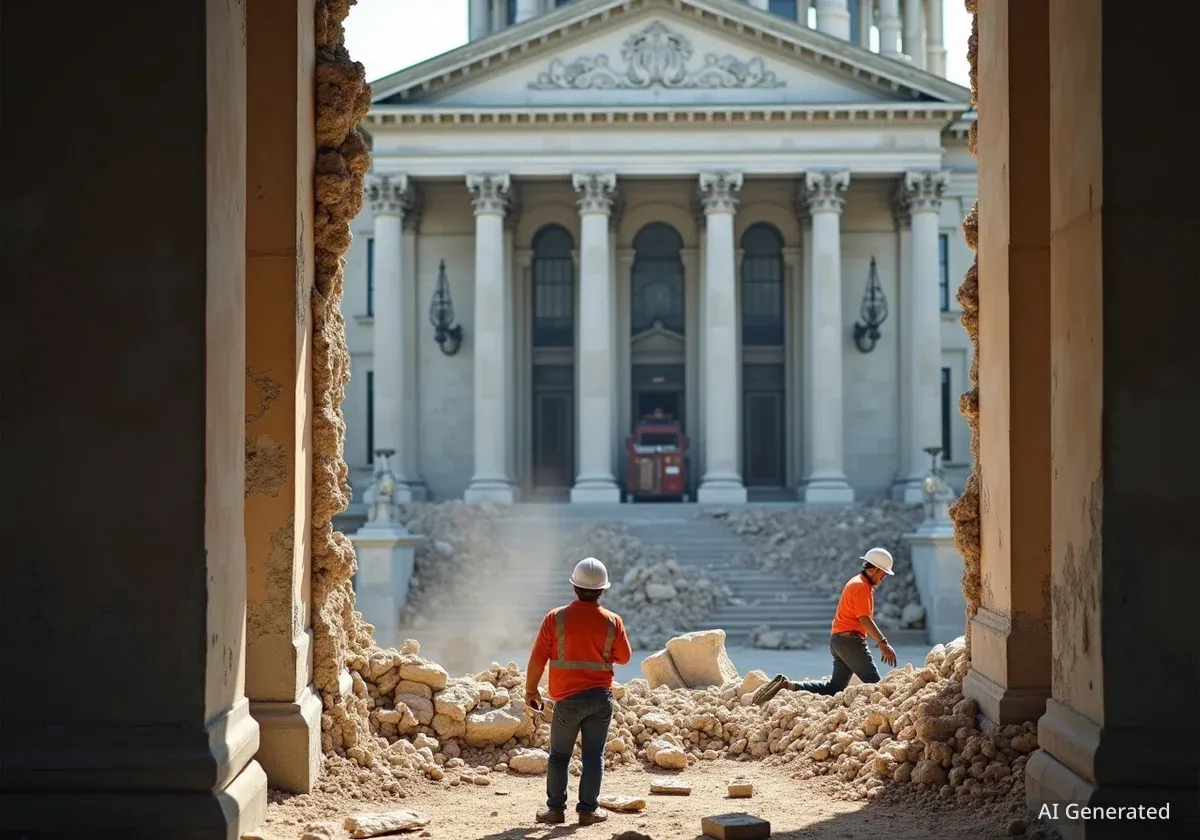
The demolition of the White House East Wing proceeded with remarkable speed, reportedly taking only days. This swift action has fueled speculation about the motivation behind such a rapid timeline and the potential bypass of standard procedures.
Given the age of the East Wing, constructed in 1902, concerns have been raised about the presence of hazardous materials like asbestos and lead paint. While some images showed water being sprayed during demolition, a method used for asbestos mitigation, experts note this is an older technique and may not meet current safety standards, as visible dust clouds were also reported.
The White House Historical Association stated that they had created a historic record of the East Wing through digital scans and photographs before demolition. They also affirmed that historic artifacts were preserved and stored.
Unanswered Questions on Permits and Planning
The rapid demolition has also led to questions regarding necessary permits, architectural plans, and environmental assessments. Typically, projects of this scale require extensive planning, soil tests, and multiple levels of approval before construction or demolition begins. The apparent speed of the East Wing's removal suggests these steps might have been expedited or overlooked.
- No public information on permit applications.
- Lack of detailed architectural drawings or structural plans.
- Concerns over proper lead and asbestos abatement procedures.
Funding and Oversight: A Public or Private Endeavor?
The funding mechanism for this ambitious project remains a critical point of contention. Initial discussions suggest that the money for the ballroom is not being sourced from government funds but rather from private donations. This arrangement raises significant questions about transparency and accountability.
Private donations typically mean less congressional oversight and fewer requirements for public accounting of funds spent. This lack of transparency creates an environment where opportunities for financial impropriety could arise.
Previous Financial Settlements
The Trump Organization and the Presidential Inaugural Committee previously paid $750,000 to settle with the Washington, DC, attorney general's office regarding funds used in the 2017 inauguration, highlighting past issues with financial oversight.
The White House: The People's House
Many see the White House as a symbol of American democracy and refer to it as "The People's House." The extensive and rapid alterations to a historic wing, coupled with the high costs and lack of transparency, have sparked debate about the appropriate use and stewardship of such a national landmark.
The project's scale and the fast-tracked demolition have led some to believe that the intent was to prevent public opposition or intervention. The transformation of a functional wing into a vast, privately funded ballroom raises fundamental questions about who ultimately controls and benefits from modifications to this iconic American structure.
As the project moves forward, the public awaits more clarity on its true purpose, financial details, and the long-term implications for one of the nation's most important historical buildings.