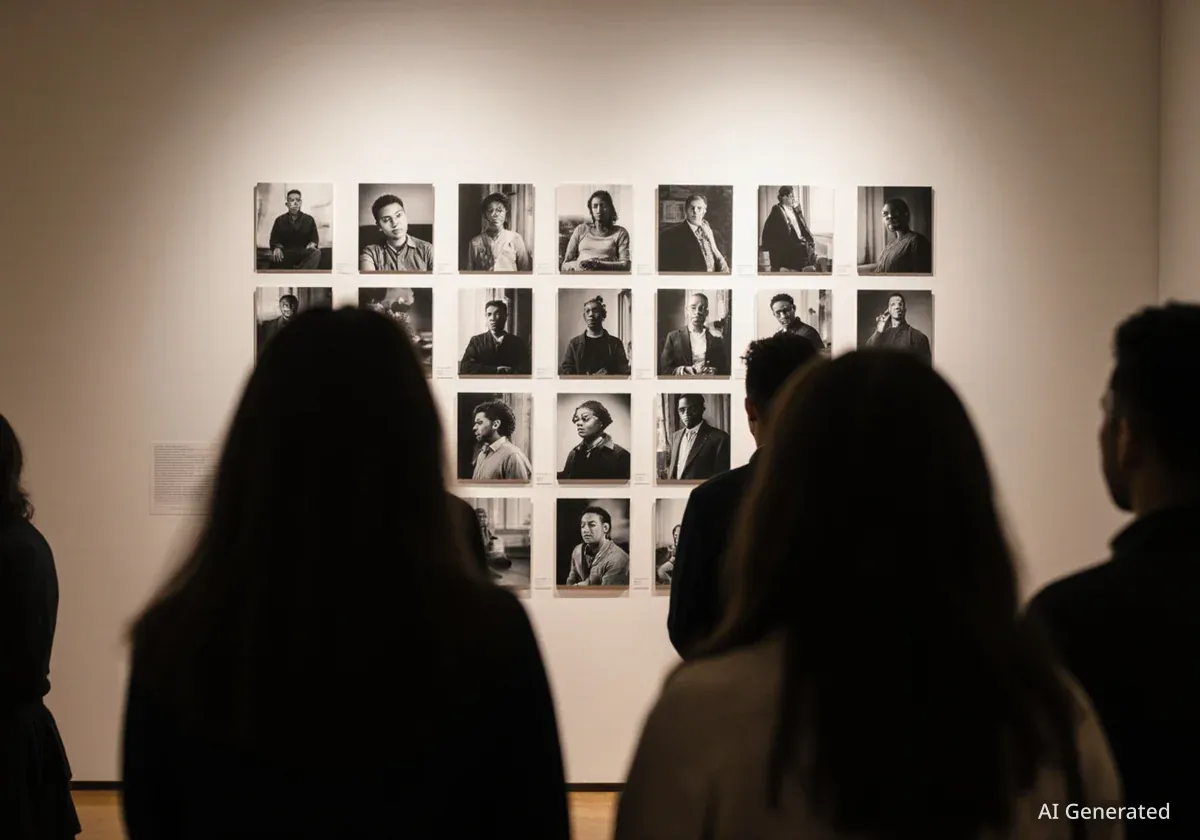




An influential photographic work, Nan Goldin's 'The Ballad of Sexual Dependency,' is now on full display in London for the first time. The Gagosian gallery is exhibiting all 126 prints from the iconic book, offering a rare opportunity to experience the complete narrative of Goldin's intimate portrayal of her community.
Key Takeaways
- All 126 prints from Nan Goldin's 'The Ballad of Sexual Dependency' are on view at Gagosian in London.
- This marks the first full exhibition of the work in the United Kingdom.
- The 'Ballad' originated as a slideshow performance before its 1986 book publication.
- Goldin's work challenged perceptions of personal experience and color photography in serious art.
A Deep Dive into Personal Histories
Published by Aperture in 1986, 'The Ballad of Sexual Dependency' quickly became one of the most significant photo books of its era. It chronicles Goldin's life and the lives of her friends across various cities, including New York, Chicago, London, Berlin, and Mexico City. The photographs capture moments of love, loss, desire, and heartbreak, creating a deeply personal and immersive experience for the viewer.
The collection offers a raw, unfiltered look into a specific time and place, primarily focusing on queer communities deeply affected by the AIDS crisis. However, Goldin has often corrected interpretations of her work, stating that it is not about marginalized people.
"We were never marginalized because we were the world," Goldin told the Museum of Contemporary Art Los Angeles in 2013. "We didn’t care what straight people thought of us. We had no time for them, they didn’t show up on our radar, so we weren’t marginalized from anything."
This statement underscores the artist's perspective, emphasizing the self-contained nature and internal validity of her community's experiences.
From Slideshow to Influential Book
Before its publication as a book, 'The Ballad' existed as a dynamic slideshow. Goldin would present these images, synchronized with music by artists like The Velvet Underground and Dionne Warwick, in nightclubs across New York. This original format provided a fleeting, intense emotional experience for audiences.
Interesting Fact
The slideshow version of 'The Ballad of Sexual Dependency' featured several hundred images, significantly more than the 126 prints included in the published book.
The images would flash across the screen, showing friends on beaches, in beds, or simply gazing into the distance. Cigarette smoke often filled the air in these scenes. The narrative captured the lives of her circle, including the love story, marriage, and eventual deaths of her best friend Cookie and her husband.
The Live Performance Aspect
Katherine A. Bussard, curator of photography at the Princeton University Art Museum, highlighted the unique nature of the early slideshows. The museum recently acquired a version of this format.
"The slideshow originally was really a live performance. So it was the artist standing there, dropping the slides in, DJing the soundtrack…for those who have seen it that way, they talk about the alive feeling of that experience," Bussard explained.
This element of live performance added another layer of intimacy and immediacy, making each viewing a distinct event. The transition to a book offered a different, self-guided rhythm for engagement.
Challenging Artistic Norms
The book itself creates a unique form of intimacy. Bussard noted that the table of contents often uses song titles, suggesting a musical accompaniment for readers. Unofficial Spotify playlists have even emerged to enhance this experience.
Goldin's approach was groundbreaking for its time. In the 1970s and 80s, there was skepticism about whether deeply personal experiences could form the basis of "serious art." Additionally, color photography was not widely accepted in the realm of fine art.
Artistic Context
Goldin's work helped to break down two major barriers in the art world: the idea that personal lived experience was not suitable for serious art, and the perception that color photography was less artistic than black and white.
Styled like casual snapshots, 'The Ballad' challenged both these conventions. It demonstrated that art could be both profoundly personal and presented in vibrant color, pushing the boundaries of what was considered acceptable or significant in photography.
Memory and Emotional Resonance
The visual style of Goldin's photographs often evokes familiar feelings. The compositions, subjects, and even the occasional blur of the camera can remind viewers of their own personal photographs or family albums.
However, Bussard pointed out a crucial difference. "People don’t make family albums about heartbreak. They didn’t pull out the Kodak camera to record moments of despair or longing or upset or death… so at the same time that the ‘Ballad’ is leaning into snapshots, it’s also changing them into something more expansive."
Goldin herself has written about the power of memory, describing it as "an invocation of the color, smell, sound, and physical presence, the density and flavor of life." This quote, often revisited by Bussard, highlights the sensory richness Goldin aimed to capture.
"When we remember something, we don’t turn it to black and white," Bussard concluded. "We remember things in color, and we remember them often with sound." This sentiment perfectly encapsulates the vivid, emotional impact of Goldin's enduring work.