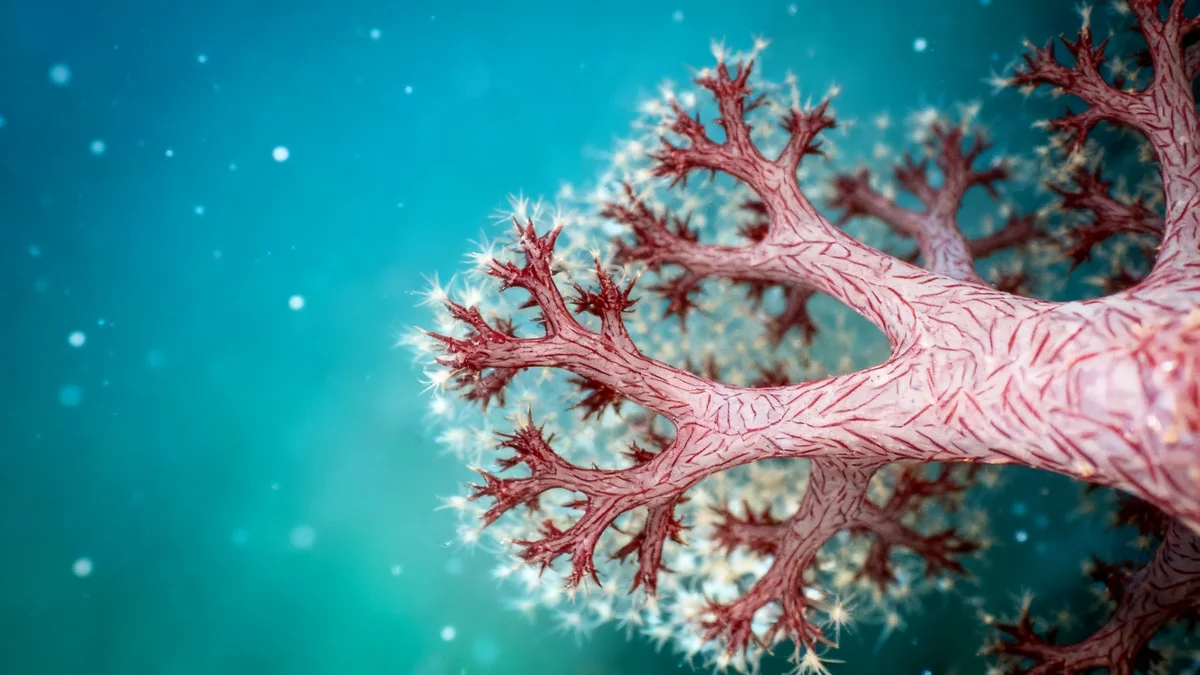

The seventh annual Close-up Photographer of the Year (CUPOTY) awards recently celebrated the intricate beauty of the natural world. Australian photographer Ross Gudgeon took the top prize for his striking image of a cauliflower soft coral, captured from within its delicate structure in Indonesia's Lembeh Strait. The competition drew over 12,000 entries from 63 countries, highlighting diverse subjects from tiny insects to abstract plant forms.
Key Takeaways
- Ross Gudgeon's "Fractal Forest" won the overall Close-up Photographer of the Year award.
- The competition received over 12,000 entries from 63 countries.
- Categories included Animals, Insects, Arachnids, Underwater, Plants, Fungi, and a Young Photographer award.
- Several winning images highlighted environmental themes, including species returning due to improved water quality.
- Young photographers showed remarkable talent, with a 14-year-old Indian photographer winning the youth category.
Overall Winner Captures Coral's Hidden World
Ross Gudgeon's winning photograph, titled "Fractal Forest," offers a unique perspective on a cauliflower soft coral. He captured the image from inside the coral using an extended macro wide lens. The photograph was taken in the Lembeh Strait, Indonesia, a renowned location for underwater macro photography due to its high biodiversity.
The coral, named for its numerous small, rounded polyps, presented a challenging subject. Gudgeon's technique allowed him to reveal an unseen aspect of this familiar marine creature. The Lembeh Strait is a favorite among divers seeking unusual and wonderful underwater life, despite its proximity to a large modern port.
"This was the toughest competition yet," said Tracy Calder, co-founder of the competition. "Of Gudgeon’s winning image, she said it 'embodies everything close-up photography can achieve — it shows us a perspective we’ve never seen before and reveals hidden beauty in a familiar subject. The judges were captivated.'"
Competition at a Glance
- Entries: Over 12,000
- Participating Countries: 63
- Categories: 11, including Animals, Insects, Underwater, and Fungi.
- Top Prize: £2,500 (approximately $3,420 USD)
Environmental Stories Through the Lens
Many photographs in the competition did more than just capture beauty; they also told important environmental stories. The winner of the Insects category, Imre Potyó, photographed a swarm of mayflies over the Danube River in Hungary. His image, "Blue Army," highlighted the return of the endangered Danube mayfly, which had disappeared from rivers in Central Europe due to water pollution.
Potyó's photograph was taken during the summer of 2024 from within the river. He observed millions of mayflies overwhelming people along the river during a period of hot, dry weather. The artificial lights of the town of Szentendre drew the insects in, creating both a spectacular and alarming scene.
The photographer noted that the mayflies, attracted by the lights, circled for extended periods and sadly perished on the asphalt below. This image serves as a powerful reminder of how human activity can impact natural cycles, even in positive environmental recovery stories.
The Danube Mayfly's Return
The endangered Danube mayfly has made a remarkable return to the Danube River. This comeback is largely attributed to improved water quality after decades of pollution. The species' re-emergence is a positive sign for the river's ecosystem, showcasing the impact of conservation efforts.
Diverse Subjects and Hidden Lives
The awards showcased a wide array of subjects, from the macro world of arachnids to the subtle beauty of fungi and plants. Artur Tomaszek's "Dinner" won first prize in the Arachnids category, depicting a lynx spider feeding on termites in Hong Kong. These nocturnal predators ambush their prey, and Tomaszek's image captured one spider with two or three termites at once.
In the Fungi category, Valeria Zvereva's "Mushroom in the Nude Style" captured the delicate lower parts of a lamellar mushroom in Moscow, Russia. Barry Webb's image of tiny Cribraria rufa slime molds, only 1.5mm tall, earned second place in the same category. This image was a composite of 103 photographs, carefully stacked to bring the entire mold into sharp focus.
Invertebrate Portraits and Underwater Wonders
Laurent Hesemans won the Invertebrate Portrait category with "Good Boy," a photograph of a moth from the Bombycidae family in Costa Rica. Another notable entry in this category was Wayne Sayers' image of a female heather crab spider guarding her eggs in Dorset, England. The colorful spider lives among heathland and displays this protective behavior.
Underwater photography also featured prominently. Daniel Sly's image of an orange painted frogfish, taken in the Lembeh Strait, secured second place in the Underwater category. The photograph highlights the frogfish's camouflage as it prepares to pounce on prey. Luis Arpa's "Featherhome" showed a crinoid shrimp clinging to a feather star in Bali, earning third place in the same category.
Young Talent Shines Bright
The competition also recognized the talent of young photographers. Rithved Girish, a 14-year-old from India, won the Young category with his image of stingless bees guarding their nest entrance in Mezhathur, Kerala. His photograph beautifully captured the intricate social behavior of these small insects.
Jameson Hawkins-Kimmel, a 14-year-old American photographer, received third place in the Young category for "Emerald Glow," an image of a Cuban tree frog in his Florida backyard. Another young talent, 17-year-old Gaspard Buriez from France, captured a dragonfly in a meadow from a unique low angle in his image "In the Rain." These young artists demonstrate a keen eye for detail and a deep appreciation for the natural world around them.
The Close-up Photographer of the Year awards continue to inspire and showcase the extraordinary details of life often overlooked. The winning images serve as a testament to both photographic skill and the endless wonders of nature, encouraging viewers to look closer at the world.