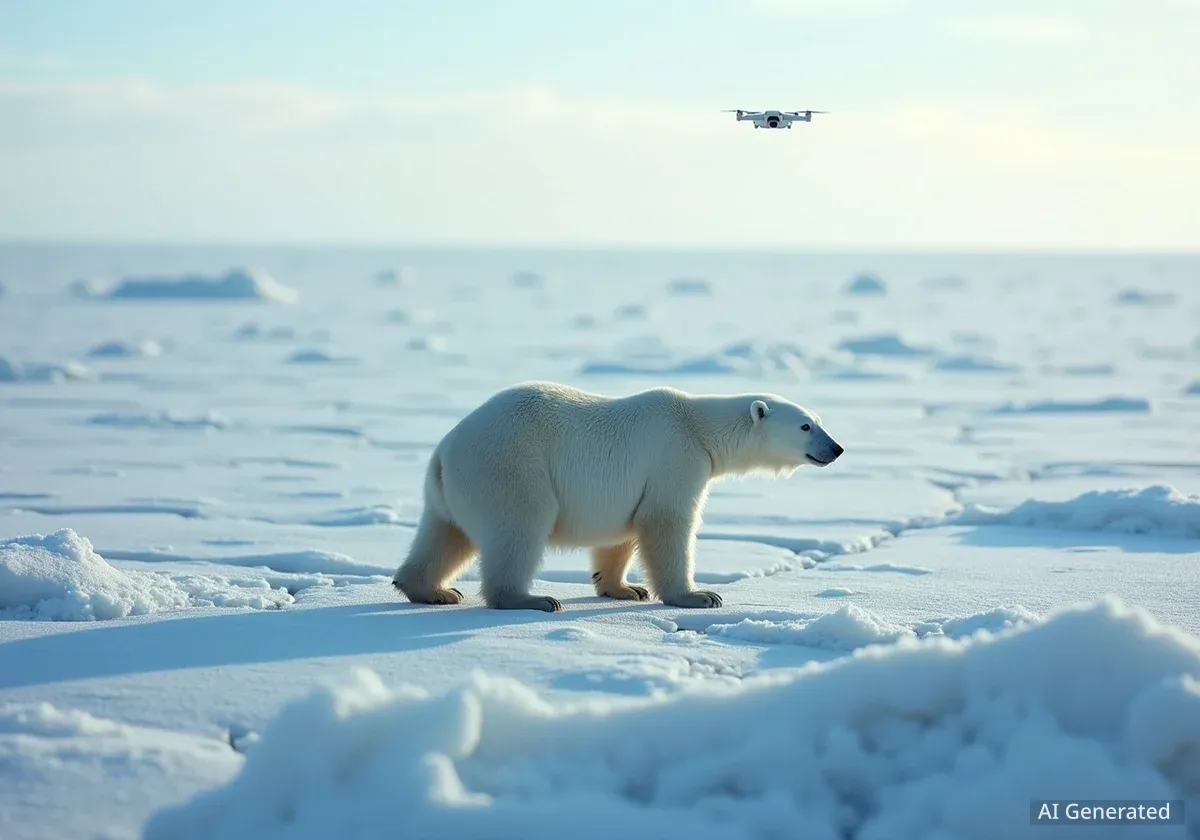


In response to growing concerns over photographers disturbing Arctic wildlife, Polar Bears International has released the first-ever set of guidelines for operating drones near polar bears. The move aims to protect the animals from unnecessary stress and ensure the safety of both bears and people in their remote habitat.
The new protocols were developed after consultations with researchers and photographers, addressing a regulatory gap for a technology that has become increasingly popular for capturing dramatic wildlife imagery. Officials emphasize that while spectacular photos can inspire conservation, they should never come at the expense of an animal's well-being.
Key Takeaways
- Polar Bears International has published new guidelines for using drones to photograph polar bears in the Arctic.
- The rules are a response to concerns that photographers, seeking viral content, are causing stress to wildlife.
- The guidelines focus on preventing biological disturbance to bears and ensuring the safety of drone operators.
- Experts warn against desensitizing bears to drones, which could compromise their use as a future safety deterrent.
- The rules call for operators to recognize subtle signs of stress in bears and to maintain safe distances, especially from vulnerable animals.
A Response to a Modern Problem
The proliferation of high-quality, affordable drones has opened up new possibilities for wildlife photography. However, it has also introduced new challenges. According to officials at Polar Bears International, the pressure to capture unique, shareable content for social media has led some operators to take risks that can negatively affect wildlife.
Erinn McNicol, the organization's Senior Manager of Communications, noted a trend of photographers pushing boundaries. "As the social media world has become noisier," some have gone "a little too far" in pursuit of a viral shot. The new guidelines are designed to create a clear standard for responsible behavior.
The organization has long supported ethical tourism as a way to foster appreciation for the Arctic ecosystem. "Seeing polar bears in the wild and learning about where they live and the challenges they face can inspire people," McNicol explained. "But we also have to make sure the bears aren’t disturbed in a biologically meaningful way, and that people and bears remain safe."
The Biological Cost of a Photograph
For a polar bear, every calorie counts. Unnecessary energy expenditure can have serious consequences, particularly in a harsh environment where food can be scarce. The new guidelines are centered on preventing any drone activity that might cause a bear to alter its natural behavior, such as running away or abandoning a meal.
Raymond Friesen, a research support specialist with the organization, highlighted that disturbance isn't always obvious. While a bear fleeing is a clear sign of distress, more subtle indicators are just as important.
"Running away is an obvious sign, but we also look at more subtle signs of stress, like vocalizing or yawning," McNicol stated.
The guidelines specifically advise operators to avoid flying drones near vulnerable bears. This includes mothers with young cubs, bears that are nursing or feeding, and individuals that appear to be in poor health. The goal is to minimize human impact on the most sensitive members of the population.
Recognizing Stress in Polar Bears
- Obvious Signs: Running away, charging, or making aggressive movements.
- Subtle Signs: Increased vocalizations (huffing, growling), repeated yawning, teeth chattering, or excessive grooming.
- Behavioral Changes: Stopping a natural activity like resting or feeding to watch the drone.
Protecting a Future Tool
Beyond the immediate welfare of the animals, there is another critical reason to avoid habituating polar bears to drones. Researchers believe these unmanned aircraft could one day serve as an effective tool for deterring bears from entering human settlements, potentially preventing dangerous encounters.
"It’s important not to desensitize polar bears to drones," said Friesen. If bears become too accustomed to the sight and sound of drones, they may no longer react to them, rendering them useless as a safety device.
"We still don’t fully understand how drones might affect bears, nor how they could be used as effective deterrents in the future," he added. "Establishing safe and responsible practices now will help protect both bears and people while keeping future opportunities open." This forward-thinking approach is crucial for long-term coexistence strategies in the Arctic.
Guidelines for Safe and Ethical Operation
The newly published rules provide clear, actionable advice for anyone planning to use a drone in polar bear territory. The recommendations cover everything from pre-flight checks to on-the-ground safety protocols.
A key principle is that the animal's welfare always comes first. "Great shots should never come at the expense of the animal," Friesen emphasized. "Respect comes first, always."
On-the-Ground Safety
Operating a drone requires intense focus, which can make an operator vulnerable in an environment with apex predators. The guidelines stress that no one should operate a drone alone. A team should consist of at least three people: the drone pilot, a dedicated bear monitor watching for signs of disturbance, and a guard equipped with deterrents who is scanning the wider area for other wildlife.
The guidelines also remind operators of their legal obligations. The Arctic is a complex airspace with frequent low-flying aircraft and numerous protected areas. Drone pilots are responsible for knowing and complying with all local regulations, which may include contacting air traffic controllers before launching.
The Responsibility of Professionals
Polar Bears International places a special emphasis on the role of professional photographers and filmmakers. Their work often sets the standard for what is considered acceptable practice among amateurs and hobbyists.
"Drone operators, pro or amateur, share the responsibility to keep wildlife safe," Friesen stated. "Pros especially. If you’re skilled or well-known, your images set the tone for what’s seen as acceptable."
By adhering to and promoting these ethical standards, professionals can help cultivate a culture of respect for wildlife that extends to the entire photography community. McNicol hopes the straightforward nature of the guidelines will encourage widespread adoption.
"We’re hoping that these easy-to-use guidelines will encourage ethical behaviors and reduce disturbance not just to the bears, but to other wildlife and other people who have come to enjoy this unique place," she concluded.