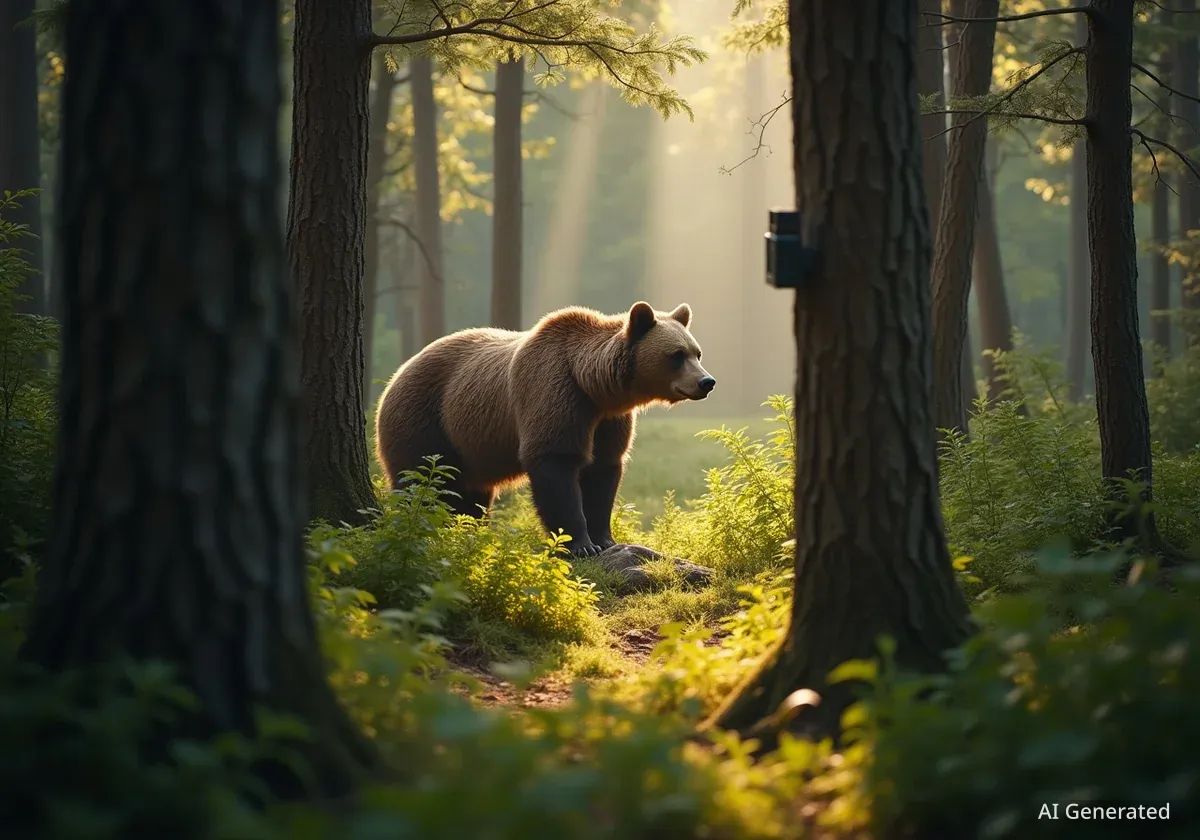


A brown bear has been captured on a trail camera in a Lithuanian forest, marking a significant moment for wildlife conservation in the region. The unexpected sighting near the Belarus border offers new hope for the species' re-establishment after its disappearance from the country in the 19th century.
Key Takeaways
- A brown bear was filmed by a trail camera in Lithuania's Šalčininkai district.
- This sighting suggests the species is making a return after being wiped out in the 19th century.
- The return of native species often indicates improving ecosystem health.
- Trail cameras play a crucial role in documenting elusive wildlife for conservation efforts.
Rare Sighting Confirmed by Trail Camera
Marek Kislovskij, a local photographer, set up trail cameras with the simple goal of observing nature. On March 31, one of his cameras recorded an astonishing image. It captured a brown bear moving through a forest in the Šalčininkai district, an area close to the Belarus border.
Kislovskij described his reaction to the discovery.
"When I came to check the camera, I couldn't believe what I saw at first," he stated. "I was really surprised to have captured such a shot and, of course, I was thrilled."
The photographer noted that no previous signs of bears, such as tracks, had been observed in this specific district. This makes the sighting even more remarkable. The presence of such a large predator without prior indication highlights the elusive nature of these animals.
Interesting Fact
Brown bears were last seen regularly in Lithuania during the 19th century. They were driven to extinction in the region due to extensive hunting and the loss of their natural habitats.
A Sign of Ecological Recovery
Increased bear sightings in Lithuania over recent years signal a positive trend. Wildlife experts view the return of native species as a strong indicator of an improving ecosystem. When a top predator like the brown bear re-establishes itself, it often means the entire food chain below it is also thriving.
The return of brown bears can have wide-ranging benefits. Native plant species flourish when ecological balance is restored, which in turn supports pollinator populations. A healthy food chain, from insects to apex predators, helps protect biodiversity, ensures a stable food supply, and improves water quality for all species, including humans.
This particular sighting is not just an isolated event. It contributes to a growing body of evidence suggesting that brown bears are slowly but surely returning to their historical territories in Lithuania. Conservationists have long hoped for this development.
The Role of Trail Cameras in Conservation
Trail cameras like Kislovskij's are proving indispensable tools for documenting endangered or elusive species. These devices provide scientists with vital data, including information on animal movements, population numbers, and habitat use. This data is critical for developing effective conservation strategies.
Recent examples from other regions underscore the importance of this technology. A lynx was documented in Colorado, offering insights into its presence in new areas. In Papua New Guinea, a New Britain goshawk was recorded for the first time in over 50 years, providing crucial evidence of its continued existence.
Historical Context
The brown bear population in Lithuania was eradicated by the 19th century. This was a direct result of human activities, primarily hunting and the destruction of their natural forest environments. The species has since been absent from the country for a significant period.
Hunters' Role in Conservation Efforts
Interestingly, local hunters in Lithuania have shown a commitment to protecting these animals. Reports indicate that hunters actively refuse to kill brown bears. This stance reflects a widespread awareness of the species' dwindling population and the desire to support its recovery.
This collaborative approach between wildlife enthusiasts, photographers, and local communities is essential. It creates an environment where rare species can thrive without constant threat. The respect shown by hunters is a powerful example of how different groups can contribute to conservation.
The re-emergence of the brown bear in Lithuania is more than just an exciting wildlife encounter. It symbolizes a hopeful future for the country's natural heritage. As these magnificent animals reclaim their place in the forests, it suggests that the broader ecosystem is regaining its health and vitality. This ongoing natural process will likely reveal even more about the thriving wild populations in the region.
- The brown bear is Europe's largest land predator.
- Their diet is omnivorous, consisting of berries, roots, insects, and small mammals.
- Brown bears are known for their solitary nature, especially males.
- A healthy bear population indicates a rich and diverse forest ecosystem.