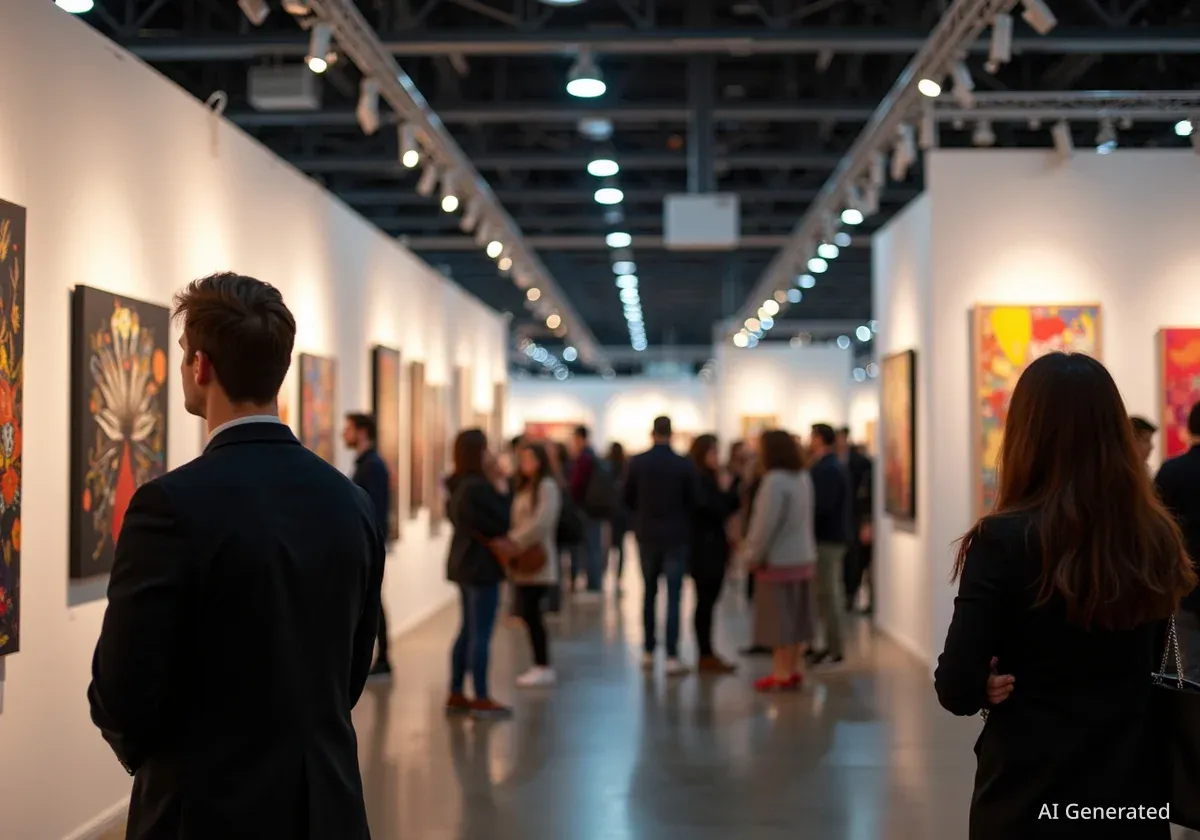
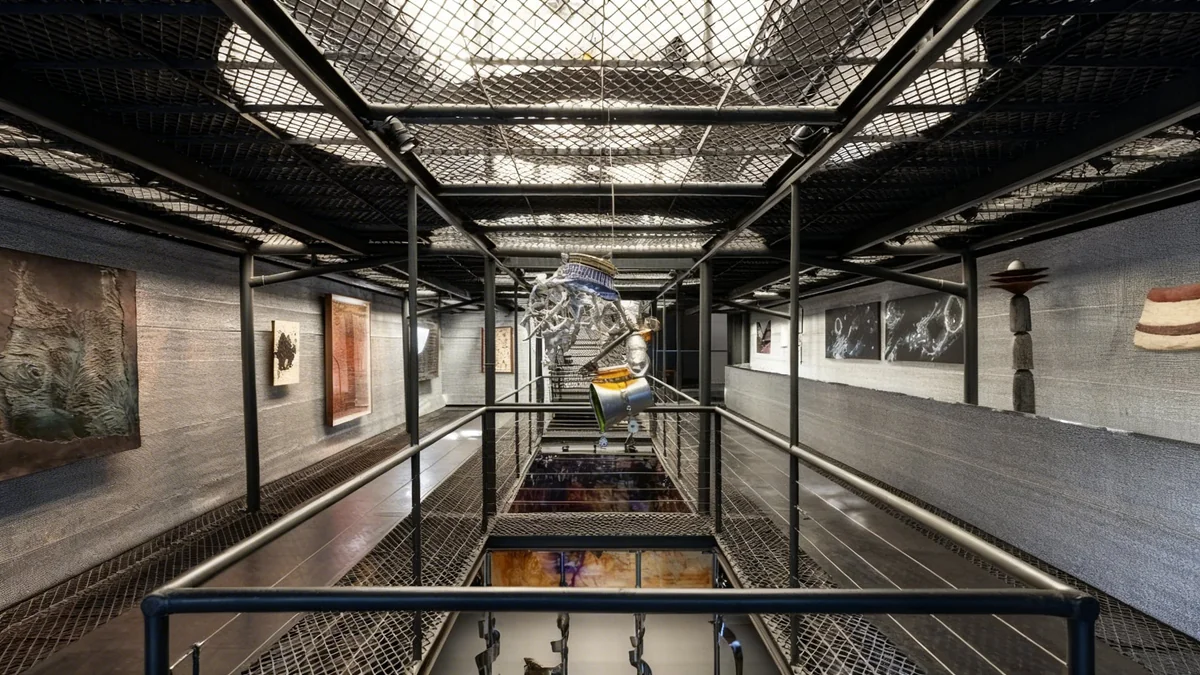
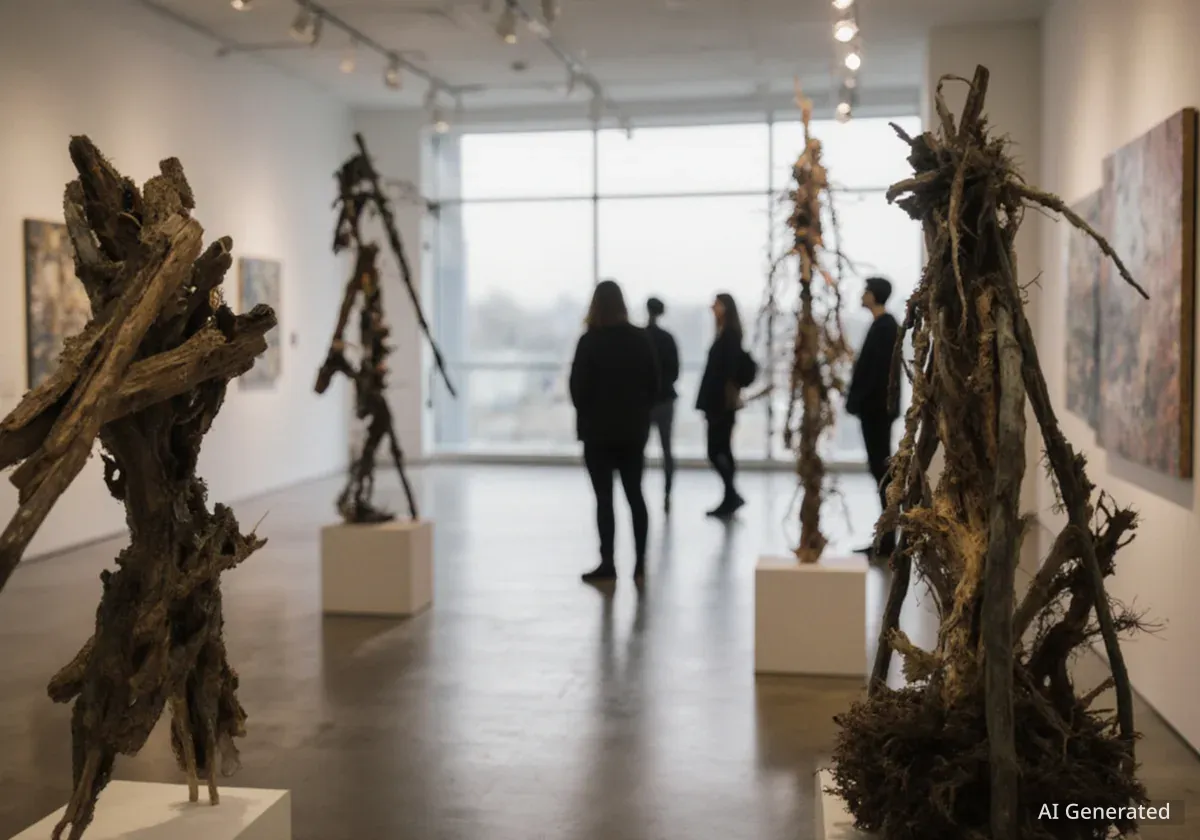
Turin is currently the center of the contemporary art world as Artissima, Italy's oldest contemporary art fair, opened its doors this week. Running until November 2nd at the Oval Center, the 2025 edition brings together 176 galleries from 33 countries, solidifying its reputation as a crucial platform for discovering new and avant-garde artists.
The event, a cornerstone of Turin Art Week, is drawing significant attention from international curators and collectors. Many are eager to explore its curated sections that prioritize experimental and process-based works over more conventional commercial art, offering a fresh perspective on the global art scene.
Key Takeaways
- Artissima 2025 is hosting 176 galleries from 33 different countries in Turin.
- The fair is known for its focus on emerging artists and cutting-edge contemporary works.
- A recent Italian government reduction of VAT on art sales to 5% is expected to boost the market.
- The event features curated sections like "Present Future" for new talent and "Back to the Future" for rediscovering 20th-century artists.
A Fair Built on Discovery
Since its founding in 1994, Artissima has cultivated an identity distinct from other major art fairs. Rather than focusing solely on established names, it champions innovation. This was evident from the opening VIP day on Thursday, October 30th, where attendees navigated booths filled with performance art, moving images, and intricate design projects alongside paintings and sculptures.
Luigi Fassi, the fair's director, described Artissima as a "bridge" connecting the Italian and international art communities. This global exchange is a core part of its mission, providing a stage for galleries that might not be seen at larger, more commercially driven events.
A Collector's Perspective
Long-time supporters of the fair emphasize its role in nurturing talent. Patrizia Sandretto de Rebaudengo, a prominent Turin-based collector whose foundation celebrates its 30th anniversary this year, has a deep connection to the event.
"It’s my fair not only because it is in my city, but it’s a fair that in a certain way has grown with me, with the story of my foundation, and with the story of my collection," she said, calling it a "fair of discovery."
This sentiment is shared by many curators who value the opportunity to see tightly focused presentations that delve deep into an artist's practice. The fair's layout encourages exploration through specialized sections, including Present Future, which is dedicated to emerging artists, and Disegni, which focuses on contemporary design.
Boosting the Italian Art Market
The timing of this year's fair is particularly significant. The Italian government recently lowered the Value Added Tax (VAT) on art sales to 5 percent, the lowest rate within the European Union. This policy change is seen as a major step toward making the Italian art market more competitive on a global scale.
"It’s a big chance to raise the capability of the Italian system to compete," Fassi explained. The reduced tax rate is expected to attract more international buyers and encourage investment in both established and emerging Italian artists.
By the Numbers: Artissima 2025
- 176 participating galleries
- 33 countries represented
- 5% new VAT on art sales in Italy
- Fair founded in 1994
This favorable financial climate, combined with the diverse range of works on display—from Arte Povera masters to young artists priced under $10,000—creates a dynamic environment for both seasoned collectors and those new to the market.
Five Standout Works Under $10,000
While major sales often dominate headlines, Artissima's strength lies in the breadth of its offerings. A closer look reveals compelling works at accessible price points. Here are five pieces that captured attention for their unique vision and craftsmanship.
Karine Rougier's 'Ode à la curiosoté' (2025)
Presented by Parisian gallery Galerie Les filles du calvaire, this small work in pigment and watercolor on textured paper is immediately captivating. French artist Karine Rougier draws inspiration from the intricate detail of Indian miniature painting. The piece, Ode à la curiosoté, depicts a surreal, mountainous landscape where a group of terracotta-hued figures gazes at a sun with a human face.
The scene feels both mythical and deeply personal. Rougier, who represented Malta at the 2017 Venice Biennale, creates a dreamlike theater of metamorphosis. Her precise linework and rich, jewel-like colors give the small surface an incredible sense of depth and mystery.
Beatrice Meoni's 'La nota del lupo' (2025)
Tucked into a corner of the Cardelli & Fontana booth, a series of small paintings by Beatrice Meoni offered moments of quiet introspection. La nota del lupo (The Wolf's Note) stands out for its warm, rusted palette of reds and browns. The still life depicts a collection of objects—a figurine, ceramics, books—that seem charged with emotional weight.
According to gallery director Massimo Biava, Meoni's work often explores the atmosphere of her personal spaces, like her studio and home. She uses a tactile, almost sculptural application of paint to transform tangible environments into something more ethereal and suggestive.
Linda Fregni Nagler's Photographic Experiments
At the Monica De Cardenas gallery, Linda Fregni Nagler's photograph Professional Pet-sitter Jack Sofield Trusts Mac The Macaw #2 (2023) challenges the viewer's perception. The image shows a man leaning toward two parrots, but his gesture is fragmented and distorted by a mirror or lens used in the artist's process.
Nagler’s work investigates the mechanics and psychology of photography. She often re-photographs archival images, manipulating them to create new meanings. In this piece from her "Wonderland" series, she deforms prints from 20th-century American magazines to explore the relationship between humans and animals. The result is a disorienting visual puzzle that forces a second look.
Desire Moheb-Zandi's 'To grow again' (2025)
Desire Moheb-Zandi's textile work, on display at Berlin gallery Wentrup, appears to grow directly from the wall. To grow again is a layered composition of cotton, botanically dyed wool, and French hemp, interwoven with upcycled fibers, rope, and jute. The piece reflects the artist's engagement with weaving as a form of thinking about rhythm and transformation.
Dealer Jan Wentrup noted that Moheb-Zandi incorporates old techniques learned from her grandmother, connecting her contemporary practice to deep-rooted traditions from her upbringing between Germany and Turkey. The work's contrasting textures—shaggy and smooth, matte and glossy—create a rich, tactile surface that is both organic and structured.
Nobuhito Nishigawara's 'Qualia #248' (2023)
In the middle of the Luce Gallery booth, a ceramic sculpture by Nobuhito Nishigawara commanded attention with its sense of controlled chaos. Qualia #248 is built from looping ribbons of soft pink clay that spiral upwards, as if frozen in motion. Embedded within its folds are smooth, bluish ceramic stones.
Nishigawara, who was born in Japan and now works in Los Angeles, explores themes of cultural identity and material transformation. Gallery director Nikola Cernetic explained that the artist's work is informed by memories of his life in Japan and his family's move to the U.S. The sculpture is a meditation on how delicate forms can emerge from disorder, suggesting both vulnerability and strength.