
Philadelphia-based mosaic artist Isaiah Zagar, renowned for transforming city buildings into vibrant, mirrored dreamscapes, has passed away at 86. Zagar died Thursday at his home due to complications from heart failure and Parkinson's disease, according to Philadelphia's Magic Gardens, the nonprofit art center he founded.
His intricate, immersive art, often created from broken glass, tiles, and found objects, left an indelible mark on Philadelphia, particularly along the South Street corridor where he lived and worked for decades.
Key Takeaways
- Isaiah Zagar, celebrated mosaic artist, died at 86.
- He was known for large-scale, immersive mosaic installations across Philadelphia.
- Zagar co-founded Philadelphia's Magic Gardens, a major cultural attraction.
- His work reflected his personal struggles and deep connection to the city.
A Legacy of Public Art in Philadelphia
Isaiah Zagar, born in Philadelphia, returned to his hometown in 1968 with his wife, Julia, after serving in the Peace Corps in Peru. This return marked the beginning of a prolific artistic career that would see him create hundreds of public mosaics.
Many of his most recognizable works adorn buildings and alleyways along the vibrant South Street corridor. This area became a canvas for his unique artistic vision, transforming ordinary urban spaces into extraordinary visual experiences.
Quick Fact
Zagar's artistic materials included broken glass, ceramic tiles, mirrors, and various found objects, giving his work a distinctive texture and reflective quality.
Emily Smith, executive director of Philadelphia's Magic Gardens, shared her thoughts on Zagar's profound connection to the city.
"He loved South Street, the city of Philadelphia, and the community fostered here with all of his heart," Smith stated.This sentiment underscores the deep personal investment Zagar had in his art and its placement within the urban landscape.
Philadelphia's Magic Gardens: An Immersive Masterpiece
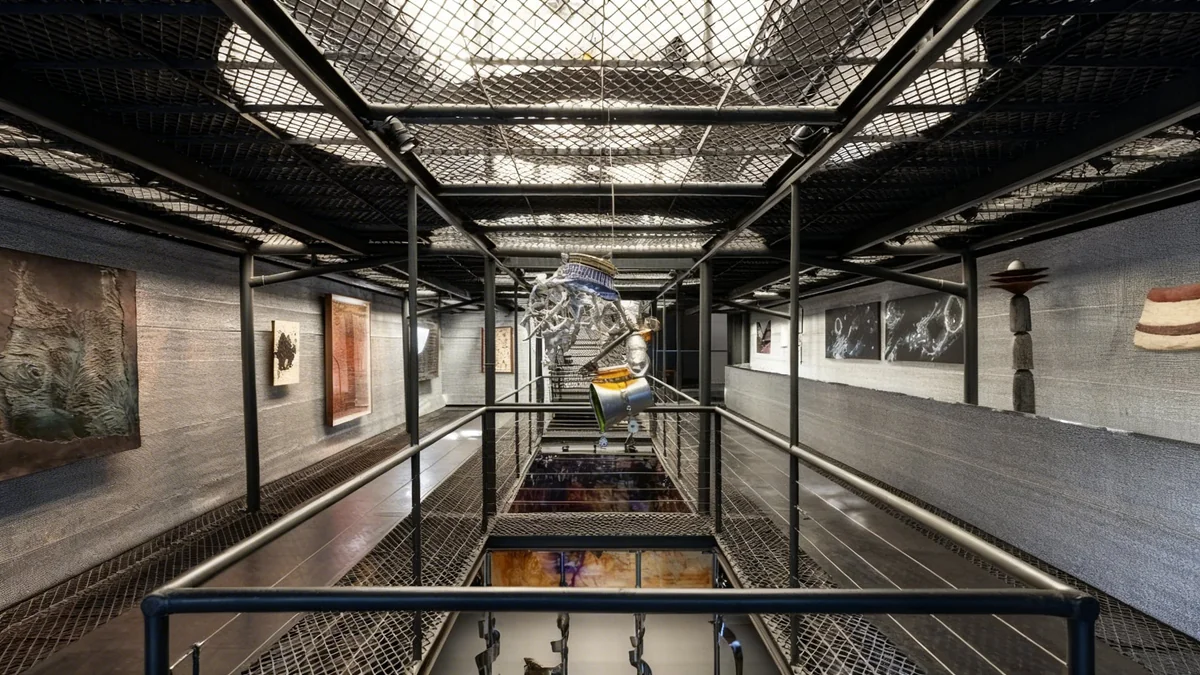
Among Zagar's most celebrated creations is Philadelphia's Magic Gardens. This immersive outdoor and indoor art environment on South Street draws thousands of visitors each year, serving as a testament to his enduring artistic power.
The Magic Gardens showcase Zagar's signature style, featuring sprawling, mirrored surfaces and intricate designs that wrap around walls and pathways. It offers a labyrinthine journey through his artistic mind, reflecting light and stories at every turn.
Background
Philadelphia's Magic Gardens is a non-profit organization that preserves, interprets, and presents the art environment created by Isaiah Zagar. It serves as a cultural hub and a significant tourist attraction in the city.
The success of the Magic Gardens highlights the public's appreciation for Zagar's unconventional approach to art. His ability to transform discarded materials into something beautiful and thought-provoking resonated deeply with both locals and tourists.
Battles for Preservation
Not all of Zagar's artistic endeavors were free from challenges. Some of his large-scale mosaics faced threats from urban development. A notable instance involved a massive mosaic on a building in the Old City neighborhood, home to The Painted Bride Art Center.
Zagar worked on this particular mosaic throughout the 1990s. The artwork became a central part of the building's identity. However, development plans led to a long legal battle over its fate.
Despite efforts to preserve the entire piece, demolition on the building began in December. Fortunately, some parts of Zagar’s work are being salvaged. This effort reflects the community's desire to retain pieces of his artistic legacy.
Art as a Tool for Survival
Zagar's life was not without its struggles. He openly dealt with mental health challenges and, in later years, Parkinson's disease. Yet, art remained a constant in his life, serving as both an outlet and a coping mechanism.
"While Isaiah lived with ups and downs of mental health struggles, and later with Parkinson’s Disease, he endlessly turned to his art-making to not only express himself, but as a tool to survive," Emily Smith noted.
This perspective reveals the profound personal connection Zagar had with his creative process. His mosaics were more than just decorative; they were expressions of his inner world and his resilience.
Family and Artistic Partnership
Isaiah Zagar is survived by his wife, Julia, whom he often referred to as his muse and artistic partner. Their collaboration was a cornerstone of his life and work, providing support and inspiration throughout his career.
He is also survived by his two sons. One of his sons, Jeremiah Zagar, is a filmmaker who directed a 2008 documentary about his father titled "In A Dream." This film offered an intimate look into the artist's life, creative process, and family dynamics, further cementing his place in the cultural narrative of Philadelphia.
Zagar's passing marks the end of an era for Philadelphia's art scene. His unique vision and dedication to public art transformed the city's streetscapes, leaving behind a colorful, reflective legacy that will continue to inspire for generations.