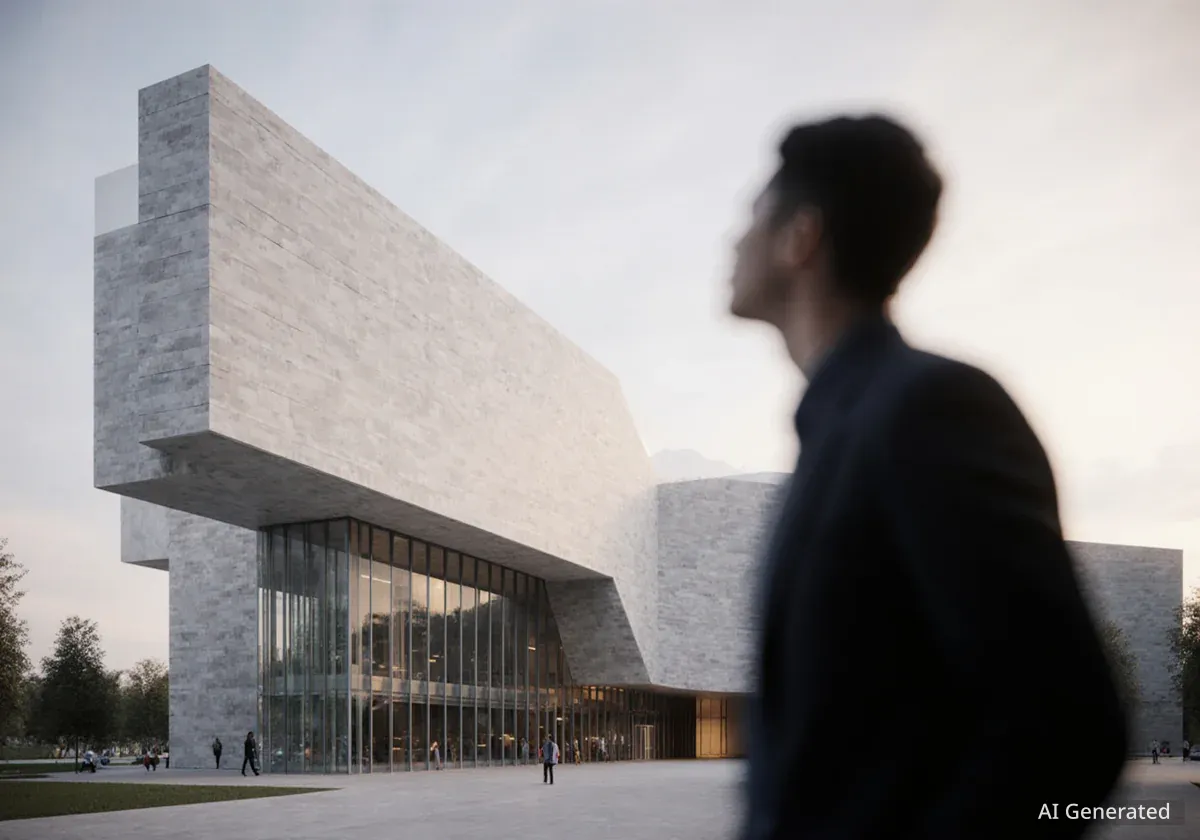
The Whitney Biennial 2026 opened its doors on March 8, offering a vital look at contemporary American art. This highly anticipated group show, hosted by the Whitney Museum of American Art, brings together 56 artists, duos, and collectives. Curators Marcela Guerrero and Drew Sawyer undertook an extensive year-long journey, conducting over 300 studio visits across the nation and U.S. territories to select the diverse works on display.
The exhibition reflects a broad range of artistic concerns, moving beyond specific themes to focus on shared conditions. These include the challenges of crumbling infrastructure in America, the deep connection between humans and nature, and the urgent pursuit of self-determination. The Biennial presents an intergenerational mix of artists, with some pieces dating back decades, all contributing to a rich tapestry of current artistic thought.
Key Takeaways
- The 2026 Whitney Biennial features 56 artists, duos, and collectives.
- Curators conducted over 300 studio visits across the U.S. and its territories.
- Themes include infrastructure, human-nature kinship, and self-determination.
- Exhibition runs from March 8 through August 2026.
- Several artists explore personal narratives and unconventional materials.
A Broad View of American Artistic Expression
The curators, Marcela Guerrero and Drew Sawyer, chose an expansive approach for this year's Biennial. Instead of imposing a central theme, they allowed the artists' individual concerns to shape the exhibition. This method led to a show that truly captures the diverse pulse of American art.
The selection process involved significant travel and engagement. "We wanted to truly understand what artists are grappling with right now," Guerrero stated. This direct engagement resulted in a collection that feels deeply personal and relevant.
Biennial at a Glance
- Artists Featured: 56 (including duos and collectives)
- Curators: Marcela Guerrero and Drew Sawyer
- Studio Visits: Over 300 (in-person and virtual)
- Duration: March 8 – August 2026
Celebrating Queer Joy and Resistance
One striking installation is Divine Dance of Soft Revolt (Anna, Travis, Me) (2024) by Young Joon Kwak. This sculptural work bursts with color and light, celebrating queer joy and resistance. Kwak created casts from the bodies of queer and trans individuals in Los Angeles, then adorned them with glitter and mirrored glass.
The fragments are suspended in a swirling spiral, reflecting light onto the yellow walls. This creates an immersive experience, amplified by electronic music from collaborator Marvin Astorga. The room transforms into a vibrant nightclub, transporting viewers to a place of exuberance.
"My work invites viewers to become participants, engaging directly with the energy and celebration it represents," Kwak explained about the interactive nature of their art.
Ancestral Traditions and Community Bonds
Indigenous artist Raven Halfmoon contributes two significant ceramic sculptures to the Biennial. Her nine-foot-tall black and white figure, Too Ancient to Care (2025–26), stands prominently in the museum plaza. This monumental work honors Halfmoon's Caddo Nation culture, particularly Caddo women, drawing from her personal experiences and ancestral stories.
Halfmoon learned coil ceramics from a community elder. She infuses traditional techniques with a contemporary edge, marking surfaces with graffiti-like patterns that reference Caddo tattooing. Inside the museum, her work Sun Twins (2023) features two fused figures, symbolizing the importance of community, family, and ancestors over individual perspectives.
Artist's Journey
Raven Halfmoon's work has gained national recognition. Her solo show, "Flags of Our Mothers," has traveled across the country for three years. Its next stop is at Ballroom Marfa in May, continuing to share her powerful narratives.
A Deep Connection Between Species
Interdisciplinary artist Emilie Louise Gossiaux explores the profound bond between humans and service animals. After losing her sight in 2010, Gossiaux began depicting her service dog, London, a yellow Labrador. Her drawings and sculptures often blur the lines between their two bodies, highlighting their interdependent relationship.
As London's health declined in 2024, Gossiaux started crafting one hundred sculptures of Kong toys, London's favorite. These colorful, bulbous toys fill a vast plinth in the Biennial. This installation, created before London's passing in September 2025, represents Gossiaux's wish for London's eternal happiness. Drawings of the pair adorn the surrounding walls, serving as a heartfelt homage to their unique collaboration.
The Unseen Connections and Human Endeavor
Akira Ikezoe's paintings delve into the complex, often illogical, systems that connect energy infrastructure with nature. His work, such as Frog Stories Around Nuclear Power Plant (2025), uses fantastical imagery to tell circular narratives.
In this piece, anthropomorphized frogs perform endless tasks to produce pearls. They carry clams, operate machines, and even appear as skeletons continuing their mission, getting electrocuted along the way. A frog dressed as Santa Claus makes a cheeky appearance, symbolizing consumerism. Ikezoe uses these absurd scenes to highlight the unseen connections between humans and nature, suggesting our own Sisyphean existence in pursuit of energy and enjoyment.
Artistic Recognition
- Emilie Louise Gossiaux received the Joan Mitchell Fellowship in 2024.
- Akira Ikezoe's work will also be featured in MoMA PS1's "Greater New York" exhibition in April.
Resilience in the Face of Disaster
Kelly Akashi, a resident of Altadena, presents Monument (Altadena) (2026), a poignant reflection on loss and resilience. Akashi's home and studio were destroyed in the devastating 2025 Los Angeles wildfires. Only her brick fireplace and chimney remained standing.
This chimney inspired her site-specific glass installation on the museum's fifth-floor terrace. Akashi collaborated with a mason to replicate her chimney, fireplace, and a pathway mirroring her home's walkway. Nearby, a cut-steel sculpture, inspired by her grandmother's doilies, memorializes lost objects and inheritance. Akashi's participation in the Biennial underscores the power of community and the realities of natural disasters.
Geopolitical Echoes and Unconventional Materials
Aziz Hazara's ethereal green and purple archival pigment prints, Moon Sightings (2024), are displayed against a wall covered in dark NATO thermal blankets. This stark setting amplifies the power of his work, which considers power relations and the physical repercussions of geopolitical actions.
Hazara, born in Wardak, Afghanistan—a highly contested area during the U.S. war—explores what is left behind after military withdrawal. He uses biometric data and retinal scans from discarded night-vision goggles, creating images that resemble otherworldly spaces. His compositions evoke the haunted energy of war-torn places, expanding the notion of American art to include occupied territories and the global influence of the U.S. as a military force.
Pushing Artistic Boundaries
Nour Mobarak's wall pieces feature some of the most unconventional materials in the Biennial: breast milk, dehydrated blood, semen, and mycelium. These casts of her own body form colorful, abstract compositions, with contours of her buttocks, breasts, and pregnant belly playfully protruding.
Their shiny surfaces distort reflections of the room and visitors, reminding us of our limited control over biological processes. An accompanying audio piece, Broad’s Cast (Montage) (2024–26), further pushes conventions. Produced by inserting a microphone into her vaginal canal during and after pregnancy, the strange sounds appear supernatural despite their deeply human origin. Mobarak’s work reveals the awkwardness and messiness of human experience, yet remains enticing and beautiful.
Transforming Trash into Treasured Art
Jasmin Sian's delicate, lace-like paper artworks resemble aged doilies. However, they are made from found materials, specifically trash like fast-food bags and biscuit wrappers. Sian meticulously paints minute, dense details of plants and animals onto these surfaces, demanding a closer look.
Surrounding these intricate scenes are lace-like borders, painstakingly cut with an X-Acto knife. Sian transforms discarded items into carefully crafted objects, creating intimate odes to the natural world. She has been creating similar works for decades, earning a Joan Mitchell grant in 1998. Her art has recently gained commercial traction, including a successful solo booth at the Art Dealers Association of America’s 2023 Art Show.