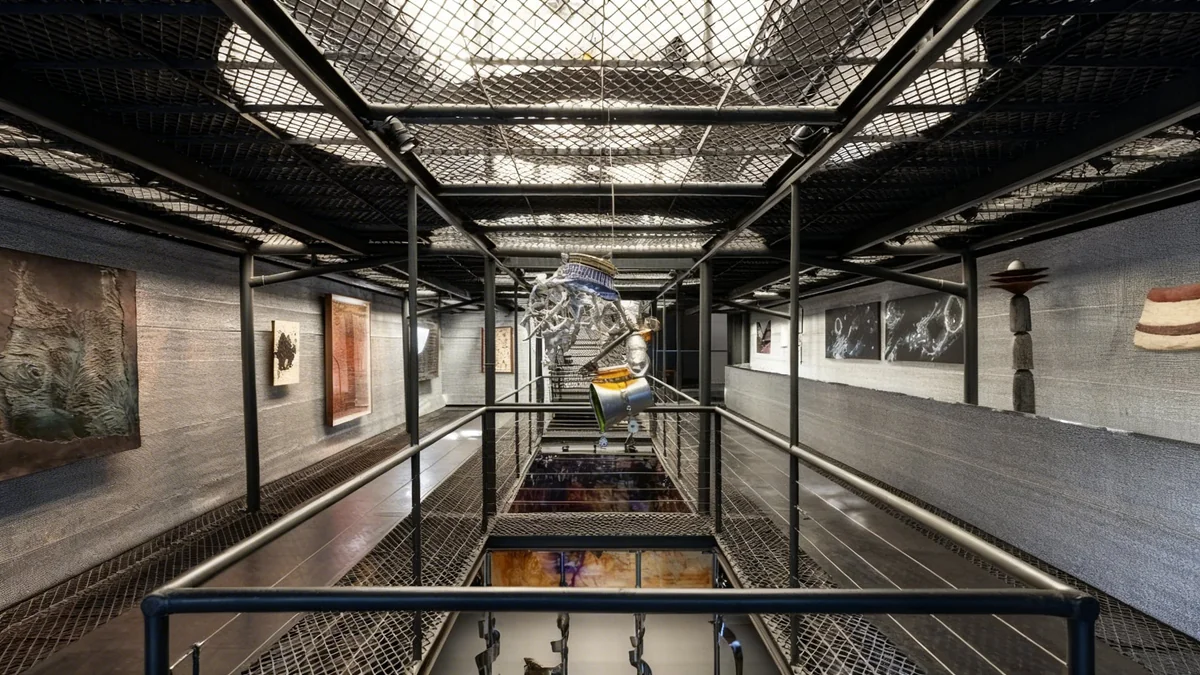

An exhibition titled 'Sixties Surreal' at the Whitney Museum of American Art in Manhattan will close on January 19. The show presents a collection of 150 works from the 1960s counterculture, featuring paintings, sculptures, photography, collage, and found objects. It focuses on art that often explores psychosexual themes and the human body.
This exhibition offers a different perspective on the 1960s art scene. While pop art and minimalism are commonly associated with the decade, 'Sixties Surreal' highlights works that reflect the social unrest and activism of the time more directly. More than 100 artists are featured, many of whom faced marginalization due to their race, gender, sexuality, or geographic location.
Key Takeaways
- 'Sixties Surreal' at the Whitney Museum closes January 19.
- The exhibition features 150 works from the 1960s counterculture.
- It highlights artists marginalized by race, sex, sexuality, or geography.
- The show challenges common perceptions of 1960s art.
Revisiting the 1960s Art Scene
The 1960s were a period of significant social change and cultural transformation. Political movements, civil rights activism, and counterculture movements defined the decade. However, the dominant art forms often recognized from this era, like pop art and minimalism, did not always directly engage with these profound societal shifts.
The 'Sixties Surreal' exhibition seeks to correct this historical narrative. It argues that a significant body of work, often overlooked, captures the raw energy and subversive spirit of the decade. These works delve into themes that mainstream art might have avoided.
Exhibition at a Glance
- Number of Works: 150
- Number of Artists: Over 100
- Location: Whitney Museum of American Art, Manhattan
- Closing Date: January 19
Counterculture and Artistic Expression
The term "surreal" in the exhibition title refers less to the historical Surrealism movement and more to the countercultural, often dreamlike or unsettling, quality of the art. Many pieces explore the human psyche and the body in ways that were considered provocative at the time. This focus allows for a deeper understanding of artistic responses to a turbulent era.
The exhibition includes a diverse range of mediums. Viewers can see paintings that challenge traditional forms, sculptures that redefine the human figure, and collages that combine disparate elements to create new meanings. Photography and found objects also play a crucial role, reflecting a broader artistic experimentation.
The critic Walker Mimms described the exhibition as "fascinating and revisionist," noting that it leaves the viewer "caffeinated in a way no other show in New York currently leaves you." This highlights the show's unique energy and impact.
Spotlight on Overlooked Artists
A central aim of 'Sixties Surreal' is to give recognition to artists whose contributions were historically marginalized. Many creators in the exhibition were sidelined due to their race, gender, sexuality, or simply because they worked outside major art centers. This show brings their work to the forefront, offering a more inclusive view of 1960s art.
This re-evaluation of history is important. It shows that artistic innovation and critical commentary were happening across a much wider spectrum than previously acknowledged. The diversity of voices in the exhibition enriches our understanding of the period.
The Whitney Museum of American Art
The Whitney Museum of American Art is known for its focus on 20th and 21st-century American art. It was founded by Gertrude Vanderbilt Whitney in 1931. The museum has a strong commitment to exhibiting the work of living artists and collecting American art in all mediums. Its current building, designed by Renzo Piano, opened in 2015 in the Meatpacking District.
Impact of Social Movements on Art
The 1960s were marked by intense social movements, including the Civil Rights Movement, women's liberation, and anti-war protests. These movements profoundly influenced artists, inspiring them to create works that questioned authority, challenged norms, and expressed dissent. The art in 'Sixties Surreal' often reflects these direct connections.
For example, some pieces might use symbolism related to political events, while others explore personal identity in the context of broader social change. The exhibition provides a powerful visual narrative of how artists responded to their world.
A Limited Time to Experience History
With its closing date rapidly approaching, the 'Sixties Surreal' exhibition offers a final opportunity to engage with this unique collection. Visitors have a chance to see art that provides a deeper, more nuanced understanding of the 1960s. It goes beyond the commonly known art movements to reveal a vibrant, often subversive, artistic landscape.
The show has garnered significant attention for its revisionist approach. It encourages viewers to rethink what they know about the art of the 1960s and the artists who shaped it. This makes it a compelling visit for anyone interested in art history, social movements, or the cultural impact of a transformative decade.
The Whitney Museum continues its mission to showcase American art, and exhibitions like 'Sixties Surreal' play a key role in expanding that narrative. Do not miss the chance to see this important collection before it concludes its run.