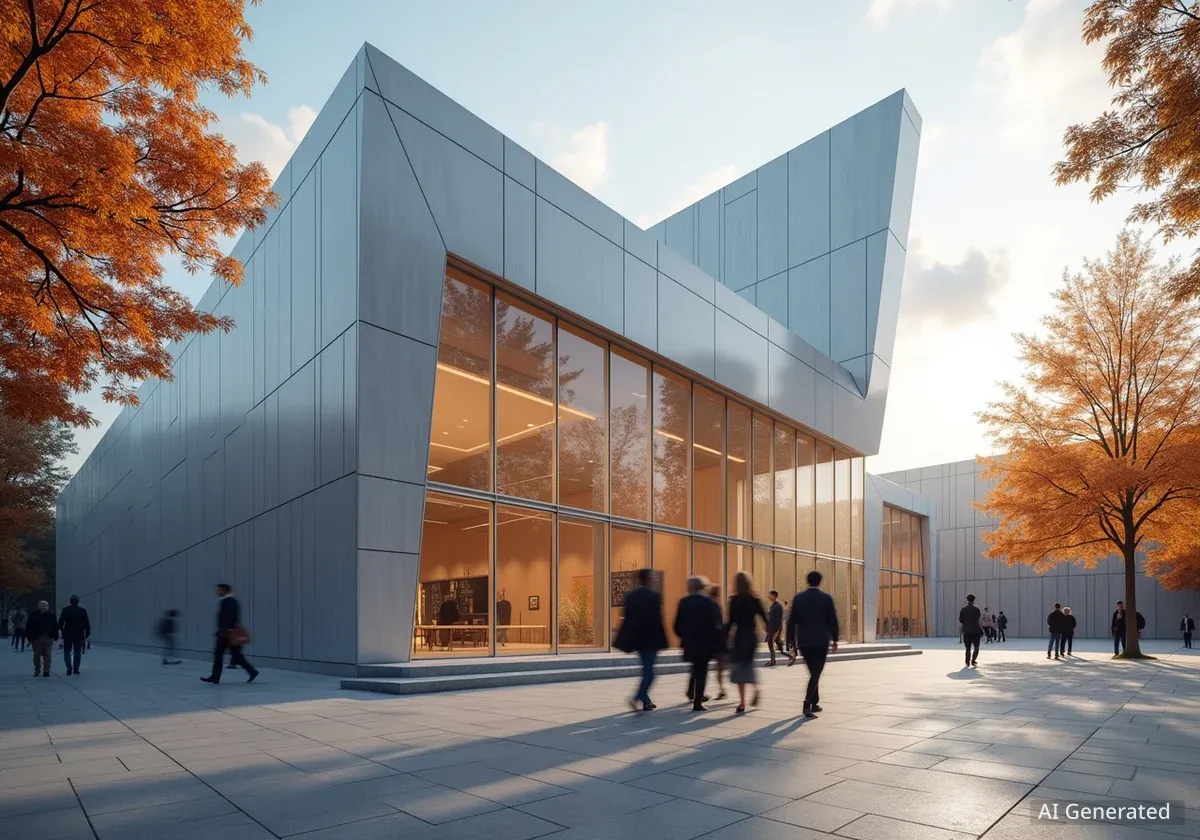
The Princeton University Art Museum reopens its doors to the public this Halloween, October 31, after five years of extensive demolition and reconstruction. The new facility, designed by architect David Adjaye, promises a completely reimagined visitor experience and a significant expansion of exhibition space, addressing the limitations of its predecessor.
Key Takeaways
- Princeton University Art Museum reopens October 31 after a five-year rebuild.
- The new design by David Adjaye features a non-hierarchical layout across nine pavilions.
- The museum's collection has grown by 30% to 117,000 objects.
- New features include cross-cultural dialogues in galleries and a full-service restaurant.
- The building is designed as a campus crossroads, inviting wider public engagement.
A Transformed Space for a Growing Collection
The decision to rebuild the museum stemmed from its rapid growth and increasing popularity. James Steward, the museum's director for 17 years, noted a significant surge in engagement. Attendance doubled, and use by Princeton students increased by an impressive 700%.
During the same period, the museum's collection expanded by 30%, growing from 90,000 to 117,000 objects. Steward called the addition of 27,000 objects in 17 years a 'marker of a really active museum.'
Museum Growth Statistics
- Attendance: Doubled in 17 years.
- Student Use: Increased by 700%.
- Collection Size: Grew 30% (from 90,000 to 117,000 objects).
The previous building, a result of multiple construction campaigns, had become inefficient and structurally problematic. Steward described it as 'dysfunctional,' having been built, demolished, and added onto repeatedly.
Juliana Ochs Dweck, the museum's chief curator, spent the last 10 months installing thousands of art pieces. She expressed her excitement, stating, "It is incredibly exciting. It makes it real."
Innovative Design for Cross-Cultural Dialogues
The new museum's layout corrects a perceived hierarchy present in the old structure. Previously, European and American art occupied the upper floor, while Asian and South American art was relegated to a lower level. Dweck explained this created an 'unintended perception of hierarchy,' with many visitors missing the downstairs entirely.
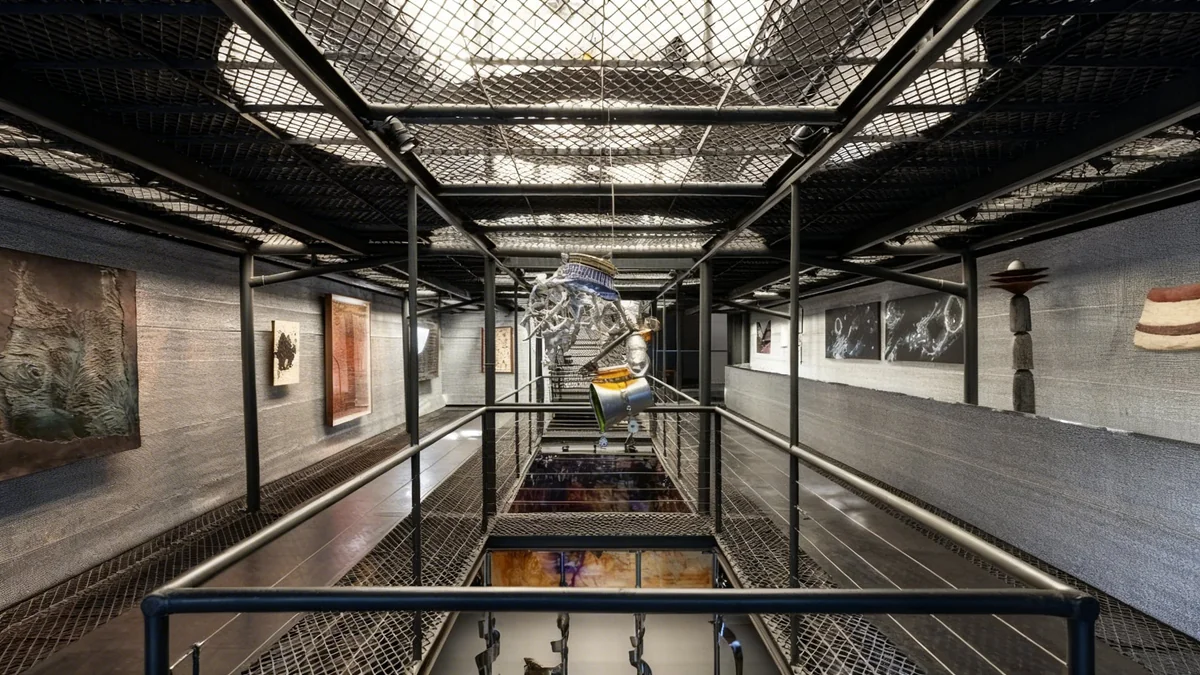
The new design places all primary exhibition spaces on the second floor, spanning 80,000 square feet. This makes it the largest single floor on the entire Princeton campus. The floor features nine distinct pavilions, each dedicated to specific subject areas.
Between these pavilion galleries are interstitial walkways. These spaces are designed to encourage 'transhistoric and cross-cultural dialogues' between objects. For example, a 16th-century Buddhist statue, showing Chinese and Indian influences, is displayed next to a 21st-century white plastic sculpture by Chinese cartoonist Danny Yung, titled 'Tian Tian Xiang Shang.'
"Within every pavilion there are transhistoric and cross-cultural dialogues happening between objects so that visitors get a sense of the transformation of objects and ideas over time," Dweck said.
The museum's ground floor serves as an entrance and houses classrooms. The third floor features offices and a new full-service restaurant called Mosaic.
Architecture and Visitor Experience
The museum's design focuses on enhancing the visitor experience. Exhibition spaces vary in size, shape, height, and natural light, all oriented around the central Grand Hall. This variation helps combat 'museum fatigue,' a common issue where visitors become overwhelmed by uniformly scaled galleries.
Steward noted, "Daylight has a wonderful advantage in helping fight the problem of museum fatigue. People are worn down by a sequence of similarly scaled gallery spaces where the light never changes. You can almost feel that you’re divorced from time and place.”
The Architect's Vision
The museum was designed by acclaimed architect David Adjaye, known for the National Museum of African American History and Culture. While the design is largely his, Princeton has distanced itself from him due to allegations of misconduct raised in 2023. Ron McCoy, the university’s campus architect, described the building's aesthetic as an 'essay on stone,' highlighting its brutalist use of sandblasted concrete, polished terrazzo floors, and soft grey granite portals. He emphasized the warmth of the materials, countering the typical perception of brutalism as cold.
For the reopening, curators assembled "Princeton Collects," a temporary exhibition showcasing objects acquired during the construction period. A campaign launched during the museum's closure resulted in approximately 2,000 new works from over 200 donors.
These acquisitions include significant pieces by artists such as Ai Weiwei, Joan Mitchell, Becky Suss, Sean Scully, Mark Rothko, Helen Frankenthaler, and Gerhard Richter. Many of these works would have been beyond the museum's purchasing means due to their market values.
A New Campus Beacon
Beyond its role as an art institution, the new museum is designed to be a vibrant campus hub. The second-floor pavilions feature large windows offering views of the campus in all directions. The ground floor is configured as a crossroads, allowing pedestrians to traverse the campus north-south and east-west directly through the museum.
This design encourages people to engage with the building, whether they intend to view art or are simply passing through. The museum galleries can be individually shuttered, allowing foot traffic to continue even after the museum has closed. The third-floor restaurant, Mosaic, can also maintain later operating hours.
Steward emphasized the goal of inviting everyone inside. He aims to overcome 'threshold resistance' for those who may not have a pre-existing interest in art.
- The museum encourages pedestrian flow through its ground-floor crossroads.
- Individual gallery shutters allow the building to remain open after hours.
- The design integrates the museum into daily campus life.
"I always understood that museum-going could make me a fuller human being," Steward reflected. "Not everybody has that experience. Part of our job is to create a reason to come that overcomes what in the retail trade would be called ‘threshold resistance.’”