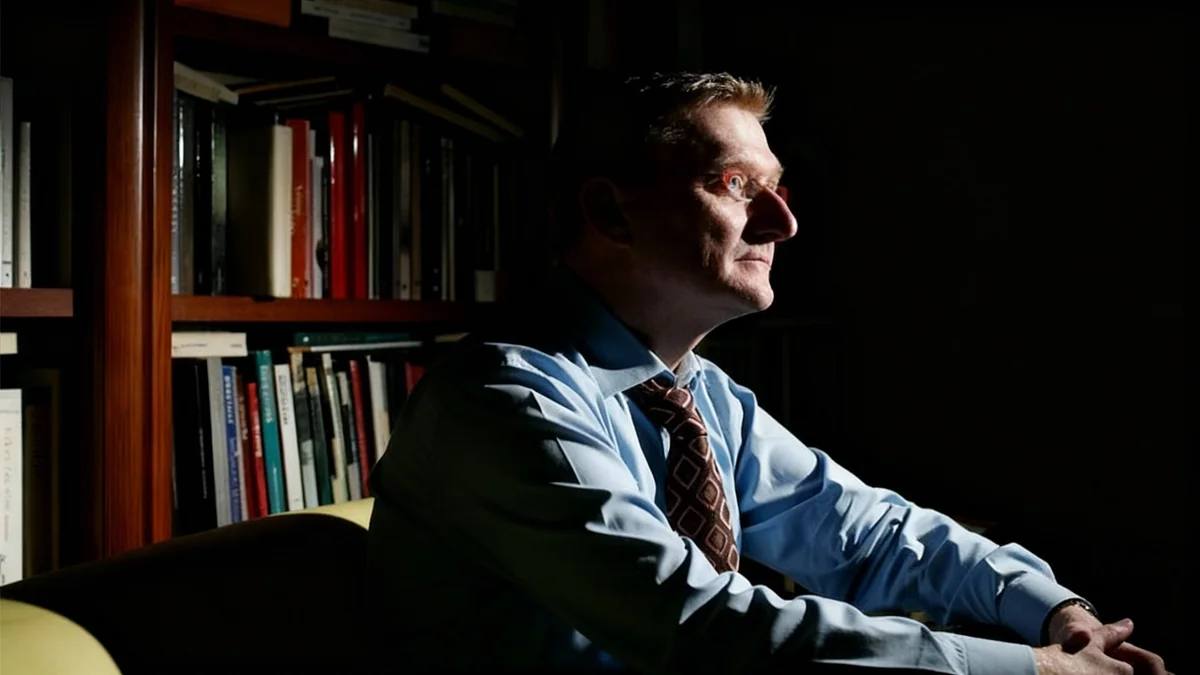


Guy Cogeval, the influential art historian and former director of the Musée d’Orsay in Paris, has died at the age of 70. His death from pneumonia was announced by the museum, where he served from 2008 to 2017, a period marked by a dramatic increase in visitors and a series of groundbreaking exhibitions that challenged traditional curatorial norms.
Key Takeaways
- Guy Cogeval, former director of Paris's Musée d’Orsay, passed away at age 70 from pneumonia.
- During his tenure from 2008 to 2017, he was credited with doubling the museum's visitor numbers.
- Cogeval was known for curating provocative and highly popular exhibitions focusing on themes like sexuality, the male nude, and prostitution in 19th-century art.
- His approach often drew criticism from traditionalists but proved immensely successful with the public, redefining the museum experience.
A Transformative Era at the Musée d’Orsay
When Guy Cogeval took the helm of the Musée d’Orsay in 2008, he inherited one of France’s most prestigious cultural institutions. Housed in a former railway station, the museum was celebrated for its collection of French art spanning from the mid-19th to the early 20th century. However, Cogeval saw an opportunity to inject new energy into its halls.
Under his leadership, the museum's attendance doubled. This success was driven by a bold curatorial strategy that moved beyond conventional artist retrospectives. Cogeval sought to illuminate entire historical periods by incorporating sociology, psychology, and a wider range of media, including photography and historical documents, alongside masterpieces.
He famously utilized the museum's unique architecture, employing dramatic lighting and dark backgrounds to create immersive viewing experiences. His vision extended the museum's chronological scope, connecting its 19th-century collection to both earlier art and emerging modernism.
A Career Forged in Culture
Born in Paris on October 13, 1955, Guy Louis Antonio Cogeval was immersed in a multicultural environment, growing up in both Italy and France. He earned degrees from the Institut d’Études Politiques and the Sorbonne before securing a coveted position at the French Academy in Rome. His career included roles at the Louvre and as director of the Musée des Monuments Français in Paris and the Musée des Beaux-Arts in Montreal, where he curated the notable exhibition “Picasso Érotique” in 2001.
Provocative Exhibitions and Public Appeal
Cogeval’s tenure was defined by exhibitions that were as popular as they were controversial. He frequently explored themes of sexuality and the human body, pushing the boundaries of what was expected from a national museum. This approach was not without its detractors, who accused him of prioritizing ticket sales over scholarly enlightenment.
Masculin/Masculin: A Blockbuster Success
Perhaps the most famous example of his approach was the 2013 exhibition “Masculin/Masculin: The Nude Man in Art from 1800 to the Present Day.” The show was an unabashed exploration of the male form, featuring a diverse mix of artists. It became a cultural phenomenon in Paris.
The exhibition attracted more than 4,500 visitors each day, a figure three times higher than that of the previous year's show during the same period. While some critics labeled the curation as “confused,” the public response was overwhelmingly positive, making it one of the season's most sought-after tickets.
Cogeval's 2015 exhibition, “Splendors and Miseries: Images of Prostitution, 1850-1910,” juxtaposed works by masters like Degas, van Gogh, and Picasso with actual police reports and photography from the era to provide a comprehensive social context.
Other notable exhibitions included “Sade: Attacking the Sun” in 2014, which delved into the world of the Marquis de Sade. This focus on provocative themes led critic Philippe Dagen to write in Le Monde that the museum's exhibition axis was “in the form of a phallus.”
A Legacy of Challenging Convention
Cogeval was unapologetic about his methods. He believed that museums had a duty to engage with contemporary interests and to break free from staid, predictable formats. He openly expressed his disdain for conventional shows that simply lined up paintings on a wall.
“I try to move the lines,” he stated in a 2014 radio interview. “To introduce a bit more psychoanalysis, a bit more sociology. I try to respond more to contemporary preoccupations in these exhibits.”
He added, “You can’t move lines and just be about rearranging teddy bears.” This philosophy guided his work, even when it led to internal friction over his management style. His reappointment in 2016 was for a single year instead of the customary three, a reflection of the contested nature of his leadership.
An expert on the post-Impressionist Nabis school of painters, particularly Édouard Vuillard, Cogeval was a respected scholar who chose to be a cultural provocateur. He believed that curation was an active, opinionated process.
As he once said, “The hanging of any painting always means taking a position.” Guy Cogeval’s career was a testament to that belief, and his influence has left a permanent mark on the Musée d’Orsay and the wider museum world. He is survived by no immediate family members.