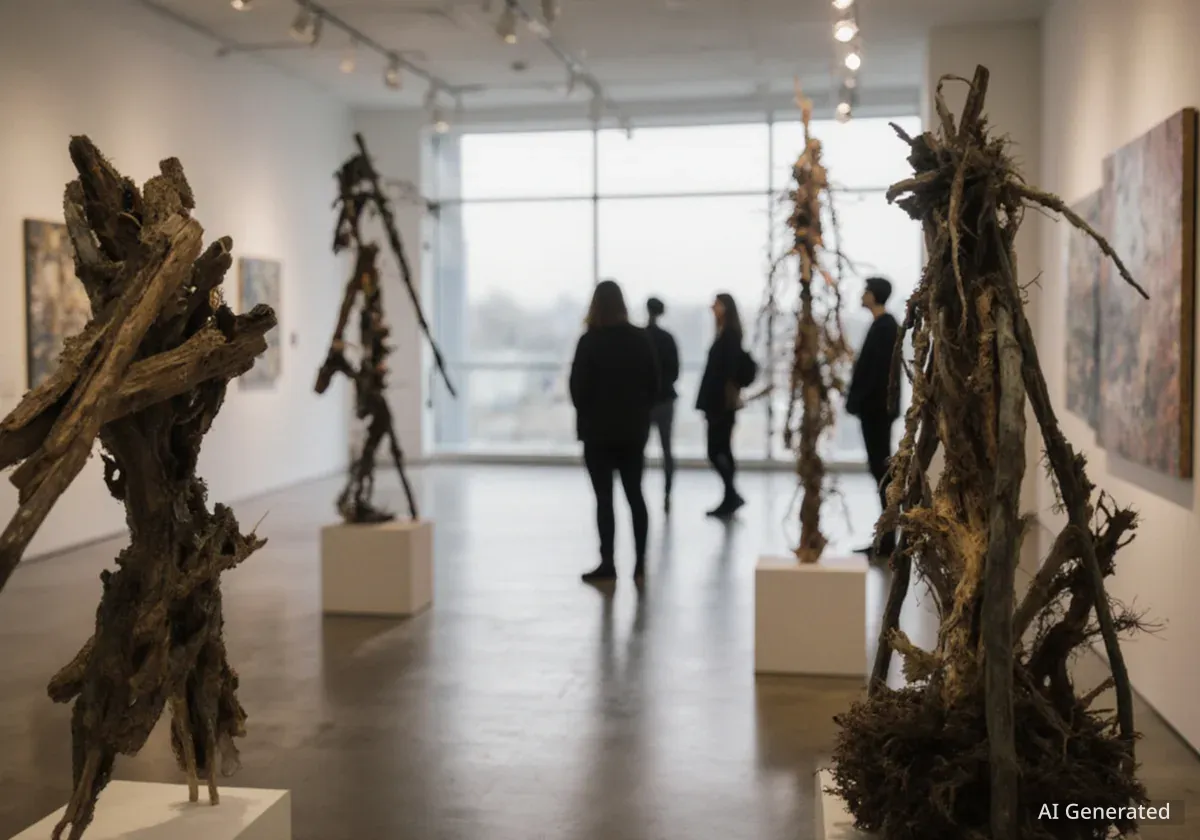
The Fondation Cartier pour l'Art Contemporain will reopen its doors on October 25, 2025. This new chapter takes place at 2 Place du Palais-Royal in Paris. The institution's new home features a transformative design by French architect Jean Nouvel. It reinvents a 19th-century landmark, the former Grands Magasins du Louvre, as a dynamic space for art. The inaugural exhibition, "Exposition Générale," curated by Formafantasma, brings together over 600 works from more than 100 artists, marking forty years of contemporary creation.
Key Takeaways
- Fondation Cartier reopens on October 25, 2025, in a new Paris location.
- Jean Nouvel designed the building, transforming a 19th-century department store.
- The design features five monumental moving platforms to reconfigure exhibition spaces.
- The inaugural exhibition, "Exposition Générale," includes over 600 works by 100+ artists.
- Formafantasma designed the exhibition's scenography, inspired by 19th-century trade fairs.
Jean Nouvel's Vision for a Kinetic Museum
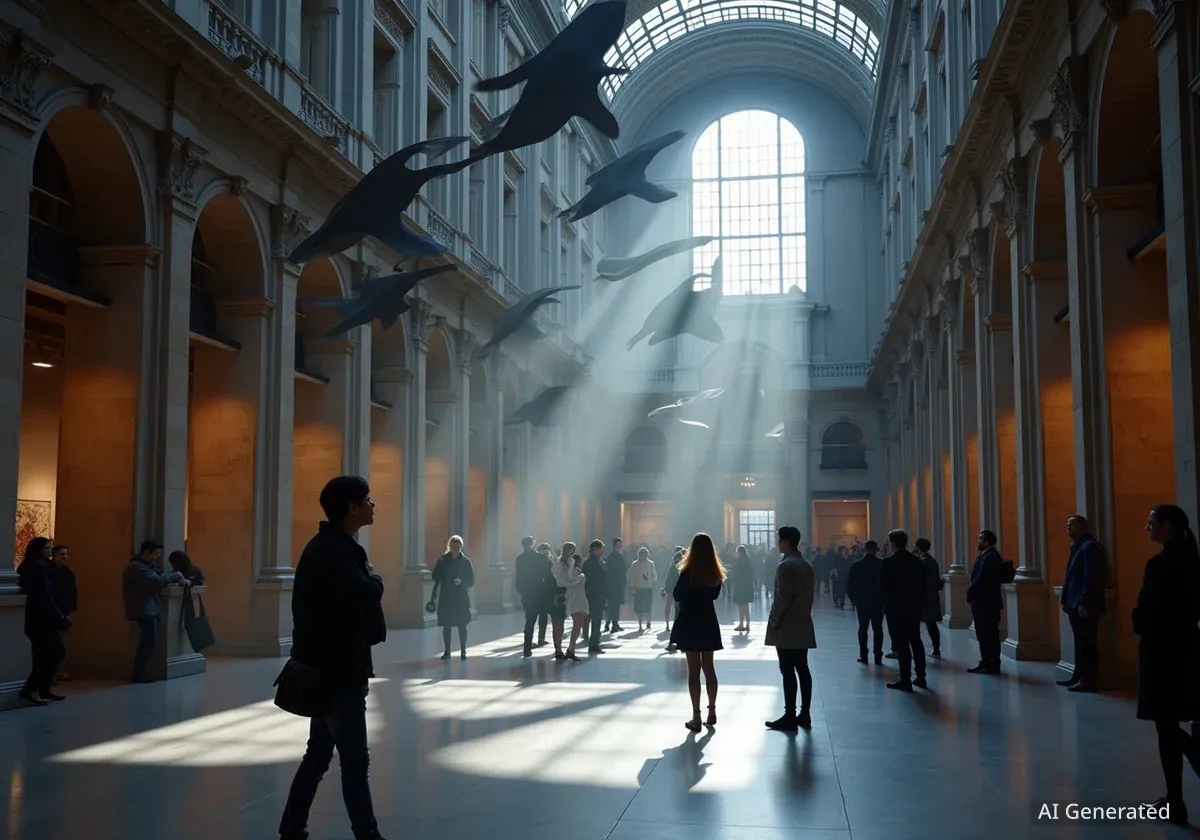
Architect Jean Nouvel has reimagined the historic 19th-century Haussmannian building as a kinetic machine for art. His design strips the structure back to its essential elements. It creates vast, transparent voids that emphasize light and movement. This approach orchestrates the visitor experience in unexpected ways.
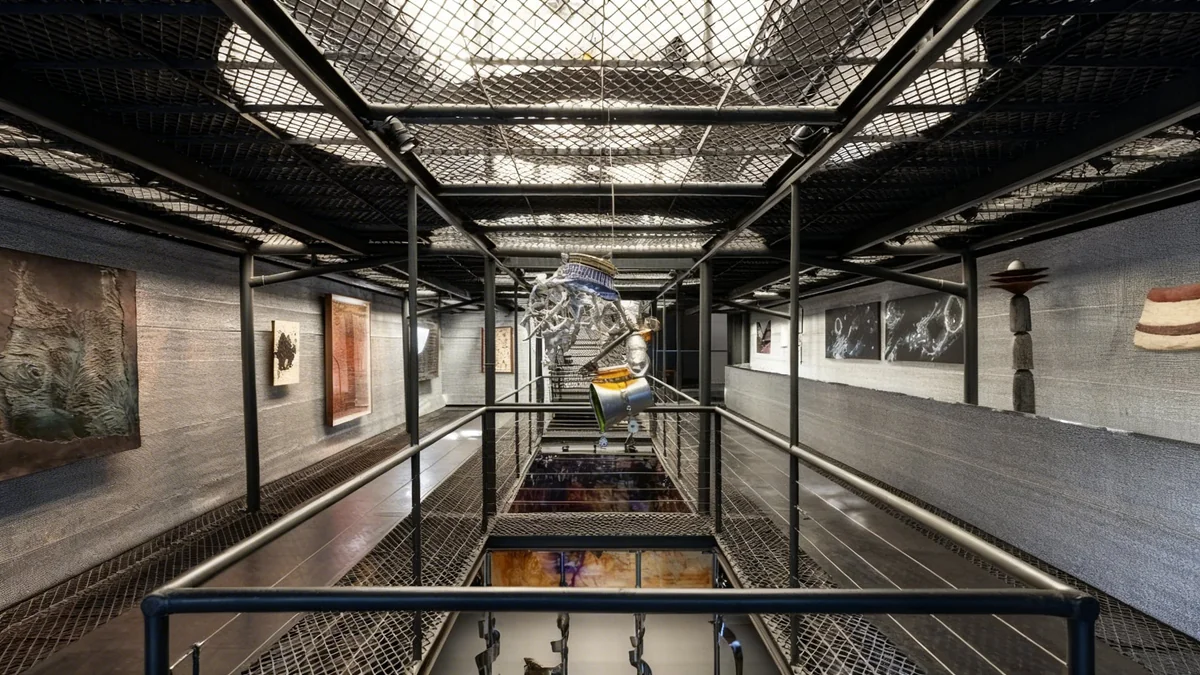
A central feature of Nouvel's design is a system of five monumental moving platforms. Each platform measures 250 square meters and weighs 250 tons. These platforms can rise and descend, suspended by a specialized cable-and-pulley system. This system was developed in collaboration with experts in bridge and theater design. The movable floors allow for endless reconfigurations of the exhibition spaces. They can expand, contract, or disappear completely, offering a constantly changing environment for art.
"Everything must be removed," Nouvel stated early in the design process. "So that the gaze can pass through an unobstructed space."
Building Facts
- Gross Floor Area: Approximately 14,000 square meters.
- Number of Moving Platforms: Five.
- Platform Size: Each 250 square meters.
- Platform Weight: Each 250 tons.
- Facade Length: 150-meter-long glass canopy along the Saint-Honoré facade.
Transforming a Historic Landmark
The building functions like a large mechanical organism. Skylights become luminous floors, and shutters slide like theatrical curtains to adjust natural light. The design blurs the line between indoor and outdoor spaces. Along the Saint-Honoré facade, a 150-meter-long glass canopy connects Rue de Rivoli to the Palais-Royal. This creates a sheltered pedestrian route.
With seven-meter-high windows and fluid circulation, the architecture transforms the site into a transparent urban stage. It becomes an "exhibition machine" where Paris itself is part of the display. This design reflects Nouvel's deliberate dialogue with the building's rich past. The former Grands Magasins du Louvre was built in 1855 for the first Paris World Fair. It once hosted "Expositions Générales," large showcases of industrial modernity.
"Exposition Générale": A Forty-Year Survey
The Fondation Cartier's inaugural exhibition, "Exposition Générale," revives the spirit of discovery from the building's past. Formafantasma, a design collective, created the scenography for this ambitious reopening. Their approach extends Nouvel's architectural concept into a curatorial experiment. It draws inspiration from the display systems of 19th-century trade fairs, reimagining the exhibition as a social and experimental field.
The exhibition is organized around four main themes: Machines d'architecture, Être nature, Making Things, and Un monde réel. It features nearly 600 works by over 100 artists from the Fondation's collection. Notable artists include David Lynch, Patti Smith, James Turrell, Claudia Andujar, Junya Ishigami, Sarah Sze, Cai Guo-Qiang, and Diller Scofidio + Renfro.
Historical Context
The building, originally the Grands Magasins du Louvre, was constructed in 1855. It served as a venue for the first Paris World Fair. These "Expositions Générales" were significant events, showcasing industrial advancements and modern innovations. Jean Nouvel's design for the Fondation Cartier intentionally references this history, creating a modern interpretation of a grand public showcase.
Exhibition Sections and Highlights
The sections of "Exposition Générale" unfold within the mechanical flexibility of Nouvel's architecture. Each theme uses the adaptable spaces to create unique visitor experiences.
- Machines d'architecture: This section transforms the first platform into an urban laboratory. It showcases visionary designs and utopian models. Examples include Alessandro Mendini's miniature cathedral and Freddy Mamani's vibrant Salón de eventos. These works explore the city as a site of constant transformation.
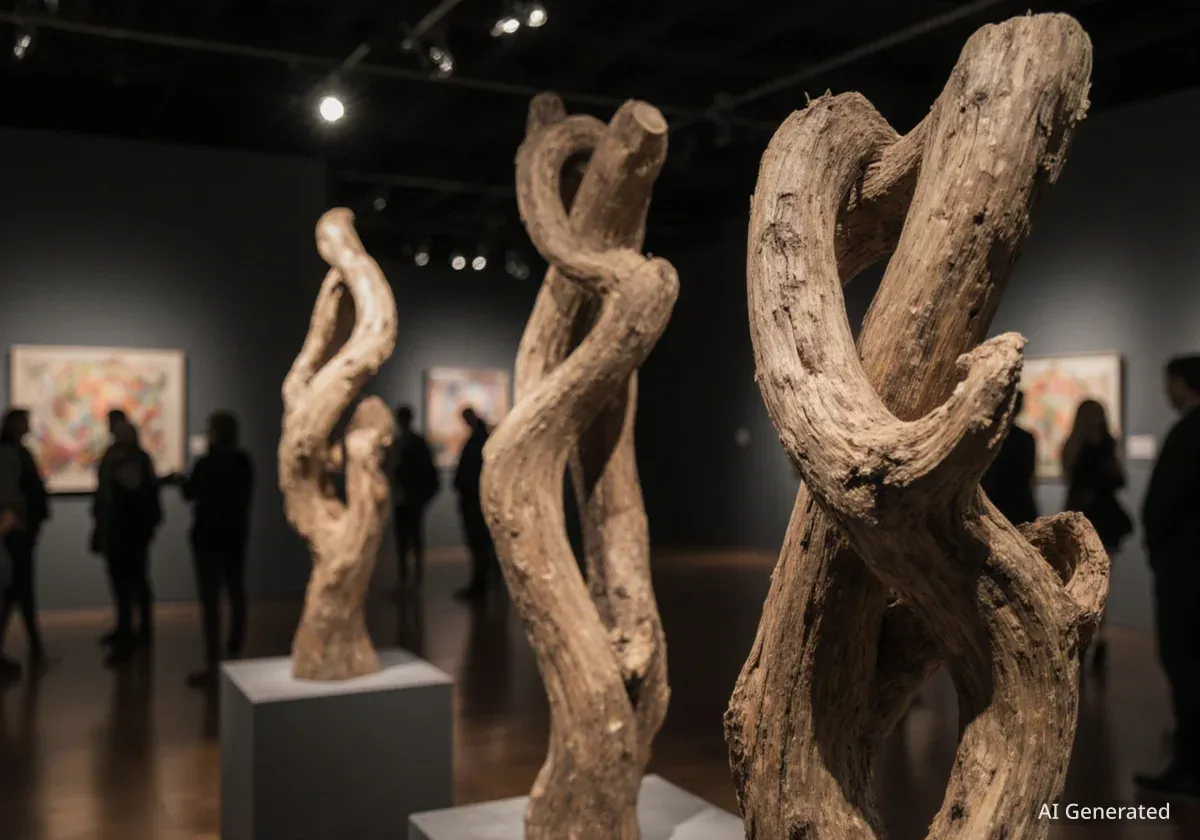
- Être nature: This theme shifts focus to the living world. It turns interior spaces into a sensory ecosystem. Solange Pessoa's feathered installation hovers above works by Claudia Andujar, Giuseppe Penone, and Bernie Krause. This section emphasizes the connection between art and nature.
- Making Things: This part of the exhibition explores the fluid boundaries among craft, design, and fine art. It highlights the creative processes and diverse materials used by artists.
- Un monde réel: This final section investigates the intersections of science, technology, and fiction. It features immersive works such as Sarah Sze's "Tracing Falling Sky" and Diller Scofidio + Renfro's data-driven "EXIT." These pieces challenge perceptions of reality and the future.
Formafantasma's Curatorial Experiment
Formafantasma's scenography is a key element of the exhibition. It draws on 19th-century trade fair display systems, reimagining the exhibition as a social and experimental space. The design collective uses specific materials, lighting, and spatial rhythms. These choices evoke the site's heritage while highlighting the performative aspect of showing and seeing art.
According to Formafantasma, their design positions artworks within a network of exchange. This network spans different disciplines, historical eras, and worldviews. This approach aims to make the exhibition a dynamic and engaging experience for all visitors. The goal is to reactivate the very notion of what a museum can be in the 21st century.
The reopening of the Fondation Cartier represents a significant moment for contemporary art in Paris. It combines innovative architecture with a comprehensive exhibition. This promises to offer a fresh perspective on modern creative practices.