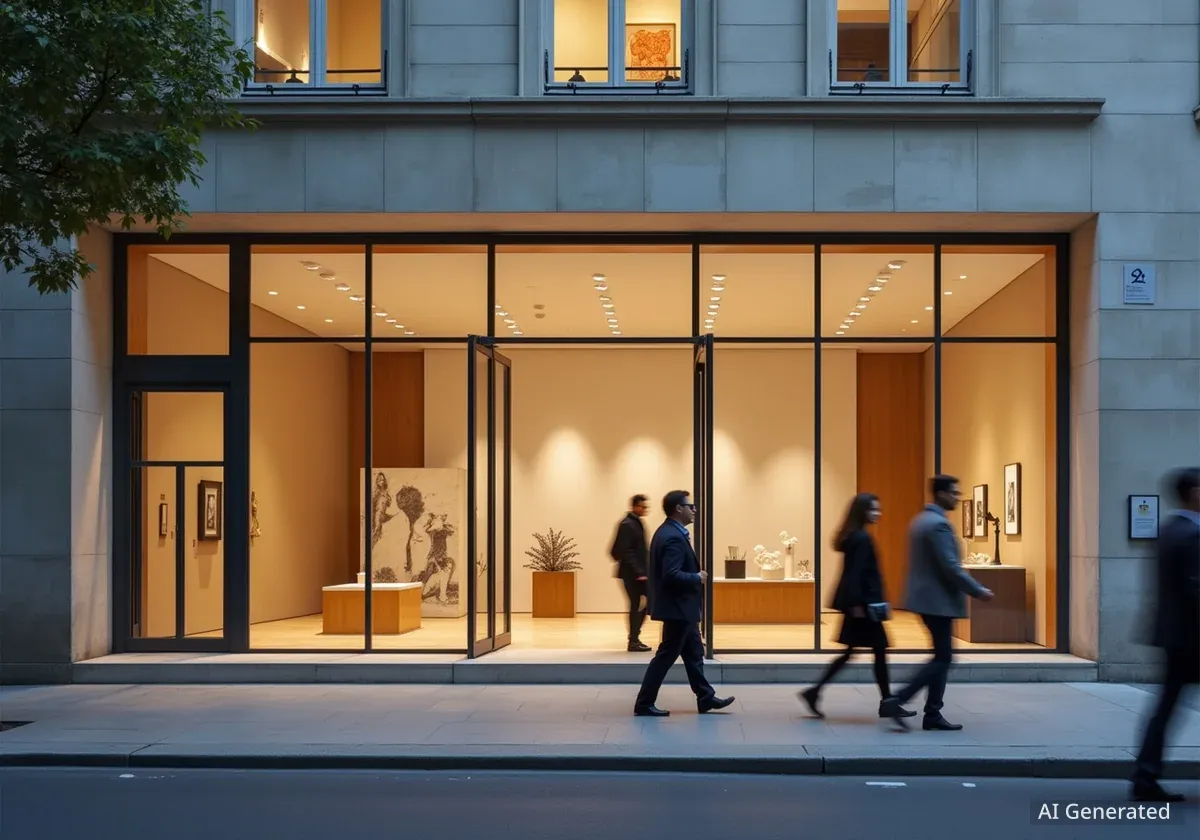
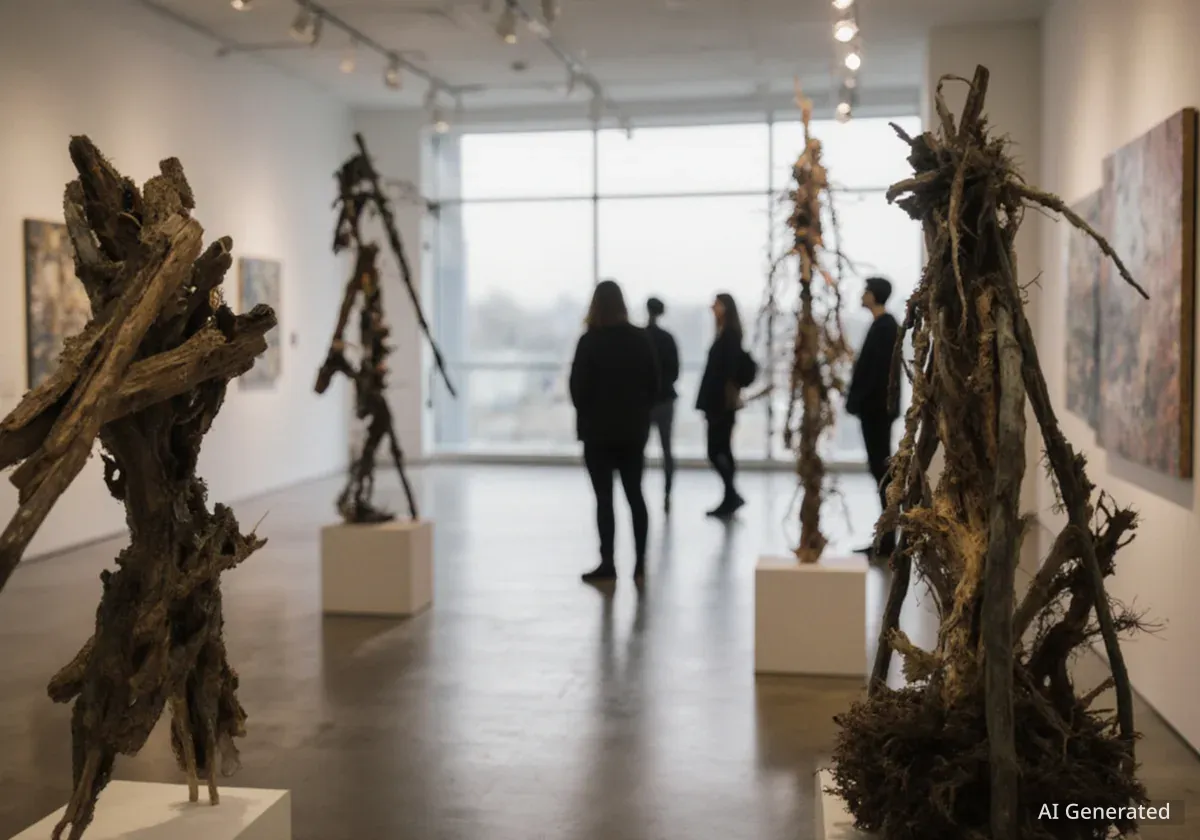
The Fondation Cartier pour l’art contemporain, a prominent European private cultural institution, is set to open its new Paris gallery this month. Located at the Place du Palais-Royal, directly across from the Louvre Museum, the new space will launch with an exhibition displaying over 600 works from its extensive collection.
Key Takeaways
- The Fondation Cartier's new gallery opens on October 25 at the Place du Palais-Royal in Paris.
- The inaugural exhibition, "Exposition Générale," will feature over 600 works by more than 100 artists.
- The building, redesigned by architect Jean Nouvel, offers 6,500 square meters of exhibition space.
- The new venue features five mobile platforms, allowing for highly flexible exhibition layouts.
- Future programming will focus on international artists, particularly from Africa and Latin America.
A Major New Cultural Hub in Central Paris
The new home for the Fondation Cartier occupies a significant portion of the former Louvre des Antiquaires complex. This move places the contemporary art foundation at the heart of Paris's historic cultural district, creating a direct dialogue with the iconic Louvre Museum.
The facility provides 8,500 square meters of public space, with 6,500 square meters dedicated specifically to exhibitions. In addition to galleries, the building includes a library, an auditorium, and a restaurant, establishing it as a comprehensive cultural destination.
A Location with Rich History
The site has a long and varied history. It was originally the Grand Hotel du Louvre, built to welcome visitors to the 1889 Exposition Universelle. It later became the Grands Magasins du Louvre department store from 1880 to 1977, before housing the Louvre des Antiquaires from 1977 until 2018.
Inaugural Exhibition Showcases 40 Years of Collecting
The opening exhibition, titled "Exposition Générale," runs from October 25, 2024, to August 23, 2026. Designed by the Italian studio Formafantasma, the show presents a curated selection from the foundation's collection of approximately 4,500 pieces.
Chris Dercon, the managing director of Fondation Cartier, explained the approach for the first exhibition. "I think if there is one characteristic about this first exhibition in relationship to the building, it is that we laid open the collection," he said. "Now we draw upon 40 years of collecting, and that means there is tremendous interest in our set of works."
Thematic Sections and Featured Artists
The exhibition is organized into four thematic sections that aim to reinterpret the traditional museum model:
- Machines d’architecture: An exploration of architectural concepts.
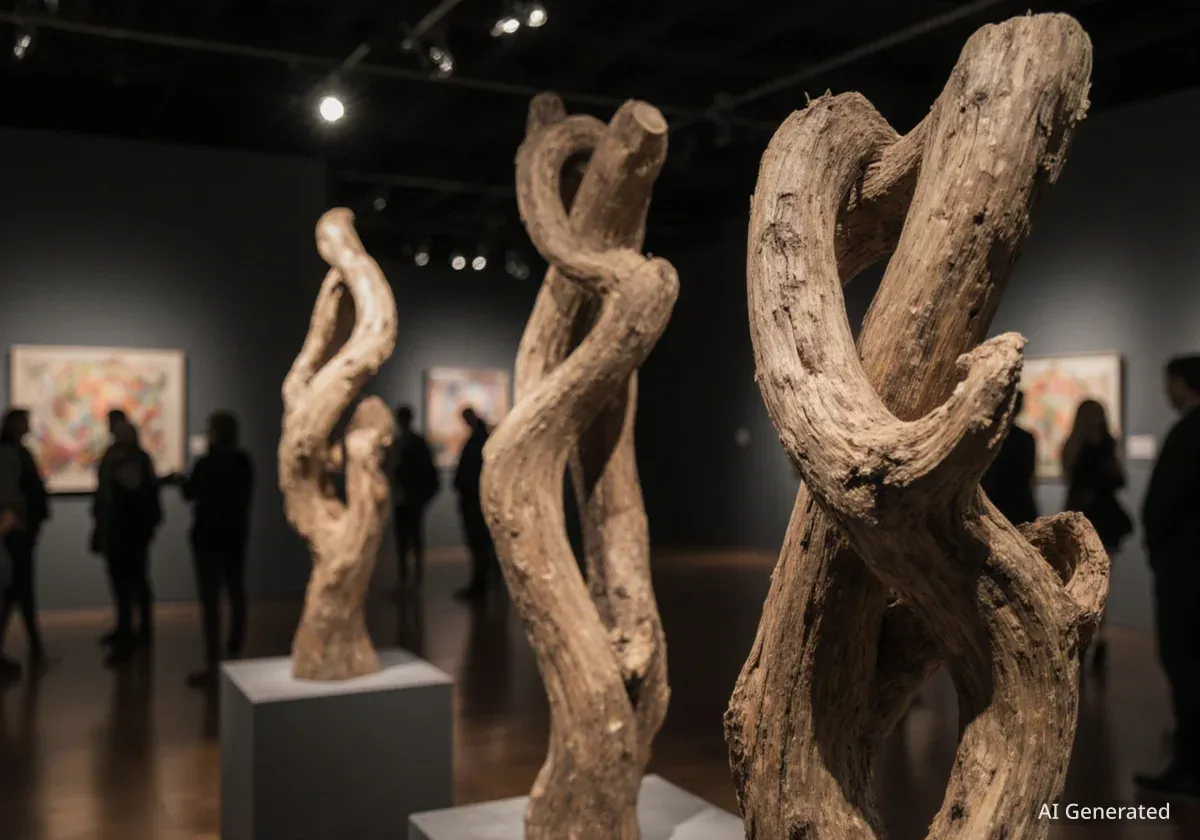
- Être nature: A section that brings natural elements, like a forest, into the gallery.
- Making Things: A space focused on materials and artistic techniques.
- un monde réel: An examination of technological and dystopian themes.
The show features works by renowned international artists, including Sarah Sze, Patti Smith, James Turrell, Vija Celmins, Joan Mitchell, and Damien Hirst. Dercon noted the unexpected dialogues created by placing works like Mitchell's "Grande Vallée VI" (1984) and Hirst's "Wonderful World Blossom" (2018) in close proximity.
Updating Art for a New Era
One notable piece, "EXIT," an immersive installation by Diller Scofidio + Renfro based on an idea by philosopher Paul Virilio, has been updated. Created in 2008 to map global migratory flows, its data was revised to reflect the current political and immigration landscape. "We had to update the piece because it's a work about the political situation which in terms of immigration and the data has changed enormously today," Dercon stated.
Adaptive Architecture by Jean Nouvel
The redesign was led by French architect Jean Nouvel, who also designed the foundation's previous glass-and-steel building on Boulevard Raspail, which opened in 1994. A key feature of the new space is its flexibility.
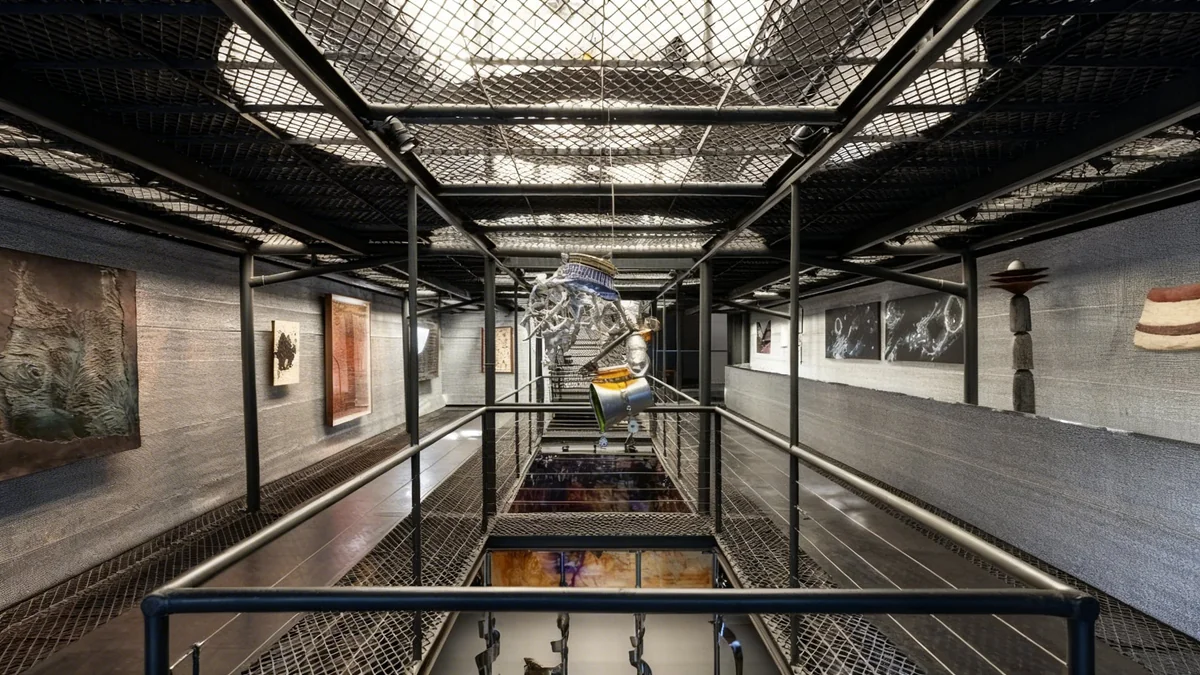
The building incorporates five large "mobile platforms" that can be moved and reconfigured for each exhibition. This allows curators and artists to create unique layouts tailored to either large group shows or solo exhibitions.
"We can choose the constellation of the platforms—we can choose the arrangement with the artist, with the curators; we can choose this also depending on the theme or character of an exhibition," explained Dercon.
He emphasized that this adaptability is perfect for the foundation's interdisciplinary collection, which spans art, design, architecture, and crafts. "In this building, all these disciplines, they talk to each other," he added. The design also integrates external areas, such as the historic Galerie Valois underground passage, which will host displays connected to the main exhibitions.
Future Vision and International Focus
The Fondation Cartier plans to host two major exhibitions annually, maintaining its transdisciplinary approach. The programming will have a strong international focus, with a particular emphasis on artists from Africa and Latin America.
This commitment is demonstrated by the first major exhibition planned for next autumn. Titled "The Harvest," it will be the first large-scale show in France dedicated to the Ghanaian artist Ibrahim Mahama.
Dercon highlighted the foundation's mission to introduce new voices to the Parisian art scene. "We will look for artists which are not well known here who deserve to be shown. It's going to be very different from other foundations because of the character of our exhibitions, our identity, our collection."
Visitor Information
Standard admission to the new gallery is €15. Free admission is available for visitors under 18, individuals on income support, disabled visitors, and asylum seekers. The cost of the extensive renovation project has not been disclosed, with president Alain Dominque Perrin describing it as "ridiculous—and confidential."
Paris as a Center for Private Art Foundations
The opening of this new venue reinforces Paris's growing reputation as a global hub for private art foundations. The Fondation Cartier, originally established in 1984, was a pioneer in this movement.
In recent years, other major patrons have followed suit. Most notably, Bernard Arnault, owner of the LVMH group, opened the Fondation Louis Vuitton in the Bois de Boulogne in 2014. The arrival of the Fondation Cartier in such a central and historic location further solidifies the significant role private institutions play in the city's vibrant contemporary art landscape.