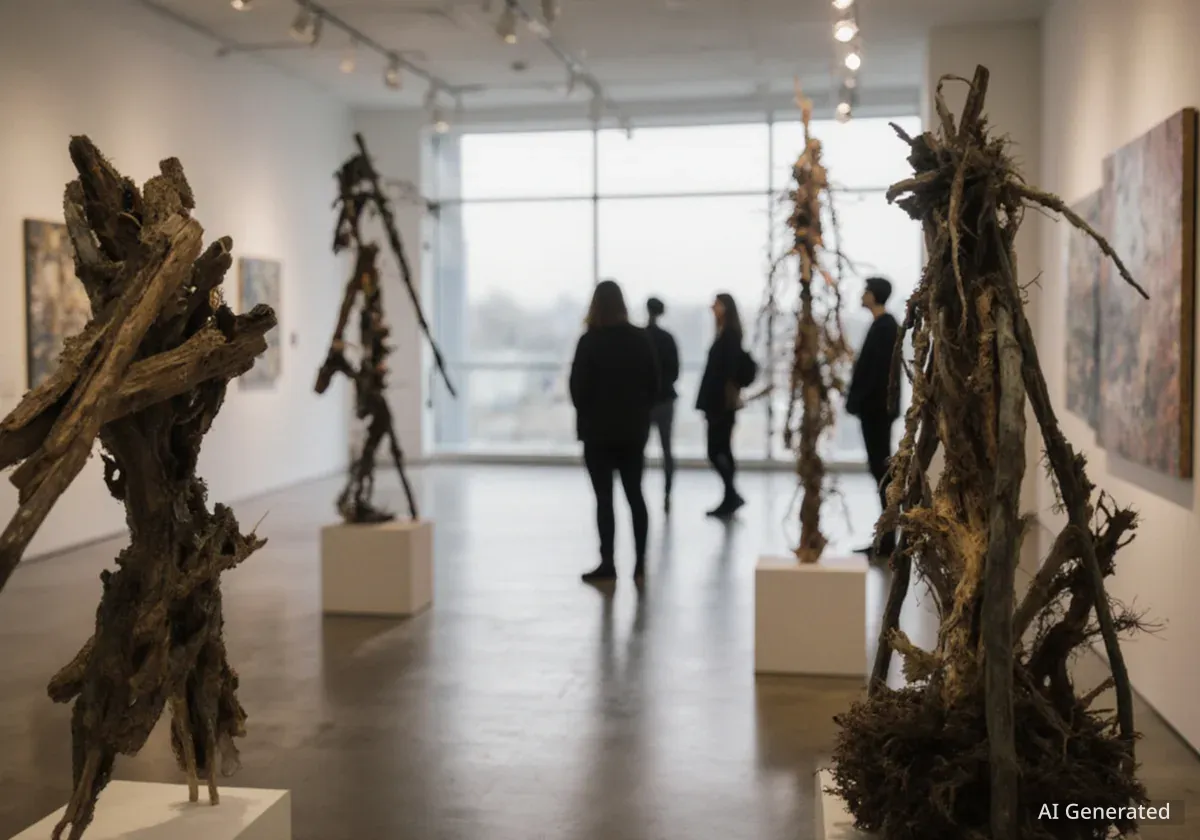
Dib Bangkok, a new private art museum, opened its doors on December 20, aiming to become a significant cultural bridge between Thailand and the global art world. Located in the heart of the Thai capital, the museum launched with its inaugural exhibition, "Invisible Presence," showcasing over 80 works from 40 international and Thai artists.
Key Takeaways
- Dib Bangkok, a new private art museum, opened on December 20.
- The inaugural exhibition, "Invisible Presence," features 80 works by 40 artists.
- The museum aims to connect Thai art with global contemporary art.
- It honors the vision of its late founder, Petch Osathanugrah.
- The architecture transforms an old steel warehouse into a three-floor cultural space.
A Vision Realized: The Legacy of Petch Osathanugrah
The museum is the realization of a decades-long dream by late Thai business magnate and art collector Petch Osathanugrah. His son, Purat "Chang" Osathanugrah, now Chairman, emphasized the museum's role in creating a dialogue.
"We want Dib Bangkok to be a bridge between the world and here, and here to the world," Chang Osathanugrah stated at the grand opening.
Petch Osathanugrah, known for his unique style and business acumen as CEO of Osotspa, a major energy drinks company, envisioned a world-class art institution. His family currently ranks 13th on Forbes' Thailand's 50 Richest list, reflecting a substantial legacy.
Did You Know?
The Osathanugrah family's business history dates back to 1891, making them a long-standing fixture in Thai commerce.
The collection itself is one of the largest private holdings of contemporary art in Southeast Asia, with over 1,000 artworks. Only a fraction of these are on display in the opening exhibition, promising future rotations and deeper dives into the collection's breadth.
"Invisible Presence": An Exhibition of Depth and Connection
The inaugural exhibition, "Invisible Presence," explores themes of perception and the unseen. It brings together a diverse array of works, aiming to "enable us to sense what cannot be seen."
Miwako Tezuka, Dib's Director and former curator at the Asia Society in New York, highlighted the exhibition's connection to the founder's personal tastes. "He was drawn to artworks that you can go back to again and again and find different meanings in — conceptual depth rather than spectacle," Tezuka explained. The show reflects a philosophical consideration of existence and a poignant sadness.
Visitors encounter interactive pieces, like Marco Fusinato's "Constellations." This artwork invites participation, allowing visitors to strike a wall with a baseball bat. The action generates 120 decibels of sound and creates a visible dent, symbolizing how art requires an audience to come alive.
Architectural Transformation: From Warehouse to Cultural Landmark
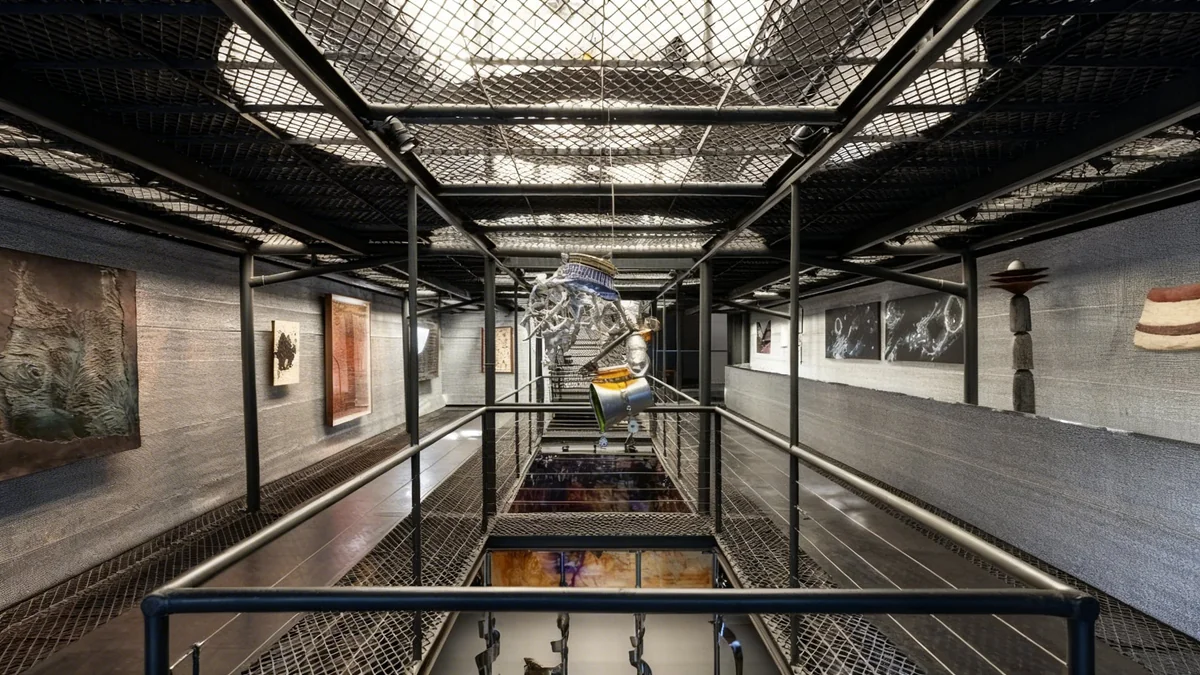
The museum building itself is a work of art. Acclaimed Los Angeles-based Thai architect Kulapat Yantrasast and his firm, Why Architecture, transformed an old steel warehouse in Bangkok's Klong Toey district. The 7,000-square-meter space now features three floors with a winding layout, creating intimate galleries and contemplative areas.
Daylight floods double-height rooms through skylights, illuminating monumental sculptures. The design, which Kulapat calls "acupuncture architecture," respects the original structure while adding surprising new elements.
Architectural Philosophy
Kulapat Yantrasast's "acupuncture architecture" approach focuses on light-touch conversions. This preserves the original character and context of old buildings while introducing modern, unexpected elements to revitalize the space.
Raw elements, such as exposed concrete pillars and Thai Chinese window grilles, have been preserved. New additions include a jagged sawtooth roof and an outdoor courtyard designed for performances and events. The name "Dib" itself means "raw" in Thai, reflecting this design philosophy.
Artist Soichiro Shimizu, a close friend of the late Petch Osathanugrah, noted the building's significance. "For me, it feels incomplete without him here, but it's a landmark for Bangkok. It shows that a Thai collector believed in art's global dialogue for decades," Shimizu said.
Engaging the Public and Shaping Bangkok's Art Scene
Since its launch, Dib's serene open spaces and large-scale installations, like James Turrell's immersive light experience "Straight Up," have gained significant attention on social media. The museum's opening has sparked discussions about Bangkok's growing prominence in the international art world.
Dib Bangkok is not Thailand's first private contemporary art museum. However, its global collection and ambitious vision set it apart. Sutima Sucharitakul, managing director of Nova Contemporary, highlighted the museum's educational role. "A museum that educates the audience is a cultural milestone for the country," she remarked.
The museum also aims to tell the complex history of Thai contemporary art. On the final floor, two rooms are dedicated to the late Montien Boonma, a Bangkok-born artist known for exploring mortality and spirituality through earthy materials. Visitors can interact with works like "Lotus Sound," an arrangement of 500 stacked terracotta bells, rarely seen in public.
Thai artists are presented in "equal visual conversation" with international artists, as Tezuka describes it. This subtle approach highlights connections and influences, such as the impact of the Italian postwar movement arte povera within Thailand.
"Geographical borders are man-made, and artists often don't care about them," Tezuka said. "I really want to see how creativity links up, to explore interesting affinities, resonances and direct influences."
Chang Osathanugrah sees the museum as having a social mission. As president of Bangkok University, a private institution founded by his grandparents in 1962, he connects the museum's purpose to broader cultural preservation. "Without that kind of museum, you kind of forget who you are culturally," he explained.
Tickets for Dib Bangkok are 550 baht for Thai nationals and 700 baht for foreigners. The founders hope that consistent, professional exhibitions and new acquisitions will foster a strong sense of community ownership and attachment, much like major museums in global art hubs.
- Dib Bangkok ticket prices: 550 baht for Thais, 700 baht for foreigners.
- The museum plans regular world-class exhibitions and new acquisitions.
- It aims to foster a sense of public ownership and cultural pride.