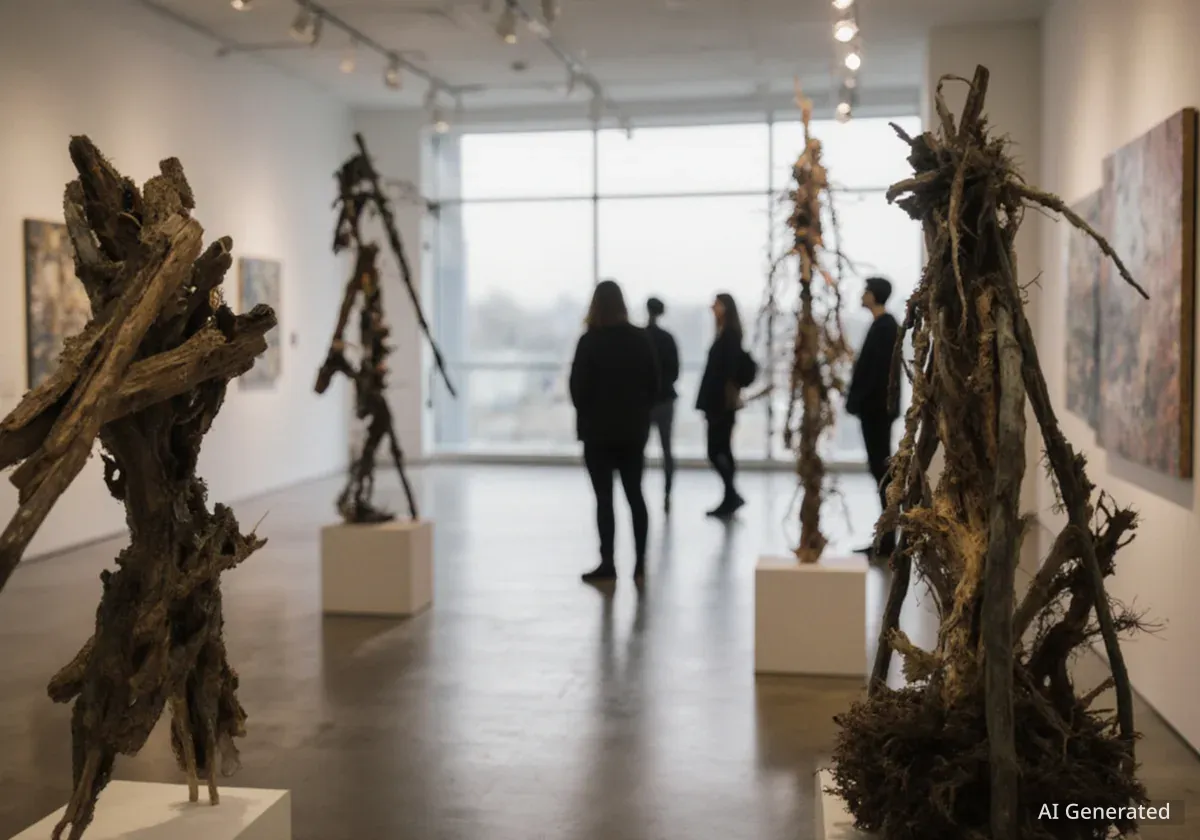
Artist Nick Cave's new exhibition, "Mammoth," has opened at the Smithsonian American Art Museum (SAAM) in Washington, D.C. The monumental show features a film installation with enormous woolly mammoths, towering sculptures, and a vast collection of everyday objects, marking the museum's largest-ever single-artist commission.
Cave, a queer Black artist based in Chicago, describes the exhibition as an intentional exploration of resurrection and history. He reflects on current societal discussions around historical narratives, stating, "This whole notion of disappearing, dissolving." Yet, he emphasizes, history often resurfaces, much like digging up ancient bones.
Key Takeaways
- Nick Cave's "Mammoth" is the largest single-artist commission in SAAM history.
- The exhibition includes a film, large-scale sculptures, and a 70-foot light table filled with collected objects.
- Cave uses the metaphor of disappearing and resurfacing history in his work.
- The artist's background in dance and fashion influences his multidisciplinary approach.
- The show opens amidst ongoing debates about historical narratives at the Smithsonian.
Bringing Ancient Giants to Life
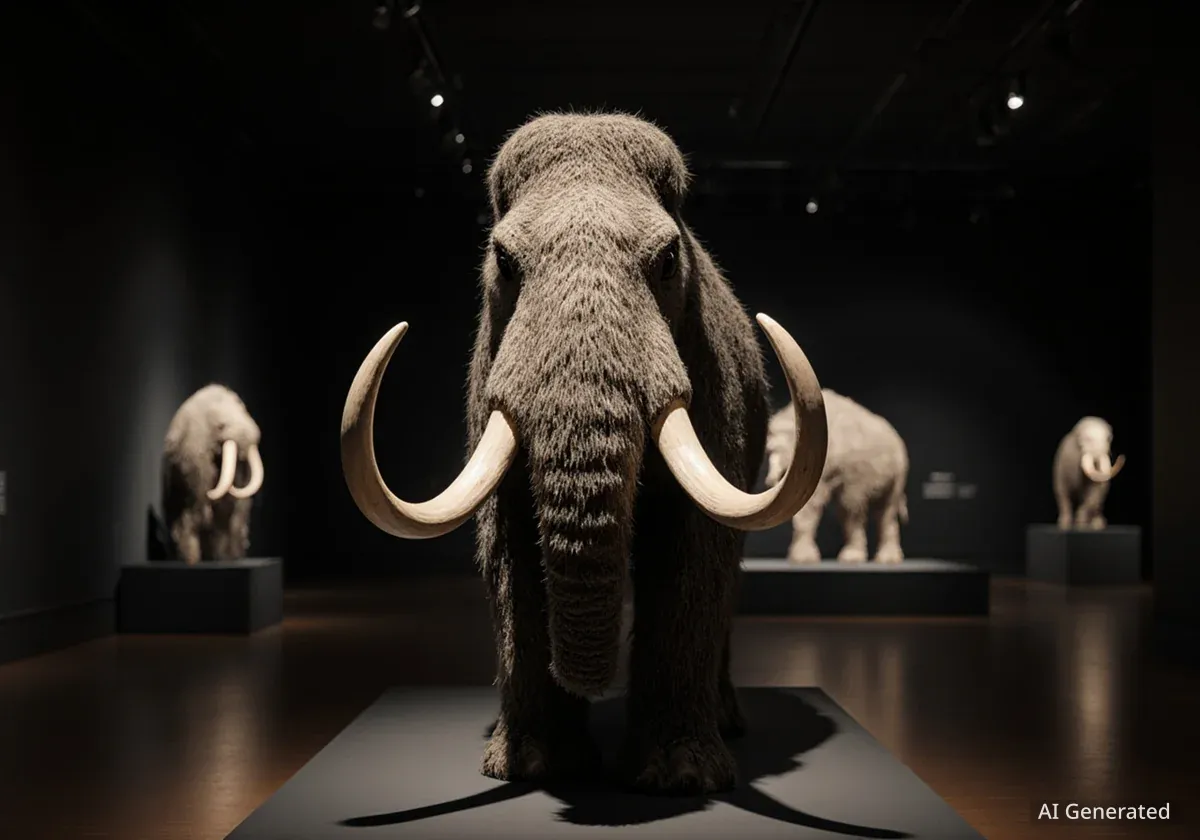
One of the most striking elements of "Mammoth" is the film installation titled "Roam." It features large-scale woolly mammoths lumbering across the Chicago lakefront. These creatures are not typical museum reconstructions.
Instead, they appear partially decomposed, as if recently unearthed from ancient permafrost. Four people animate each mammoth, walking in unison within their open metal frames wrapped in wispy hair. This gives them an eerie, almost spectral quality.
Did You Know?
The mammoths in Cave's film were designed in collaboration with Manifold, a metal fabrication studio in Chicago. The artist initially imagined them fully skinned but changed his vision after seeing people visible through their ribs, which he felt better reflected the "state of the world today."
Cave’s decision to portray these ancient creatures in such a way carries significant meaning. He suggests a connection between these partially visible forms and contemporary discussions about history and memory. The exhibition serves as a powerful commentary on what is remembered and what is overlooked.
A Personal Journey and Public Statement
The exhibition is deeply personal for Cave, who grew up as one of seven brothers in Missouri. He spent many cherished moments on his grandparents’ farm, surrounded by family members who created things with their hands. These experiences shaped his artistic perspective.
"I started thinking, how was I made? How did I become who I am?" Cave stated, reflecting on his creative process for the show.
His grandmother, in particular, inspired him. He recalls her quilting and cutting clothing patterns from brown paper bags, then pinning them directly onto her grandchildren to create garments. The act of making, coupled with the "big reveal" of finished pieces, instilled a sense of magic in him.
The Smithsonian's Broader Context
The exhibition opens at a time when the Smithsonian campus faces scrutiny. An executive order issued last March, titled "Restoring Truth and Sanity to American History," criticized the institution for promoting what it called "divisive race-centered ideology." This order authorized reviews of exhibitions and programming, aiming to emphasize "American exceptionalism" and remove what was termed "partisan narratives." Museum officials received warnings that federal funding could be withheld if they did not comply. This directive has already led to resignations and artist cancellations.
Beyond the Soundsuits
Nick Cave is widely recognized for his Soundsuits, which he began creating in 1991. These folkloric, futuristic sculptural forms emerged in response to the brutal police beating of Rodney King in Los Angeles, an event that sparked national outrage over police brutality. Cave estimates he has made nearly 500 Soundsuits since then, each reflecting his expansive imagination.
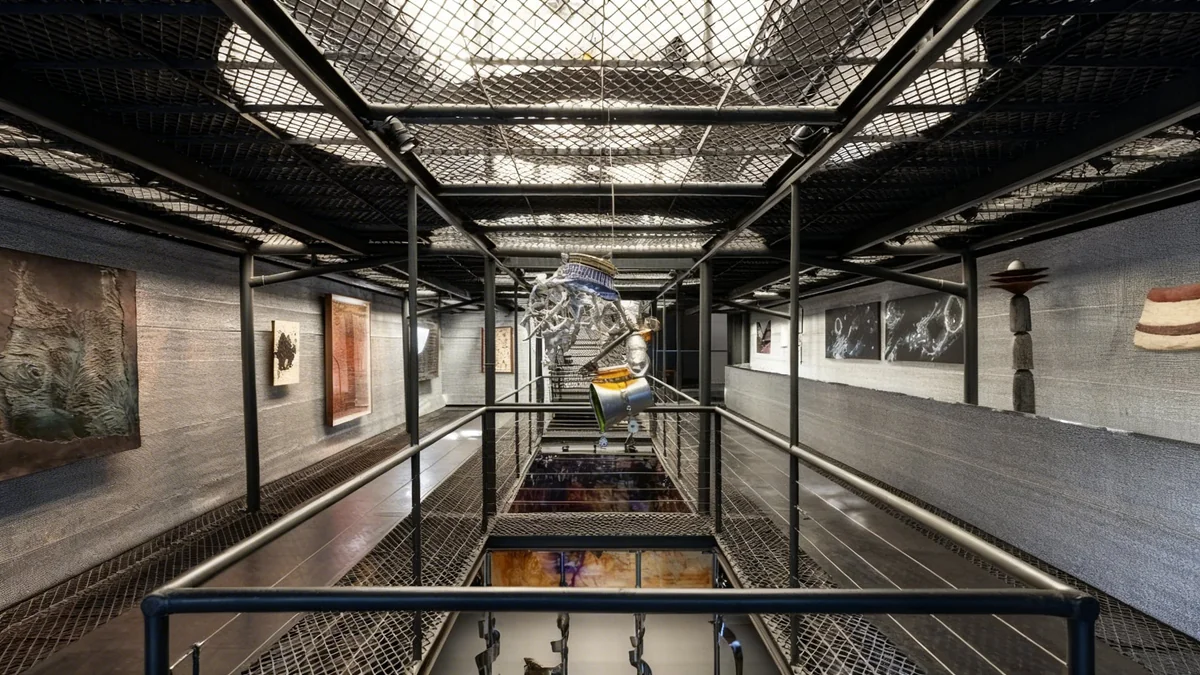
While the Soundsuits are a significant part of his legacy, "Mammoth" showcases a broader range of his artistic vision. The exhibition includes five towering lifeguard chairs and figurative bronze sculptures molded from Cave’s own body. A prominent feature is a 60-foot beaded curtain, which hangs over a mural designed by his partner, Bob Faust, inspired by Cave's childhood farm in Missouri.
- "Roam" Film: Features animated woolly mammoths.
- Lifeguard Chairs: Five towering sculptures.
- Bronze Figures: Sculptures molded from Cave's body.
- Beaded Curtain: A 60-foot installation over a mural.
- "A Lit History": A 70-foot light table with thousands of collected objects.
A Lit History: Everyday Objects as Art
Perhaps the most intimate work in the show is "A Lit History," a massive assemblage displayed on a 70-foot light table. This piece features thousands of objects Cave has collected over three decades, many from his grandparents’ home. These include pie pans, nails, thimbles, and crocheted doilies.
These everyday items are juxtaposed with Cave’s own elaborate creations, such as veils made from plastic ties and price tags, and garments stitched from tens of thousands of buttons. From a distance, "A Lit History" evokes wonder; up close, it reveals intricate craftsmanship. The piece highlights Cave’s unique ability to transform discarded items into profound artistic statements.
Michelle Boone, president of the Poetry Foundation and a longtime acquaintance of Cave, observed, "Nick has this unique ability to see beauty and art in things that people would otherwise be so quick to discard or not value."
One particular object holds special significance: a walking cane belonging to Cave’s youngest brother, Stacy, who passed away at 20. This cane is the first object visitors encounter in the gallery, placed without alteration. Cave explains, "It was his cane. I didn’t need to do anything. It was everything it needed to be."
A Timely Arrival
The exhibition comes at a moment of significant societal upheaval. Sarah Newman, James Dicke Curator of Contemporary Art at SAAM, emphasizes the relevance of Cave's work. "Nick is proposing a way to navigate through that change, a way to look at our environment and our heritage, take solace in it, honor and learn from it, and look toward creativity as a way to locate your place in the world," she said.
Cave believes the exhibition is arriving exactly when it should. He views his work as a response to the current climate, carrying both grief and celebration. The Smithsonian, Newman confirms, fully supports Cave’s vision. "The show is Nick’s vision," she stated. "We are presenting it. We will not change the show."
For Cave, having his family’s relics displayed at the Smithsonian is a profound experience. "My grandmother’s thimbles are in the Smithsonian," he remarked with a smile. "That is American history."