
Ceal Floyer, the influential conceptual artist celebrated for her minimalist and humorous works that transformed everyday objects, died on December 11. Her galleries, Lisson and Esther Schipper, confirmed her passing followed a long illness.
Floyer rose to prominence in the 1990s with a distinct artistic voice that was both playful and profound. Her practice often involved subtle interventions that challenged viewers' perceptions of space, language, and meaning, cementing her reputation as one of the most inventive artists of her generation.
Key Takeaways
- Conceptual artist Ceal Floyer passed away on December 11 after a long illness.
- She was known for her minimalist aesthetic, using everyday objects to create works with humor and intellectual depth.
- Her work is held in major international collections, including the Tate in London and the Museum of Modern Art in New York.
- Floyer was a recipient of prestigious awards and participated in major exhibitions like the Venice Biennale and Documenta.
An Understated Yet Profound Legacy
In a joint statement, Floyer's galleries described her as "one of the most radically conceptual artists of her generation, renowned for her concise humour and profoundly understated visual language."
Her work was celebrated for its ability to convey complex ideas with minimal means. The galleries noted that her creations were brilliantly inventive and, much like the artist herself, filled with intelligence and wit.
"She achieved, in her practice, a paradoxical condition of feather-light gravitas. Exuding a quiet but forceful presence, her distinct artistic voice was both playful and profound."
This unique combination of levity and seriousness defined her career and left a lasting mark on the contemporary art world. Her approach encouraged audiences to look closer at the world around them and question their assumptions.
Transforming the Everyday
Floyer's art was rooted in the manipulation of common objects and situations. She had a unique talent for isolating a single element and presenting it in a new context, thereby altering its meaning entirely.
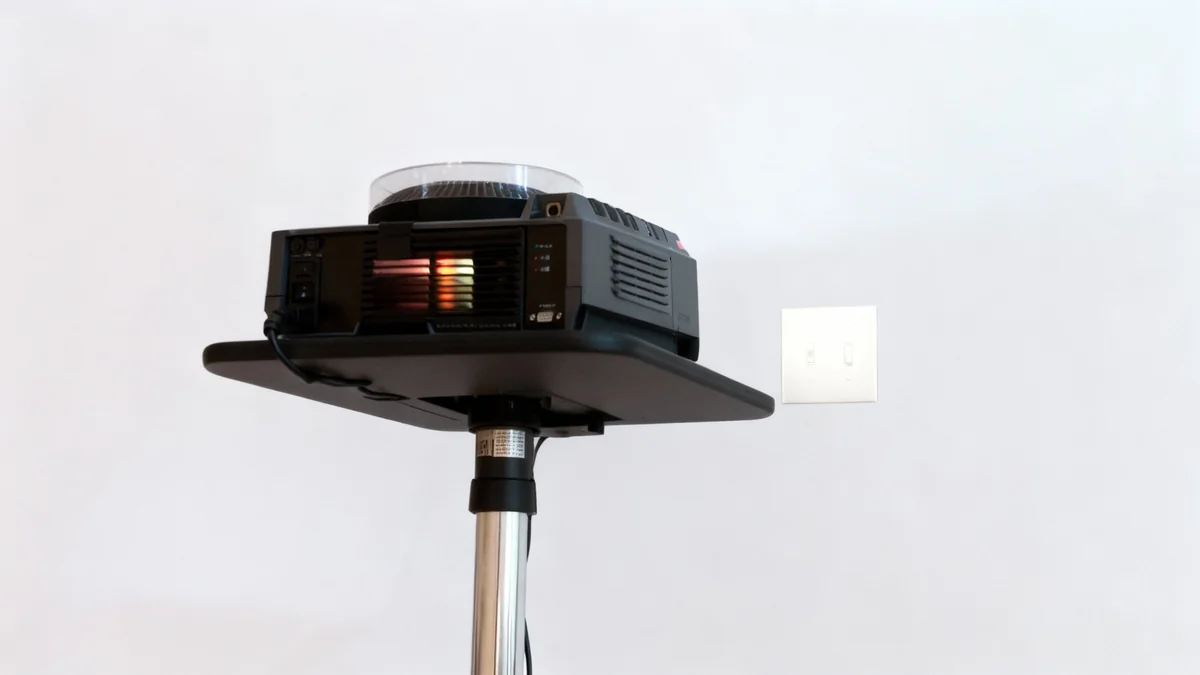
One of her most famous early pieces is Light Switch (1992–99), which is part of the Tate collection. The work consists of a slide projector beaming a life-sized image of a standard light switch onto a gallery wall. This simple act creates a disorienting effect, playing with the viewer's expectation of function and representation.
Another notable work, Nail Biting Performance (2001), involved the artist biting her nails into a microphone. The amplified sound turned a private, often anxious habit into a public performance, highlighting the sonic and social dimensions of a mundane action.
A Minimalist Approach
Ceal Floyer's work is often associated with minimalism due to its spare aesthetic. However, her primary focus was on the conceptual idea behind the object rather than just its form, using simplicity to deliver a powerful intellectual or humorous punch.
An International Career in Art and Education
Born in Pakistan in 1968, Floyer was raised in England. She attended the prestigious Goldsmiths College in London, a hub for the Young British Artists movement, before relocating to Berlin in the late 1990s, where she lived and worked for the rest of her life.
Beyond her artistic practice, Floyer was also a dedicated educator. Between 2014 and 2017, she served as a visiting professor in the sculpture department at the HFBK University of Fine Arts Hamburg.
The university released a statement acknowledging her impact. "Throughout her various teaching roles, she was an important source of inspiration for the university and its students," the institution noted. "We will miss her greatly as an artist and teacher."
Global Recognition and Acclaim
Floyer's contributions to contemporary art were widely recognized through numerous awards and high-profile exhibitions. Her work was featured in some of the world's most important art events.
- 53rd Venice Biennale (2009)
- Documenta 13 in Kassel (2012)
- Manifesta 11 in Zurich (2016)
She was also the recipient of the Preis der Nationalgalerie für junge Kunst in 2007 and the Nam June Paik Art Center Prize in 2009. Her solo exhibitions were held at major institutions, including the Palais de Tokyo in Paris (2009), the Museum of Modern Art in North Miami (2010), and the Kunstmuseum Bonn (2015).
A Legacy in Major Museums
Ceal Floyer's work is preserved in the permanent collections of many of the world's leading art museums, ensuring her influence will continue to be felt. These institutions include:
- The Museum of Modern Art (MoMA), New York
- Tate, London
- Neue Nationalgalerie, Berlin
- Kunstmuseum Basel
- Musée d’Art Moderne de Paris
- Museo Jumex, Mexico City
- National Gallery of Victoria, Melbourne
Through these collections, Floyer's quiet but powerful artistic inquiries will remain in dialogue with audiences and artists for years to come, a testament to her unique vision and intellectual rigor.