The art world navigated a complex and often challenging landscape in 2025, a year marked by political tensions, high-profile crimes, and the growing influence of artificial intelligence. Despite a pervasive sense of unease fueled by global conflicts and domestic policy shifts, the year also witnessed significant cultural triumphs, including major museum openings and a renewed appreciation for historical masterpieces.
From a sensational jewel heist at the Louvre to landmark legal rulings on art restitution, 2025 forced artists, institutions, and collectors to confront pressing questions about security, ownership, and the very nature of creativity. This period of disruption, however, also sparked resilience and cautious optimism for the future.
Key Takeaways
- The global art community faced significant challenges, including political instability and the impact of global conflicts, leading to what some described as a pervasive "gloom."
- Major museum developments provided bright spots, with the Grand Egyptian Museum fully opening and institutions like the Frick Collection and the Met's Rockefeller Wing unveiling major renovations.
- Legal and ethical issues were prominent, highlighted by a $100 million jewel heist at the Louvre, ongoing restitution of African artifacts, and a class-action lawsuit by artists against AI companies.
- The art market showed signs of recovery after a two-year slump, with cautiously optimistic results at Frieze London and Art Basel Paris.
- Artificial intelligence became a central topic, used as a tool by some artists while being challenged in court by others for copyright infringement.
A Climate of Uncertainty
The year began under a cloud of anxiety. In the United States, a charged political atmosphere created a sustained chill across cultural institutions. Changes in immigration enforcement led to tangible consequences, with international artists and art professionals reportedly becoming more hesitant to travel abroad for fear of being unable to re-enter the country.
Artist Gala Porras-Kim, who splits her time between Los Angeles and London, noted a distinct reluctance among her US-based peers to attend international events. She also stated that a governmental shift away from diversity initiatives resulted in the cancellation of some of her scheduled exhibitions.
This sentiment was echoed by gallery owner Thaddaeus Ropac, who characterized the mood for much of the year as "a kind of gloom." Global events, including the ongoing war in Ukraine and conflict in Gaza, contributed to a sense of despair that permeated artistic communities worldwide.
Activism and Expression
Compared to previous eras of social upheaval, some observers noted a more subdued response from the artistic community. Author Lauren O’Neill-Butler, who published a book on artist activism, suggested that many artists seemed more resigned or even docile. "People are really afraid to speak out," she remarked, drawing a contrast with the robust protest movements of the 1960s.
Museums and Masterpieces Shine Through
Despite the challenging environment, 2025 proved to be a banner year for museums and historical art. A notable trend emerged as audiences and scholars showed a renewed interest in Old Masters, possibly seeking solace and perspective outside the turbulent contemporary landscape.
Joseph Leo Koerner, chairman of Harvard’s art history department, observed a potential "shift in the overwhelming centrality of contemporary art" among his students. He suggested that people were looking for art that "takes them out of this self-evident condition that we’re all in."
This renewed focus was supported by a series of blockbuster exhibitions and institutional milestones:
- The Frick Collection: The celebrated New York institution reopened its doors after a comprehensive restoration and reimagining by architect Annabelle Selldorf.
- Grand Egyptian Museum: After years of anticipation, the massive museum in Giza, Egypt, finally opened fully, showcasing its vast collection of ancient artifacts in 32,000 square meters of gallery space.
- Metropolitan Museum of Art: The Met reopened its Michael C. Rockefeller Wing, presenting a new installation of art from Africa, Oceania, and the Americas.
- Zayed National Museum: In Abu Dhabi, the Foster + Partners-designed museum was set to open, further cementing the Gulf region's growing cultural influence.
- Old Masters Exhibitions: Major shows dedicated to historical figures like Fra Angelico in Florence, Sienese painters in London, and Caspar David Friedrich in New York drew significant praise and attention.
Heists, Restitution, and Legal Battles
The year was also defined by significant legal and ethical dramas that captured public attention. The most shocking event was the brazen October robbery at the Musée du Louvre in Paris, where thieves made off with nearly $100 million worth of French crown jewels during museum hours.
The incident raised serious questions about museum security and stewardship. Christopher A. Marinello, a lawyer specializing in art restitution, warned that the high price of gold could precipitate further heists and advocated for stronger "cultural-heritage terrorism laws" to deter such crimes with more severe penalties.
The Fight for Repatriation
Efforts to return looted and historically significant objects to their rightful owners continued to gain momentum. The Netherlands agreed to return 113 Benin Bronzes to Nigeria, part of a broader movement of repatriation of African artifacts. In a landmark case in the U.S., the Museum of Fine Arts Boston restored ownership of two 1850s works by the enslaved Black potter David Drake to his descendants.
Meanwhile, the art world grappled with the disruptive force of artificial intelligence. A group of artists filed a class-action lawsuit in California against several AI companies, accusing them of copyright infringement for using their work to train image-generating models without consent.
"The most sensational restitution cases of the year likely went unnoticed by the art world, since they ideally happen entirely behind closed doors."
The Market's Cautious Rebound and AI's Creative Turn
After a two-year slump, the art market began to show signs of life in the latter half of the year. A cautiously optimistic atmosphere at major art fairs like Frieze London and Art Basel Paris suggested that a recovery might be underway. The reopening of the Fondation Cartier pour l’Art Contemporain in a new Jean Nouvel-designed building further bolstered Paris's standing as a key art capital.
While many in the art world expressed fear and skepticism about AI, others began to explore its creative potential. American painter David Salle, for example, trained a computer to mimic the styles of Giorgio de Chirico and Edward Hopper, using the technology as a tool in his own creative process.
Thaddaeus Ropac remained optimistic about technology's role, dismissing concerns that AI would hurt gallery web traffic. "Our gallery’s web traffic is constantly getting bigger," he stated, arguing that machine learning is entering a "creative phase."
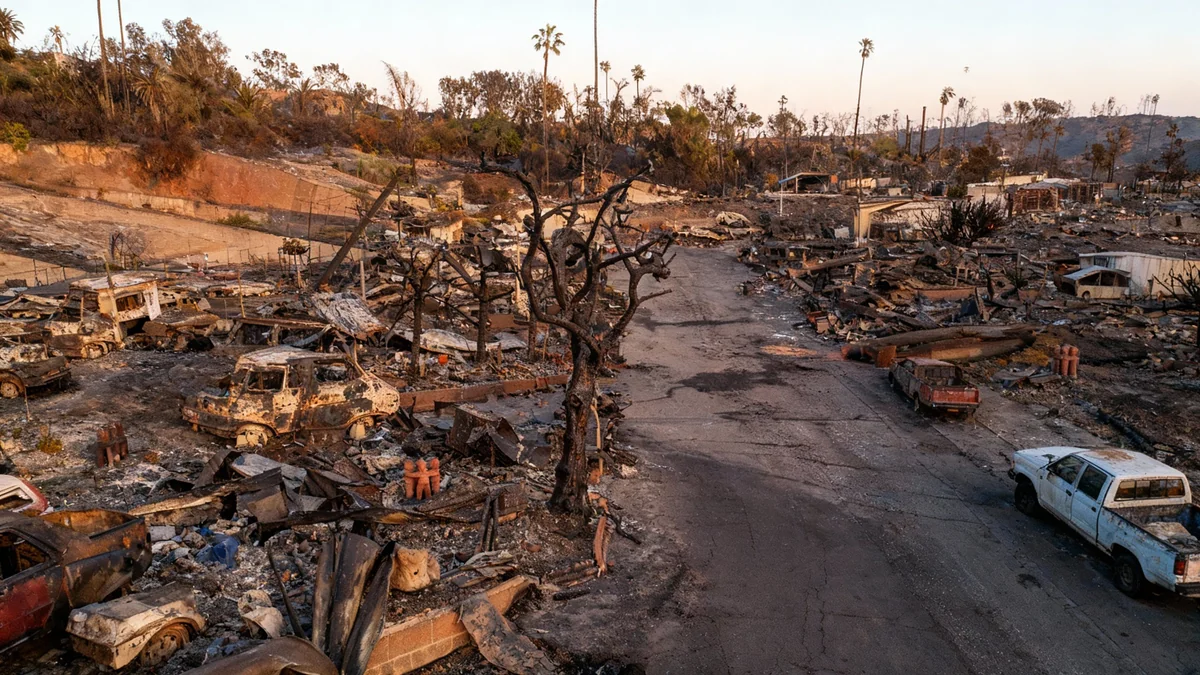
As a difficult year drew to a close, a sense of resilience emerged. The community spirit shown by Los Angeles artists in restoring fire-damaged works, and the belief that current challenges might forge a new sense of purpose for institutions, offered a glimmer of hope. Looking ahead, Ropac expressed a sentiment shared by many: "I think we’re in for a much better 2026."