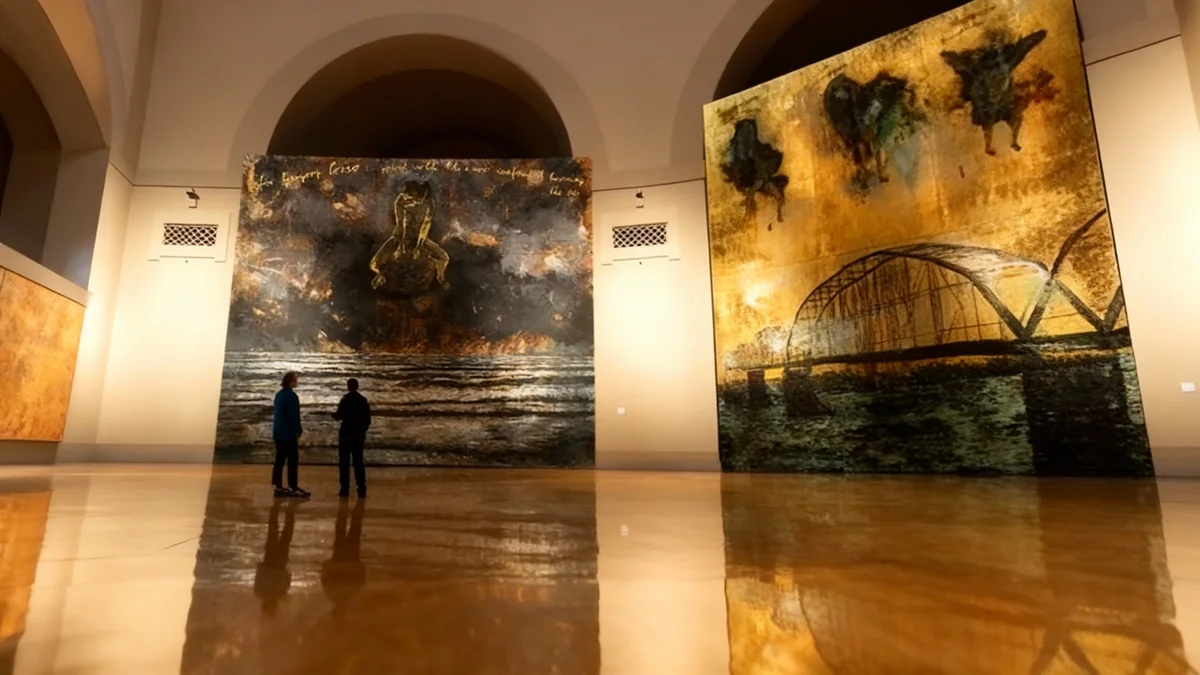
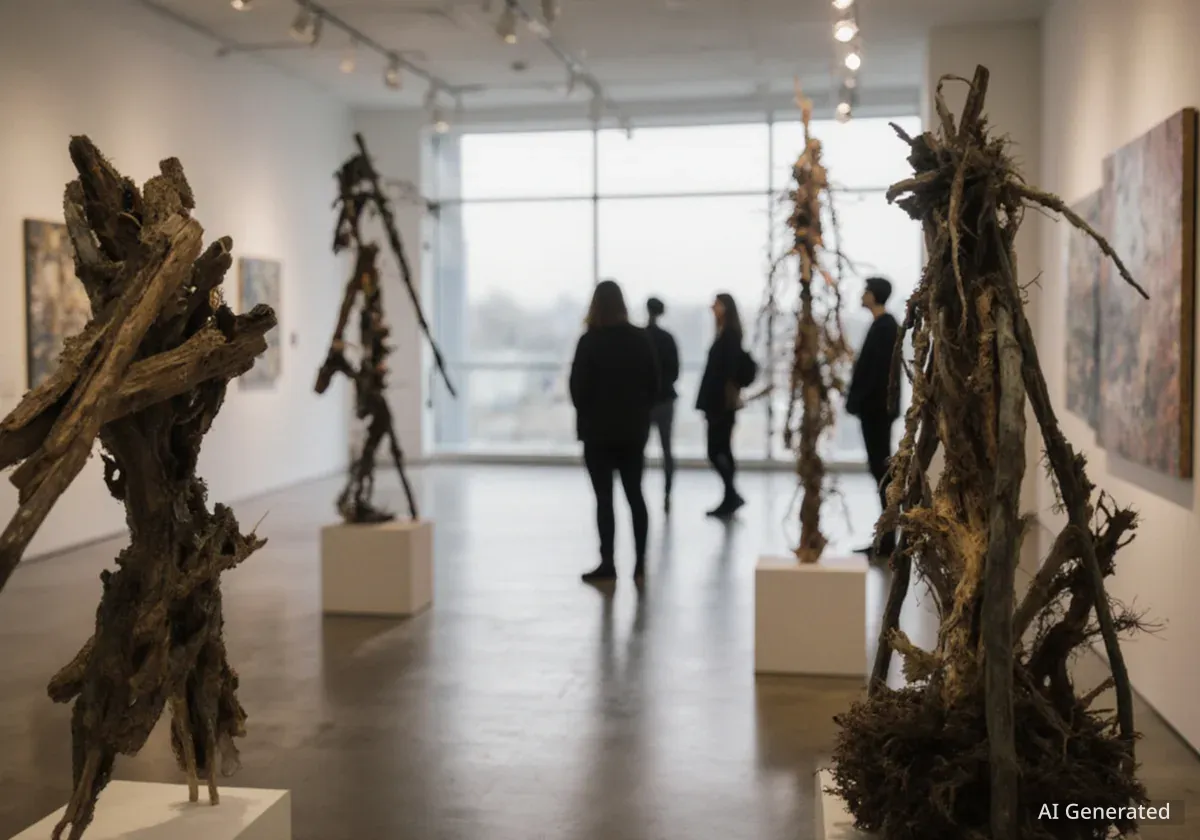
German artist Anselm Kiefer's latest monumental series, "Becoming the Sea," is now on display at the Saint Louis Art Museum. This exhibition features towering canvases that explore themes of history, mortality, and the natural world, drawing inspiration from major rivers like the Mississippi and Europe's Rhine.
Kiefer, known for his profound and often somber reflections on history, has created works that stand three stories tall. These new paintings dominate the museum space, offering visitors an immersive experience into the artist's complex vision.
Key Takeaways
- Anselm Kiefer's "Becoming the Sea" exhibition is at the Saint Louis Art Museum.
- The show features monumental, three-story-tall paintings inspired by rivers.
- Kiefer explores themes of life, death, and historical memory.
- His work often incorporates unusual materials like lead and fire.
- Kiefer, born in 1945, confronts Germany's post-World War II past in his art.
Rivers as Symbols of Life and History
The core of Kiefer's new exhibition lies in his depiction of rivers. He specifically focuses on the Mississippi River in the United States and the Rhine River in Europe. These waterways symbolize the continuous flow of life, history, and memory.
Kiefer finds deep meaning in rivers. He sees them as entities that dissolve into the sea without fear, a metaphor he applies to life and death. This idea comes from Beat Generation poet Gregory Corso, who wrote, "Spirit is life … like a river unafraid of becoming the sea."
"A river is something special; a river dissolves itself in the sea," Kiefer explained. "And it's not afraid of this. As I am not afraid of my death, you know?"
This perspective underlines the philosophical depth present in each brushstroke and material choice within the exhibition.
Did You Know?
Anselm Kiefer's paintings in the "Becoming the Sea" series are each three stories tall, making them some of his most ambitious works to date.
A Career Rooted in Post-War Memory
Born in Germany in 1945, Anselm Kiefer grew up amidst the devastation of World War II and the lingering shadow of the Holocaust. This historical context profoundly shaped his artistic practice. Many Germans after the war avoided discussing these painful memories.
Kiefer, however, dedicated his career to confronting this silence. As a young art student, he provocatively photographed himself performing the Nazi salute. This act was not an endorsement, but a powerful statement meant to force a reckoning with the past.
Historical Context
Kiefer's early work challenged Germany's post-war silence on the Holocaust and Nazi era. His art often acts as a form of historical inquiry, pushing viewers to engage with difficult truths.
He believes artists have a crucial role in society. "If the artist is in the world, like I am in the world, as I look what happens, then automatically you have a role," Kiefer stated.
Materials and Abstract Landscapes
Over several decades, Kiefer has consistently explored themes of memory, loss, and destruction through abstract landscapes. His work is distinctive for its use of unconventional materials.
- Melted lead
- Fire
- Tar
- Ash
- Straw
- Shellac
- Gold leaf
- Sediment of electrolysis
These elements are not merely decorative. They are integral to the meaning of his art, adding texture, weight, and symbolic resonance. He often incorporates chemistry into his process, creating unexpected colors and surfaces.
The Process Behind the Art
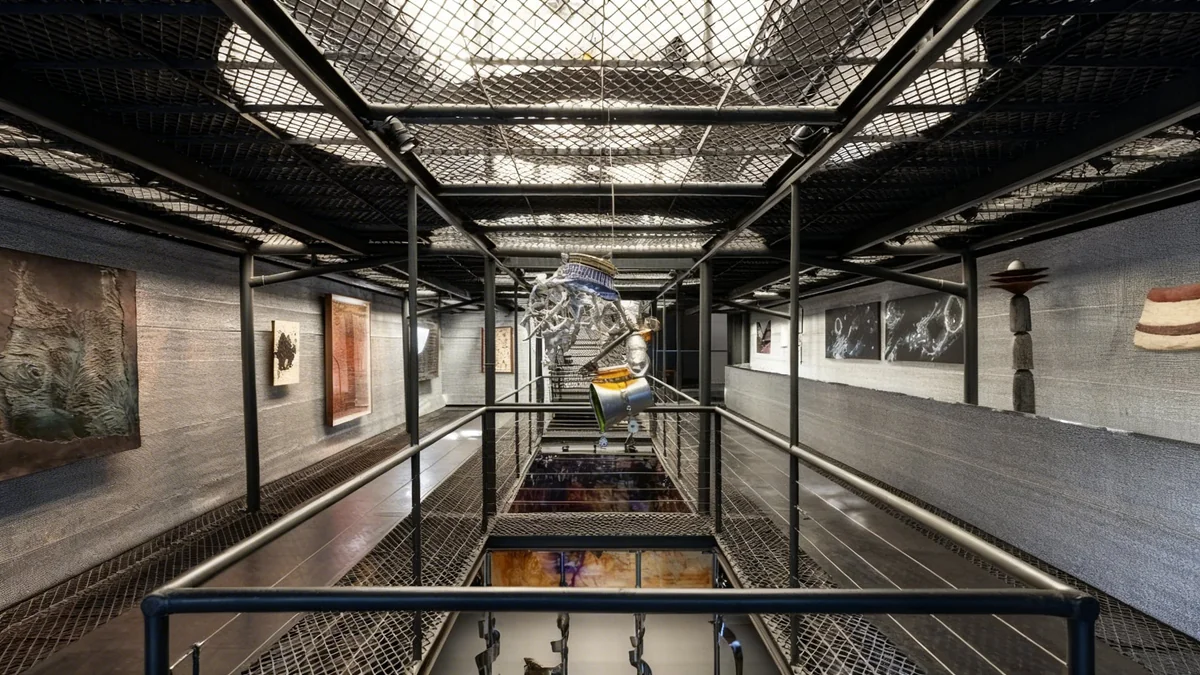
Kiefer's studio, located outside of Paris, is a vast space where he manipulates these materials. The presence of melted lead and fire are common sights, reflecting the intense and often destructive nature of his creative process.
His piece "Grenze (Border)," created in 2024, exemplifies this approach. It uses emulsion, oil, acrylic, shellac, gold leaf, and sediment of electrolysis on canvas. This blend of traditional and industrial materials creates a rich, layered surface that invites close inspection.
A Prolific Artist's Perspective
Today, at 80 years old, Anselm Kiefer is considered one of the most prolific living artists. His works fetch millions at auction and are held in major museums worldwide. Despite this widespread acclaim, Kiefer maintains a unique perspective on his achievements.
When asked about what he is most proud of in his extensive career, Kiefer offered a surprising response. He laughed and said, "You ask strange questions! I am not proud. I am disappointed!"
He continued, "Because every morning I go in the studio and say, 'Oh, what I have done yesterday?' You know, and then I continue. I continue. Proud? No, no. I don't know this word for me, proud." This humility and relentless drive for improvement define his artistic journey.
The "Anselm Kiefer: Becoming the Sea" exhibition will remain at the Saint Louis Art Museum through January 25.