A new exhibition at the Rijksmuseum in Amsterdam reveals that manipulated images are far from a modern phenomenon. Titled "Fake!", the exhibition showcases how photographers have been altering images since the mid-19th century, long before the advent of digital tools like Photoshop and AI.
The show, opening in February 2026, features 52 images from the museum's extensive collection. These works date from 1860 to 1940 and demonstrate early techniques of visual deception, primarily through collage and montage.
Key Takeaways
- Image manipulation predates digital technology, with techniques like collage used since the 1800s.
- Early fake photographs primarily served entertainment, political satire, or advertising purposes.
- The Rijksmuseum's "Fake!" exhibition features 52 manipulated images from 1860-1940.
- Public perception of photographic truth has evolved over time, especially with the rise of photojournalism.
Early Techniques of Photographic Deception
The exhibition highlights two main methods used by early photographers to create their illusions: collage and montage. Photo collage involved physically cutting and pasting different image elements together. Photomontage, on the other hand, combined multiple pictures which were then rephotographed to create a single, composite image.
Hans Rooseboom, the exhibition's curator, explained that people have always explored photography's possibilities. "We're used to Photoshop and other digital ways of altering images, but we wanted to show that it's always been the case, since the very early days of photography," Rooseboom stated. This historical perspective challenges the common belief that image manipulation is a recent problem.
Did You Know?
Approximately three-quarters of the images in the "Fake!" exhibition were created for entertainment purposes, showcasing a public appetite for visual novelty and humor even in the 19th century.
Fantastical Scenes and Everyday Tricks
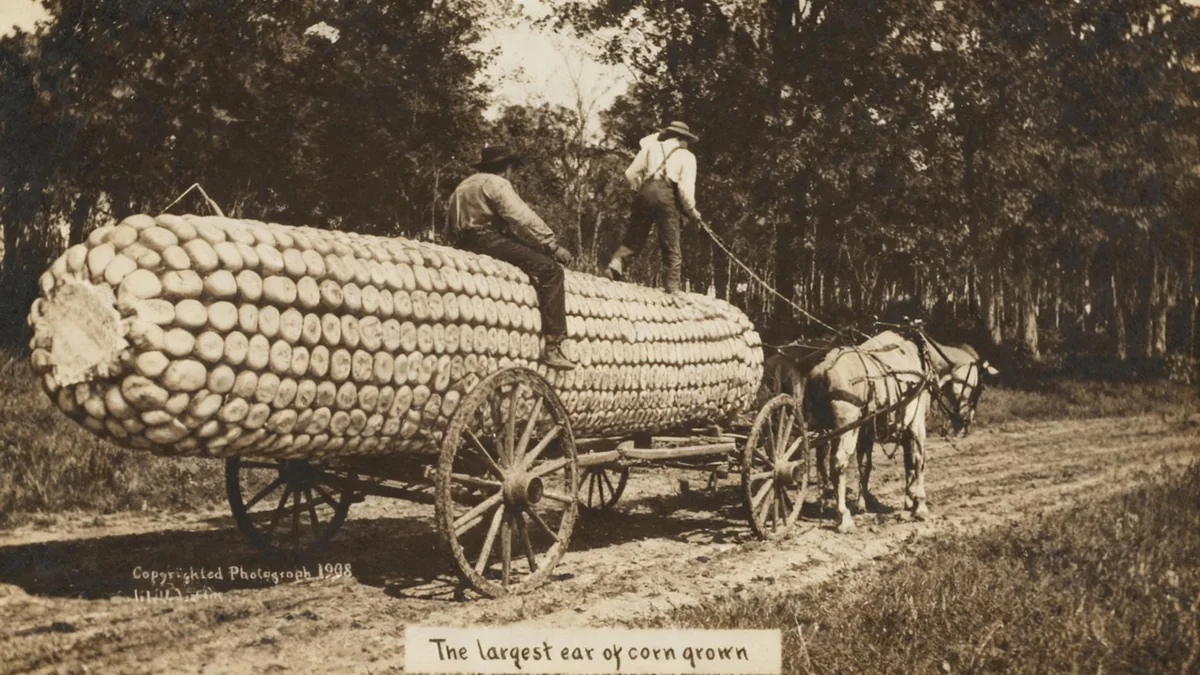
Many of these early manipulated images depicted overtly fantastical scenes. Examples include a man pushing a giant version of his own head in a wheelbarrow or an enormous ear of corn being pulled by a horse and cart. These images were clearly designed to amuse and astonish viewers, rather than to deceive them into believing they were real.
Some manipulations were achieved through simple, widely known tricks. Rooseboom mentioned an "amateur trick" for photomontage, described in magazines and booklets from the 1890s. This involved combining several negatives during printing or cutting and pasting prints before rephotographing them. This suggests that basic image doctoring was accessible to many and not just professional artists.
Motivations Behind Early Fakes
Unlike today's viral deepfakes, early manipulated photographs were not always created to mislead. The primary motivation, according to Rooseboom, was entertainment. Roughly 75% of the exhibition's images were made for this purpose, reflecting a society less accustomed to photographic realism and more open to visual whimsy.
Beyond entertainment, other significant motives included advertising and political commentary. Photographers used these techniques to create eye-catching advertisements or to make satirical statements about current events and figures.
Historical Context
In the 19th century, people were more familiar with paintings, prints, and drawings, which often depicted non-literal truths. Photography was a new medium, and the expectation for it to be strictly realistic developed slowly over time.
Political Satire Through Photography
Political satire proved a powerful use for manipulated photography. German artist Helmut Herzfeld, known by his pseudonym John Heartfield, was a pioneer in this area. Fiercely opposed to Hitler and the Nazi party, Heartfield created striking photomontages to mock the regime.
"Heartfield is both the best-known and, I think, the smartest person to have used photography to mock Nazism and all that the regime did, and to try to warn people about all the dangers that were looming or already taking place," Rooseboom observed.
One notable example from 1934, featured on the cover of the Workers’ Illustrated Magazine, shows Joseph Goebbels, the chief Nazi propagandist, as Hitler’s barber. The image depicts Goebbels transforming Hitler into Karl Marx, a pointed critique aimed at attracting working-class voters.
Evolving Perceptions of Photographic Truth
The rise of photojournalism in the inter-war period marked a significant shift in public expectations. As popular magazines began to extensively feature photographs in the 1920s and 1930s, a new standard for photographic truth emerged.
Before this period, a lack of widespread photographic literacy meant people were less inclined to mistrust images. They were simply not conditioned to expect photographs to be inherently truthful in the same way modern audiences are.
Today, with the proliferation of digital images and advanced AI tools, the debate around photographic authenticity is more intense than ever. Artists like Hey Reilly, known for AI-altered celebrity images on Instagram, use fakery to highlight societal obsessions.
"If someone thinks the fakery is about trying to fool people, they’ve completely missed the point," artist Hey Reilly stated. "We still have this deep-rooted sense that ‘the camera never lies’ — you can see that in how worried people are about AI images, especially in politics."
Peter Ainsworth, a course leader at the London College of Communication, noted that contemporary digital manipulation often serves as a critical voice against technology's inherent problems. He highlighted the importance of an artist's motive, citing the "Trump Gaza" video as an example where satirical intent was altered by its wider distribution.
Modern vs. Historical Perception
People in the 19th century saw fewer photographs in their entire lives than most individuals do in a single day now. This constant exposure has trained modern eyes to be more discerning, yet also more susceptible to sophisticated fakes.
The "Fake!" exhibition reminds us that our relationship with photographic truth is a complex and continually evolving one. From amusing postcards to biting political commentary, the art of manipulating images has a rich and surprisingly long history, laying the groundwork for the digital challenges we face today.