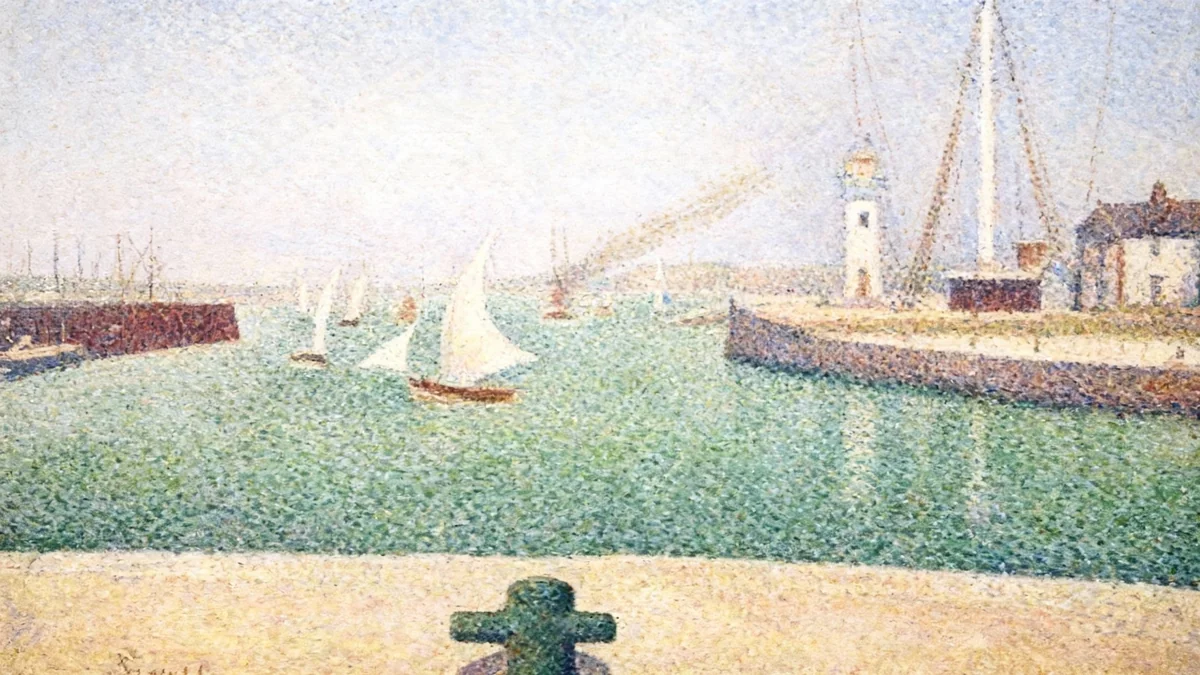

A new exhibition, "Seurat and the Sea," has opened at the Courtauld Gallery in London, marking the first dedicated show to the artist Georges Seurat in almost 30 years in the UK. This unique presentation focuses entirely on Seurat's marine paintings, bringing together 17 of his 24 known seascapes and eight related sketches.
The exhibition offers a fresh perspective on the pioneering Neo-Impressionist, famous for his 'pointillist' technique. It highlights a lesser-known but significant aspect of his brief career: his deep engagement with the Normandy coast.
Key Takeaways
- "Seurat and the Sea" is the first UK exhibition in nearly 30 years dedicated to Georges Seurat.
- The exhibition focuses exclusively on his seascapes, featuring 17 paintings and 8 sketches.
- It reveals a different side of Seurat, moving away from the rigid figures of his city scenes.
- Seurat's summers on the Normandy coast were crucial for his artistic development and exploration of light.
- The exhibition runs from February 13 to May 17 at the Courtauld Gallery, London.
Seurat's Coastal Journeys and Artistic Evolution
Georges Seurat, often remembered for his monumental urban scenes like "A Sunday on La Grande Jatte," spent five consecutive summers painting along the Normandy coast. These campaigns, from 1885 to 1890, were crucial for his artistic development.
His coastal travels began in Grandcamp in 1885, followed by Honfleur in 1886, Port-en-Bessin in 1888, Le Crotoy in 1889, and Gravelines in 1890. These locations, largely untouched by tourism at the time, allowed Seurat to focus intently on the raw elements of sea and sky.
Artist's Brief Life
- Born: 1859, Paris
- Died: 1891, aged 31
- Cause of Death: Pneumonia, meningitis, or diphtheria
- Total Paintings: Fewer than 50
Unlike his famous city scenes, which often depicted stiff, formal figures, Seurat's seascapes rarely feature people. When figures appear, they are indistinct, small, and integrated into the vastness of the landscape. This absence of human drama shifts the focus entirely to the interplay of light, water, and atmosphere.
The exhibition highlights this contrast, showing how Seurat used his signature Divisionist technique to capture the changing moods and luminosities of the Channel coast. His method, which involved applying separate dots of pure, unmixed color, aimed to achieve optical fusion in the viewer's eye, creating a more vibrant and luminous effect.
The Divisionist Technique and Critical Reception
Seurat was the leading figure of Neo-Impressionism, also known as Divisionism or Pointillism. This technique involved applying small, distinct dots of pure color directly onto the canvas. The idea was that the viewer's eye would then blend these colors optically, resulting in a more brilliant and intense hue than if the colors were mixed on a palette.
When Seurat first introduced this radical approach, it divided critics. Many found the dots and spots unsettling. One critic described the canvases as being made with "artillery and confetti." Others called the artists "bubonistes," suggesting they were spreading a plague of dots.
"We cannot abide his Sunday at La Grande Jatte, which is crude in tone and in which the figures are cut out like poorly made mannequins."
This quote from a contemporary critic reflects the initial harsh judgment of Seurat's most famous work. Even fellow Impressionist Camille Pissarro expressed discomfort with the "frozenness" he perceived in Seurat's and Signac's work.
Despite the initial skepticism, Seurat meticulously documented his reviews, both positive and negative. He called his technique "chromoluminarism," though the terms Neo-Impressionism, Pointillism, and Divisionism gained more traction.
Artistic Context
The Impressionists, who preceded Seurat, focused on capturing fleeting moments and the effects of light. They mixed colors on their palettes. Seurat and the Neo-Impressionists sought a more scientific and methodical approach to color and light, believing "optical fusion" created true luminosity.
Seascapes: A Different Side of Seurat
The "Seurat and the Sea" exhibition reveals a softer, more fluid aspect of Seurat's work. While his city paintings, often called "battle canvases," feel painstakingly constructed, the seascapes show a greater responsiveness to nature's immediate effects.
The artist himself acknowledged the difference, telling poet Émile Verhaeren that summers were for "cleansing one’s eyes of the days spent in the studio and translating as accurately as possible the bright light, in all its nuances."
He would create oil sketches outdoors, often on the beach or cliffs, using a small portable painting box called a boîte a pouce. Grains of sand found in some of these sketches attest to his direct engagement with the environment. The larger, finished paintings were then developed in his lodgings or studio.
In a letter from Honfleur in 1886, Seurat wrote to fellow artist Paul Signac, expressing a desire to "get drunk on light once again." This sentiment perfectly encapsulates the spirit of his marine work.
The Power of Light and Harmony
Paul Signac, a close associate and fellow Neo-Impressionist, was deeply impressed by Seurat's seascapes. Years after Seurat's death, upon seeing the Crotoy seascapes in Seurat's mother's home, Signac remarked on how "all the awkward aspects of the craft disappear – and only the benefit of light and harmony remains." He believed these paintings created their own light, making them particularly effective in softer indoor settings.
- Grandcamp (1885): First coastal campaign, focusing on the fishing village.
- Honfleur (1886): A more established resort, but Seurat still emphasized natural elements.
- Port-en-Bessin (1888): Depictions of harbors and low tides.
- Le Crotoy (1889): Features subtle human figures on wide beaches.
- Gravelines (1890): Known for its tranquil evening scenes and harbor details.
The exhibition offers a unique opportunity to witness this transformative power of light and color. It encourages viewers to look closely and allow their eyes to blend the myriad dots, experiencing the luminosity Seurat intended.
This collection provides a welcome contrast to the long, grey days of winter, transporting viewers to the sun-drenched coasts of Normandy. It invites a new appreciation for an artist often typecast by his more formal, urban masterpieces.
Visiting "Seurat and the Sea"
The "Seurat and the Sea" exhibition is on display at the Courtauld Gallery, London. It runs from February 13 to May 17.
This focused exhibition, spread across two rooms, is characteristic of the Courtauld's approach to presenting art. The gallery has a history of successful, intimate shows, including those dedicated to Van Gogh's self-portraits and Monet's views of the Thames.
Tickets are available through the Courtauld Gallery website. It is an experience that promises to challenge preconceptions and illuminate the radiant world of Seurat's marine art.