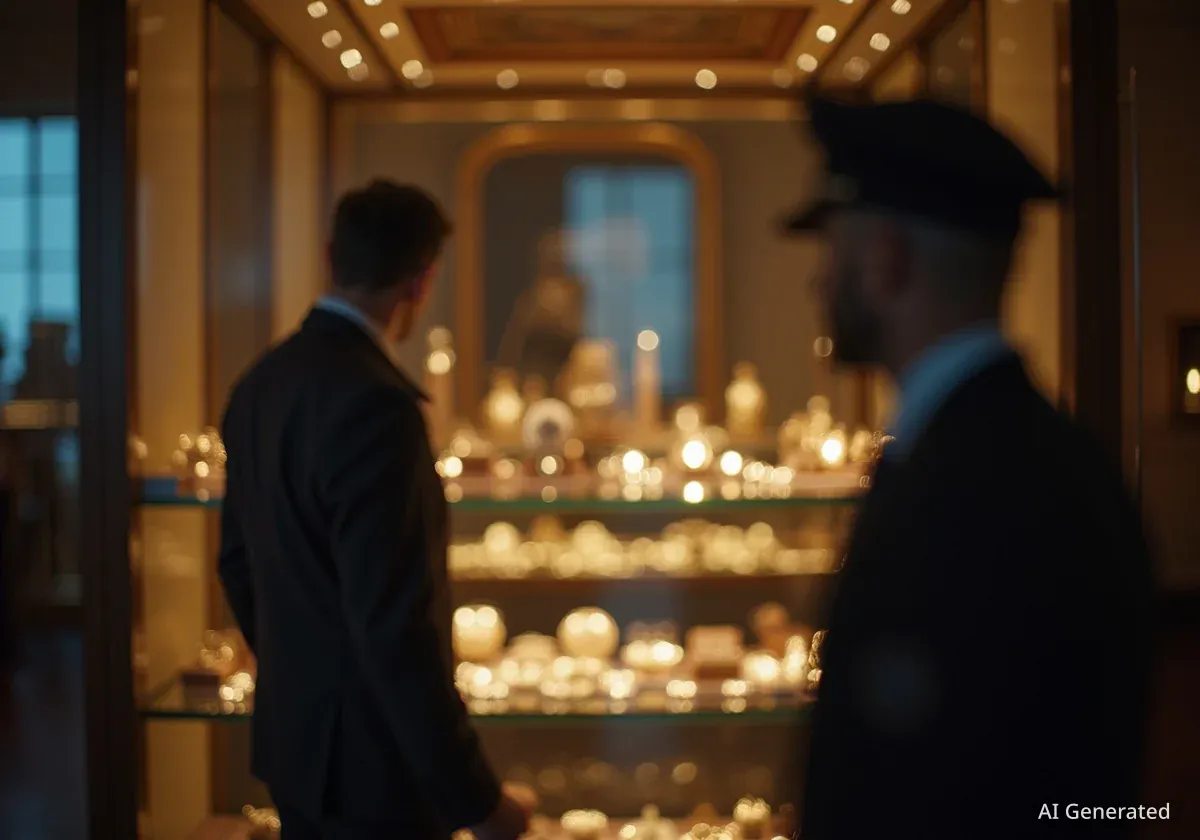


A new exhibition of royal jewels has opened in Paris at the Hôtel de la Marine, just weeks after a high-profile heist at the Louvre Museum. This timing places a sharp focus on security measures for precious artifacts across the city, as public confidence in museum protection remains shaken.
The "Dynastic Jewels" exhibition features over one hundred dazzling pieces, including diamonds, tiaras, and elaborate ornaments. It invites visitors to explore centuries of history, power, and personal affection embedded within these magnificent objects, even as Paris tightens security protocols for its cultural institutions.
Key Takeaways
- New royal jewel exhibition opens at Hôtel de la Marine.
- The opening follows a recent Louvre Museum jewel heist.
- Exhibit features over 100 pieces, including historical diamonds and tiaras.
- Paris museums are increasing security measures.
- The Hôtel de la Marine itself was the site of a historic jewel theft in 1792.
A Dazzling Display Under Scrutiny
The "Dynastic Jewels" exhibition at the Hôtel de la Marine showcases a collection of royal treasures that have survived revolutions and empires. These pieces are drawn from various sources, including the Al Thani Collection, the Victoria and Albert Museum, and notable lenders such as King Charles III and Cartier.
Visitors can marvel at the 57-carat Star of Golconda diamond, a sapphire coronet, and an emerald tiara designed by Prince Albert for Queen Victoria. These two Victorian pieces are reunited for the first time in over 150 years. Catherine the Great's diamond-encrusted dress ornaments also form part of the spectacular display.
Exhibition Highlights
- Star of Golconda Diamond: A massive 57-carat stone.
- Queen Victoria's Jewels: Sapphire coronet and emerald tiara, reunited after 150 years.
- Catherine the Great's Ornaments: Diamond-encrusted dress pieces.
- Cartier Necklace: Blends European design with centuries-old Indian gems.
The Shadow of the Louvre Heist
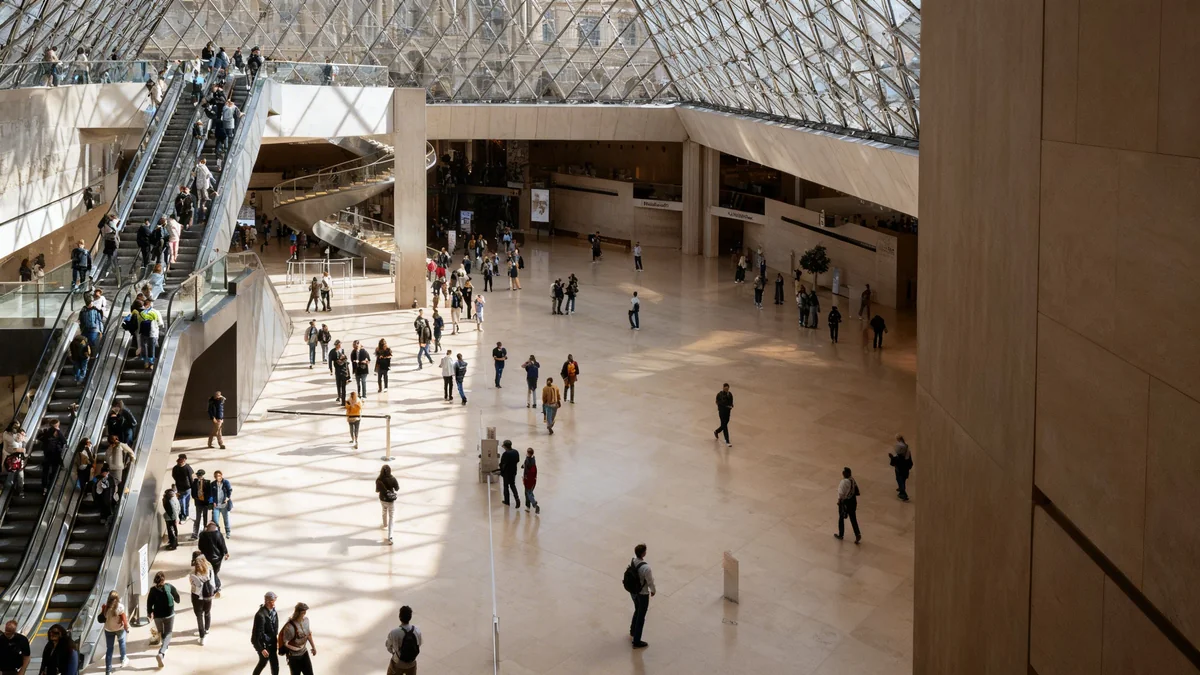
The exhibition's opening comes at a sensitive time for Paris. Just weeks ago, a brazen four-minute operation at the Louvre Museum's Apollo Gallery resulted in the theft of crown jewels. This incident forced the gallery's closure and significantly impacted public confidence in museum security.
The Louvre's Apollo Gallery remains sealed off as investigations continue. None of the stolen pieces have been recovered. This recent event has intensified scrutiny on security protocols at other cultural institutions, including the Hôtel de la Marine.
Enhanced Security Measures Across Paris Museums
Museums in Paris are urgently tightening their protection measures in response to the Louvre heist. Laurence des Cars, the Louvre director, announced plans to install approximately 100 new surveillance cameras and upgrade anti-intrusion systems. The first of these measures are already being implemented, with the full network expected by the end of next year.
The Hôtel de la Marine, which reopened in 2021 after extensive renovations, states that it was rebuilt with modern, high-grade security. Its galleries were specifically designed with robust protections in mind. While the museum did not detail any post-Louvre security enhancements, the general atmosphere in Paris demands heightened vigilance.
"Authorities have learned from the Louvre’s lacking security," said Arthur Brand, an Amsterdam-based art detective. "The thieves know that the security people here aren’t going to be sloppy. They will have learned their lesson. It’s a good thing this exhibit is going on. Life goes on. You should not give in to thieves. Show these precious items!"
Historical Context
The Hôtel de la Marine itself has a history with jewel theft. In 1792, during the French Revolution, the Crown Jewels housed within its walls were stolen. This historical parallel adds another layer of irony to the current situation, highlighting that this stretch of Paris has a long-standing history of such crimes.
Jewels as Symbols of Power and Prestige
With the Louvre's Crown Jewels display closed, the Hôtel de la Marine's exhibition is drawing increased attention. Visitors who might have gone to the Louvre for its royal collection are now likely to gravitate towards this new display. Curators emphasize the historical significance of the pieces.
Amin Jaffer, director of the Al Thani Collection and one of the exhibition’s curators, explained the deeper meaning behind the artifacts. "We show how great gemstones, tiaras and objects of virtuosity reflected identity in the 18th, 19th and 20th centuries," Jaffer stated. "They were expressions of power, reflections of prestige and markers of passion."
Public Reception and Modern Interpretations
The display of such opulence, particularly after the Louvre theft, elicits mixed reactions. Recently, protesters at the Tower of London demonstrated against inequality by splattering food on a royal crown display. This highlights a growing public debate about the provenance of such treasures and the historical context of their acquisition.
Museums face increasing pressure to address the exploitative networks that often made these historical treasures possible. For some Parisians, the timing of the exhibition feels premature.
"Honestly, the timing feels off," commented Alexandre Benhamou, a 42-year-old Paris gift shop manager. "People are still upset about what happened at the Louvre, and now there’s another jewel exhibition opening just down the street. It’s too soon; we haven’t even processed the first shock."
Despite these concerns, curators hope visitors will engage with the stories behind each object. They believe the exhibition offers a chance to marvel at the craftsmanship and explore the layers of affection, love, and relationships embedded in these enduring pieces of history. Every object, they argue, tells a unique story of survival through changing hands and eras.