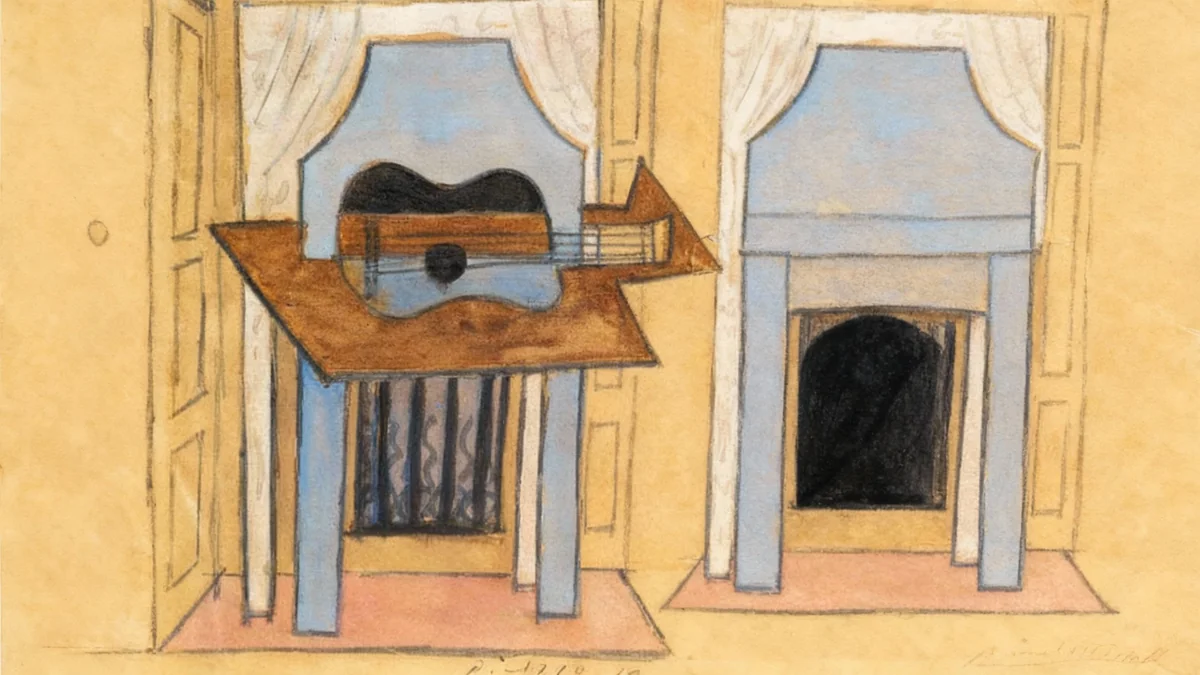


Spanish authorities are investigating the disappearance of a valuable Pablo Picasso painting. The artwork, titled Still Life with Guitar, went missing while being transported from Madrid to an exhibition in Granada. Valued at approximately €600,000, the small gouache and pencil piece was part of a consignment for a new art show.
Key Takeaways
- A Picasso painting, Still Life with Guitar, disappeared during transport.
- The artwork is valued at €600,000 (£520,000).
- It was en route from Madrid to an exhibition in Granada.
- The painting was reported missing on Monday, October 6, after arriving Friday, October 3.
- Spanish police are actively investigating the incident.
Investigation Underway for Missing Picasso
The painting, Naturaleza muerta con guitarra (Still Life with Guitar), was created in 1919. It measures 12.7cm by 9.8cm. The piece belongs to a private collector located in Madrid. It was scheduled to be a central part of the 'Still Life: the Eternity of the Inert' exhibition at the CajaGranada foundation.
According to the CajaGranada foundation, the van carrying the artworks arrived in Granada on Friday, October 3, at 10 AM. The contents were unloaded. An initial check was performed. However, some packages lacked correct numbering, which made a thorough verification difficult. Despite this, the delivery was signed off, and the transport crew departed.
Fact File: The Missing Artwork
- Artist: Pablo Picasso
- Title: Still Life with Guitar (Naturaleza muerta con guitarra)
- Year: 1919
- Medium: Gouache and pencil
- Dimensions: 12.7cm x 9.8cm
- Estimated Value: €600,000 (£520,000)
Discovery of the Disappearance
The artworks remained under video surveillance throughout the weekend. On Monday, October 6, foundation staff began unpacking the pieces. They moved the unpacked works to different areas of the exhibition room. It was mid-morning that day when the exhibition's curator and the foundation's head of exhibitions noticed one item was missing.
"Once the unpacking had been done, by the CajaGranada foundation’s own staff, the works were moved to different parts of the exhibition room," the foundation stated in an official release. "Mid-morning that day, the exhibition’s curator and the foundation’s head of exhibitions noticed that one work was missing. The piece is a small gouache by Pablo Picasso, called Still Life with Guitar."
The foundation promptly reported the incident to the Policía Nacional. They have assured full cooperation with the ongoing investigation. The foundation expressed confidence that the case would be resolved.
Transport Details and Security Concerns
Spanish media reports have provided additional details regarding the transport. It is suggested that the van may have made an overnight stop near Granada. During this stop, the two individuals aboard the vehicle reportedly took turns guarding the valuable cargo. This detail could be significant in the police investigation.
The security protocols for transporting high-value art are always stringent. However, the initial report of incorrectly numbered packages highlights a potential lapse in the verification process upon arrival. This could be a key area of focus for investigators as they piece together the timeline of events.
Background: Pablo Picasso and Art Theft
Pablo Picasso's global fame and the substantial value of his artworks have made them frequent targets for thieves. Over the decades, numerous Picasso pieces have been stolen from various locations worldwide. These incidents underscore the persistent challenge of protecting highly sought-after art.
For example, in February 2007, two Picasso paintings, with a combined worth of €50 million, were stolen from the Paris residence of the artist's granddaughter. Two years later, a Picasso sketchbook, valued at over €8 million, was taken from a Paris museum dedicated to the artist's work. These cases illustrate the high stakes involved in art security.
History of Picasso Art Thefts
The theft of Picasso's Still Life with Guitar adds to a long list of incidents involving his works. In 1989, twelve Picasso paintings, estimated to be worth around £9 million, were stolen from the French Riviera villa belonging to Marina Picasso, another of his grandchildren.
Several other Picasso paintings have also been stolen from galleries and museums. One of France's largest art thefts occurred in 1976. In this incident, 118 works were stolen from a museum in Avignon, a city in southern France. These historical occurrences demonstrate the vulnerability of art collections to criminal activity.
More recently, in 1997, a gunman entered a central London art gallery. The individual stole Picasso’s Tête de Femme, valued at more than £500,000. The thief then escaped in a taxi. Fortunately, this particular artwork was later recovered. Such incidents highlight the diverse methods employed by art thieves and the ongoing efforts by law enforcement to retrieve stolen pieces.
- 1976: 118 works stolen from a museum in Avignon, France.
- 1989: 12 paintings (worth £9 million) stolen from Marina Picasso's villa.
- 1997: Tête de Femme (worth £500,000) stolen from a London gallery (later recovered).
- 2007: Two paintings (worth €50 million) stolen from Picasso's granddaughter's home in Paris.
- 2009: A sketchbook (worth €8 million) stolen from a Paris museum.
Next Steps in the Investigation
The Policía Nacional will likely focus on several aspects of the case. They will review security footage from both the departure point in Madrid and the arrival at the CajaGranada foundation. Interviews with the transport crew and foundation staff involved in the unpacking process will also be crucial.
The discrepancy in package numbering noted by the foundation is a significant detail. Investigators will examine whether this oversight created an opportunity for the theft to occur. The possibility of an overnight stop by the transport van will also be thoroughly investigated to determine if the theft happened during that period.
The art world is watching closely as authorities work to recover this important piece of art. The incident serves as a reminder of the constant need for vigilance and robust security measures in the transportation and exhibition of valuable artworks.