


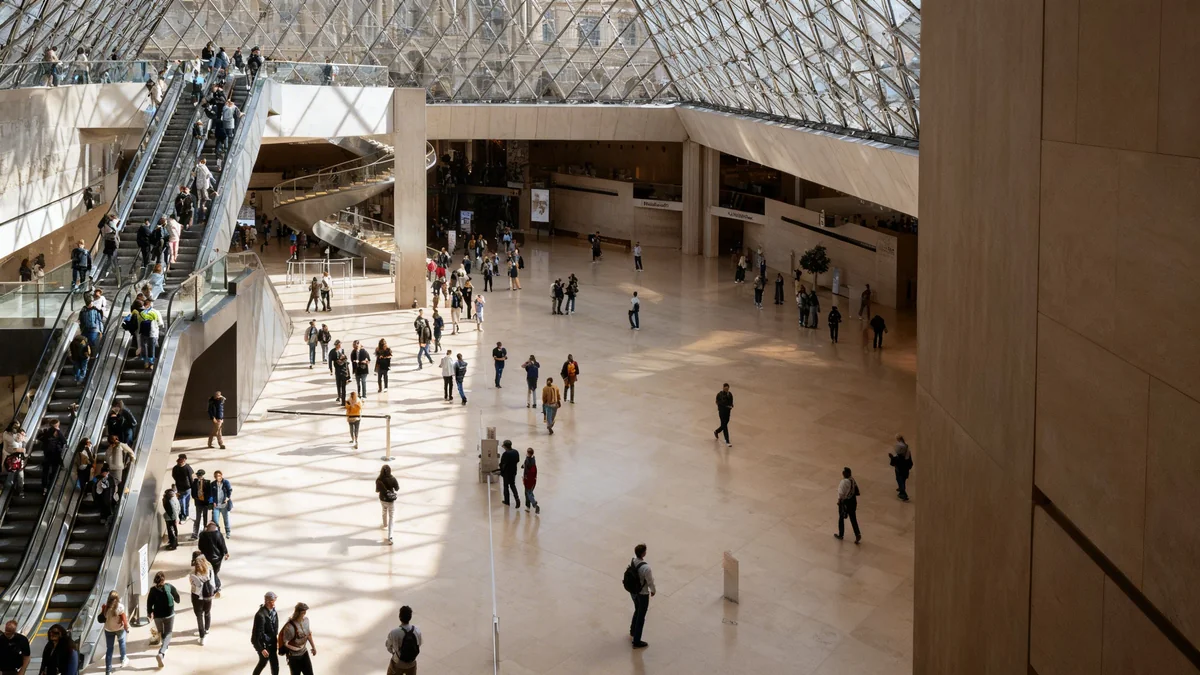
The Louvre Museum in Paris reopened its doors on Wednesday, just three days after a brazen daylight heist saw thieves make off with eight pieces from France's historic Crown Jewels. Long lines of visitors gathered beneath the iconic glass pyramid, eager to enter one of the world's most famous museums, despite the recent security breach.
The Sunday raid, which occurred mere steps from the Mona Lisa, targeted the Apollo Gallery. This incident has raised serious questions about security protocols at the Louvre and brought scrutiny upon President Emmanuel Macron's administration and Louvre chief Laurence des Cars.
Key Takeaways
- Louvre reopened Wednesday, three days after a major jewel theft.
- Eight pieces from France's Crown Jewels were stolen, valued at over $100 million.
- Thieves spent less than four minutes inside the museum.
- The Apollo Gallery, scene of the crime, remains sealed off.
- Security concerns persist amid previous staff warnings about understaffing.
Audacious Daytime Robbery Shocks Paris
The theft occurred on Sunday morning, with perpetrators reportedly spending less than four minutes inside the museum. Authorities describe a meticulously planned operation: a freight lift was positioned at the Seine-facing facade, a window was forced open, and two display cases were smashed. The thieves then made their escape on motorbikes through central Paris.
Alarms were triggered during the incident, prompting security agents to respond. However, the intruders managed to flee before being apprehended. The stolen jewels, with an estimated value exceeding 100 million dollars, remain missing, and no arrests have been announced.
"For a place like the Louvre, it’s unfathomable," said Amanda Lee, 36, an art teacher from Chicago. "I heard it took under four minutes — how is that possible here, with no police in sight?"
Heist in Numbers
- 8 historic jewels stolen.
- Less than 4 minutes spent by thieves inside.
- Over $100 million estimated value of the haul.
- 100 investigators are currently working on the case.
The Stolen Treasures and Their History
The stolen items include a sapphire diadem, a necklace, and a single earring associated with 19th-century queens Marie-Amélie and Hortense. An emerald necklace and earrings linked to Empress Marie-Louise, Napoleon Bonaparte's second wife, were also taken, along with a reliquary brooch.
Empress Eugénie’s diamond diadem and her large corsage-bow brooch, renowned for their intricate craftsmanship, were among the loot. One piece, the emerald-set imperial crown of Empress Eugénie, featuring over 1,300 diamonds, was later discovered outside the museum. It was damaged but is considered recoverable.
Prosecutor Laure Beccuau estimated the haul's value at approximately 88 million euros ($102 million). She emphasized that this figure does not fully capture the immense historical significance of the pieces.
The Apollo Gallery
The Apollo Gallery, where the theft occurred, is a lavish space within the Louvre. It houses many of France's Crown Jewels and is known for its ornate decorations and significant historical artifacts. It remains sealed off to the public as investigations continue.
Lingering Questions About Security
The incident has intensified scrutiny on the Louvre's security measures. Justice Minister Gérald Darmanin acknowledged a failure, stating that the ability to position a freight lift undetected on a public way projects "a very negative image of France."
Visitors to the reopened museum on Wednesday reported no noticeable increase in security personnel. "I didn’t notice extra security — guards as always, and no police inside. It felt like a normal day," said Tomás Álvarez, 29, a software engineer from Madrid.
This theft comes months after a staff strike at the Louvre. Unions had warned of chronic understaffing and insufficient resources, arguing that massive tourist crowds strain existing protections and leave vulnerabilities in the museum's vast 33,000-object labyrinth.
Previous Warnings and Government Response
In June, a staff walkout over overcrowding and understaffing led to a delayed opening. Unions highlighted that high visitor numbers create pressure points, particularly where construction zones, freight access, and visitor flows converge. This recent heist appears to confirm some of those concerns.
President Emmanuel Macron's government had announced new measures for the Louvre in January. These included a new command post and an expanded camera network, which the culture ministry stated was in the process of being implemented. The timing of the theft raises questions about the pace and effectiveness of these security upgrades.
"It’s a scandal of planning, not just one night," commented Luca Romano, 52, a civil engineer from Milan. "If you can plant a freight lift at a palace and no one stops you, that’s a system failure."
While headline attractions like the Mona Lisa are protected by bulletproof glass and climate-controlled cases, the break-in exposed weaknesses elsewhere. For many French citizens, the incident represents a public embarrassment for a cherished national landmark.
The Louvre's other famous masterpieces, including the Venus de Milo and the Winged Victory of Samothrace, were accessible to visitors on Wednesday. However, the cordoned-off and empty display cases in the Apollo Room serve as a stark reminder of the recent breach, highlighting the fragility of a nation's cultural heritage.