Villa Tugendhat, located in Brno, Czech Republic, is more than a discreet modern house. This UNESCO World Heritage site, designed by Ludwig Mies van der Rohe, holds a rich history. It spans from revolutionary architecture and the exile of its Jewish owners to becoming the backdrop for the peaceful dissolution of Czechoslovakia. Its unassuming exterior hides a past deeply intertwined with 20th-century events.
Key Takeaways
- Villa Tugendhat is a pioneering example of modernist architecture from 1930.
- It was designed by Ludwig Mies van der Rohe, known for 'less is more'.
- The Jewish Tugendhat family fled Nazism, and the villa was confiscated.
- It served as the site for the 'Velvet Divorce', marking Czechoslovakia's peaceful split.
- The villa is now a UNESCO World Heritage site and open to the public after restoration.
A Visionary Home Ahead of Its Time
In the late 1920s, the wealthy Tugendhat family, who were German-Jewish, sought a unique and personalized home. They commissioned Ludwig Mies van der Rohe, a renowned architect famous for his 'less is more' philosophy. The result was Villa Tugendhat, completed in 1930. This structure featured open spaces, clean lines, and expansive windows. These windows offered panoramic views of the city of Brno.
The design departed from traditional European homes. It avoided cluttered living rooms and inherited furniture. Instead, the villa rested on chrome steel pillars. It incorporated walls of white onyx and large glass panels. It even included advanced electric systems. These allowed curtains to be raised and lowered with a simple button press.
"You just flow between the rooms, and that was very antithetical to the German idea of having closed, cozy spaces inside," stated Michael Lambek, reflecting on the villa's innovative layout.
Architectural Innovation
Villa Tugendhat was a groundbreaking project. It introduced principles of modern architecture that were revolutionary for its time. Architects recognized it as a masterpiece. Local residents, however, often viewed it as eccentric due to its stark modernity.
Today, UNESCO recognizes Villa Tugendhat as a World Heritage Site. This designation confirms its significance as a pioneering work of modern architecture in the Czech Republic. Its design influenced subsequent architectural movements.
From Family Home to War Confiscation
The peaceful existence of the Tugendhat family in their innovative home was short-lived. The rise of Nazism in Europe forced the family to flee. As Jewish citizens, they faced persecution. They ultimately sought refuge in Venezuela. The villa was then confiscated by the state. It became state property during World War II.
After the war, Soviet forces occupied Brno. The villa changed ownership multiple times. It served various purposes, reflecting the tumultuous times. For a period, it hosted diplomatic receptions. It also functioned as a recovery center for women. These uses were far removed from its original purpose as a private residence.
The Prague Spring Connection
Grete Tugendhat, the family matriarch, briefly returned to the villa in 1968. This occurred during the period known as the Prague Spring. She made two critical conditions for the villa's future. She requested that it be fully restored and then opened to the public. These conditions were eventually met, though the restoration process took several decades to complete.
The journey of the villa from a private family home to state property and then a public monument highlights its role as a silent witness to European history. Its walls absorbed the echoes of war and political upheaval.
The Birthplace of a New European Map
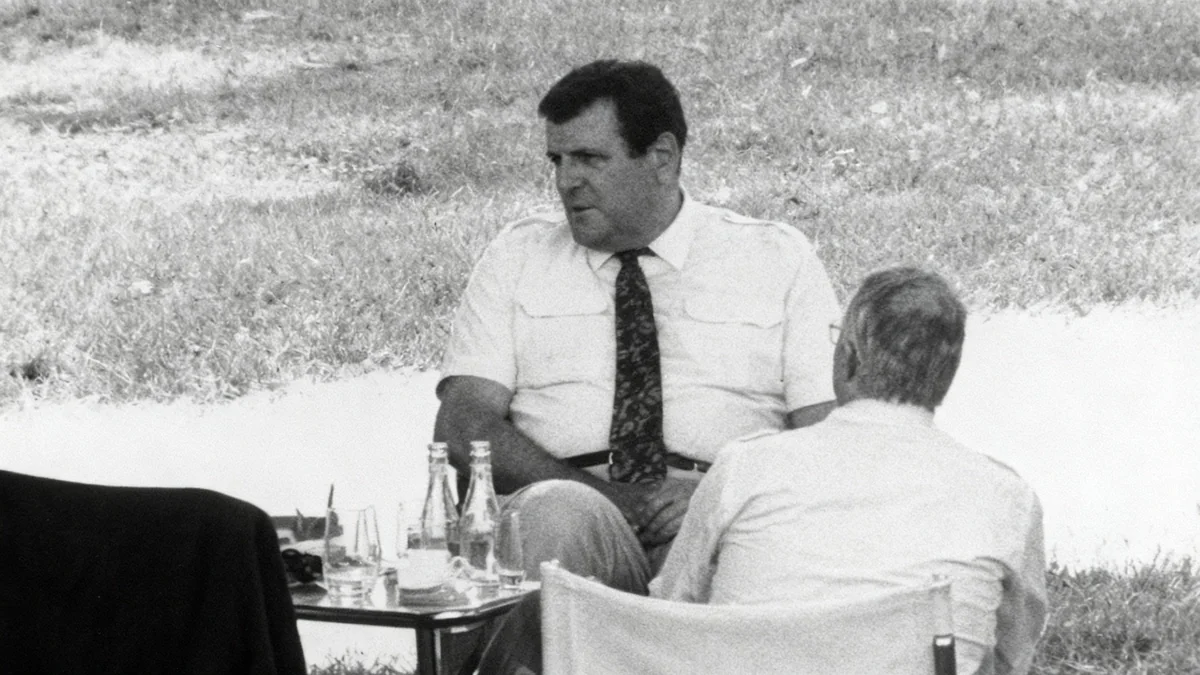
On August 26, 1992, the garden of Villa Tugendhat became a pivotal political stage. Václav Klaus, representing the Czech Republic, and Vladimír Mečiar, representing Slovakia, met there. Their purpose was to finalize the peaceful dissolution of Czechoslovakia. This historic meeting resulted in the agreement to form two separate nations.
The location was chosen strategically. It was situated geographically between Prague and Bratislava, the capitals of the two new countries. Following their discussions, Klaus and Mečiar announced the agreement to the press from the villa's grounds. This event was remarkable for its peaceful nature.
The Velvet Divorce
The peaceful separation of Czechoslovakia into the Czech Republic and Slovakia is widely known as the "Velvet Divorce." This term reflects the lack of violence or chaos during the transition. The agreement signed at Villa Tugendhat stands as a unique example of a state dissolving without conflict. It contrasted sharply with many other post-communist transitions.
This moment solidified Villa Tugendhat's place in modern European history. It transformed the garden into a symbol of peaceful political transition. The villa, therefore, witnessed not only architectural innovation and personal tragedy but also the peaceful redrawing of a national map.
A Silent Symbol of 20th-Century History
Villa Tugendhat is more than just an architectural marvel. It is a site imbued with significant historical narratives. It was once the home of a family displaced by war. It became war loot. Later, it served as a venue for critical political negotiations. Finally, it witnessed a unique, peaceful political transition. Each chapter adds layers to its story.
From the outside, the villa maintains a discreet appearance. It might seem like just another modern house. However, within its walls, a substantial part of 20th-century history resides. It stands as a testament to the power of design and the resilience of history.
The villa's quiet presence proves that some stories do not require an ostentatious façade. Its impact lies in the events it housed and the ideas it represented. It continues to inspire architects, historians, and visitors alike. Its story reminds us that even seemingly simple structures can hold profound historical weight.
Visiting Villa Tugendhat
Today, visitors can tour Villa Tugendhat. The site offers insights into its architectural brilliance and its historical significance. Guided tours explain the design principles and recount the family's story. They also detail the villa's role in the dissolution of Czechoslovakia. Reservations are often recommended due to its popularity.
This house, once considered eccentric by neighbors, is now celebrated globally. It stands as a monument to design, resilience, and pivotal moments in history. Its quiet elegance belies the dramatic events it has silently observed.