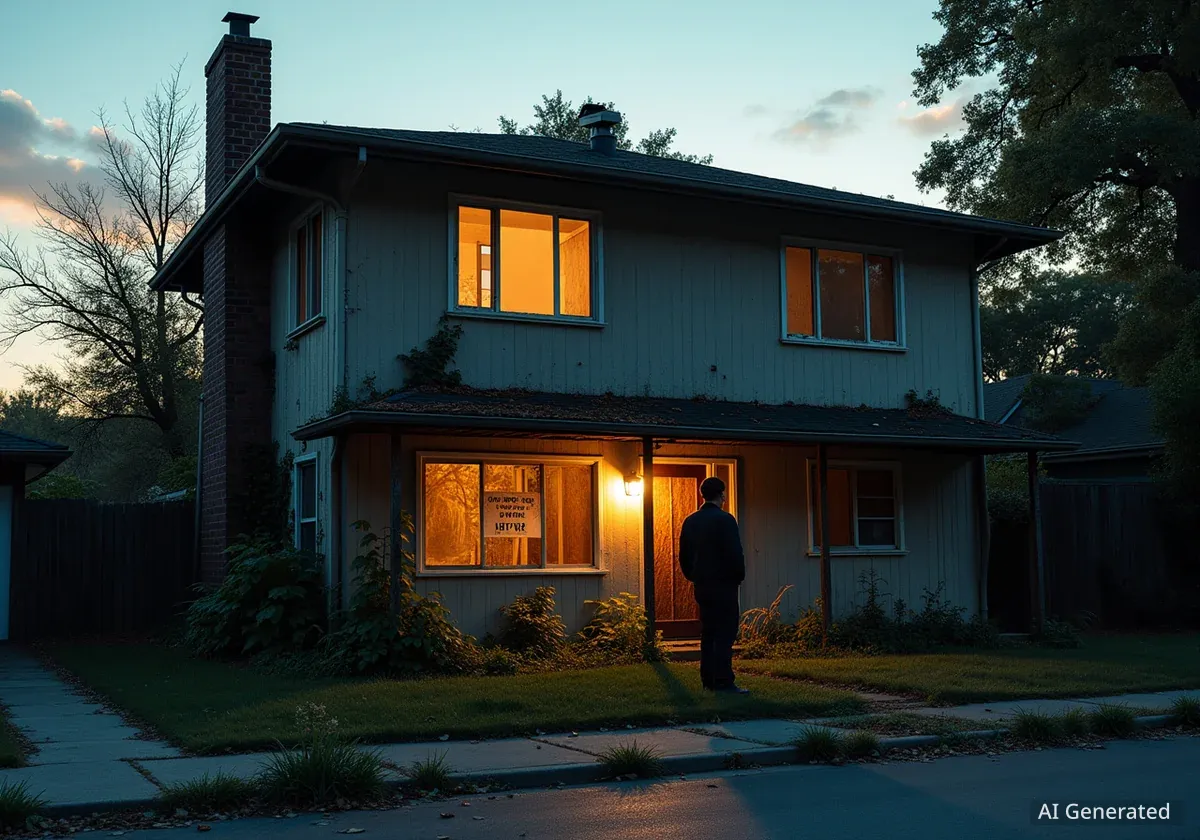
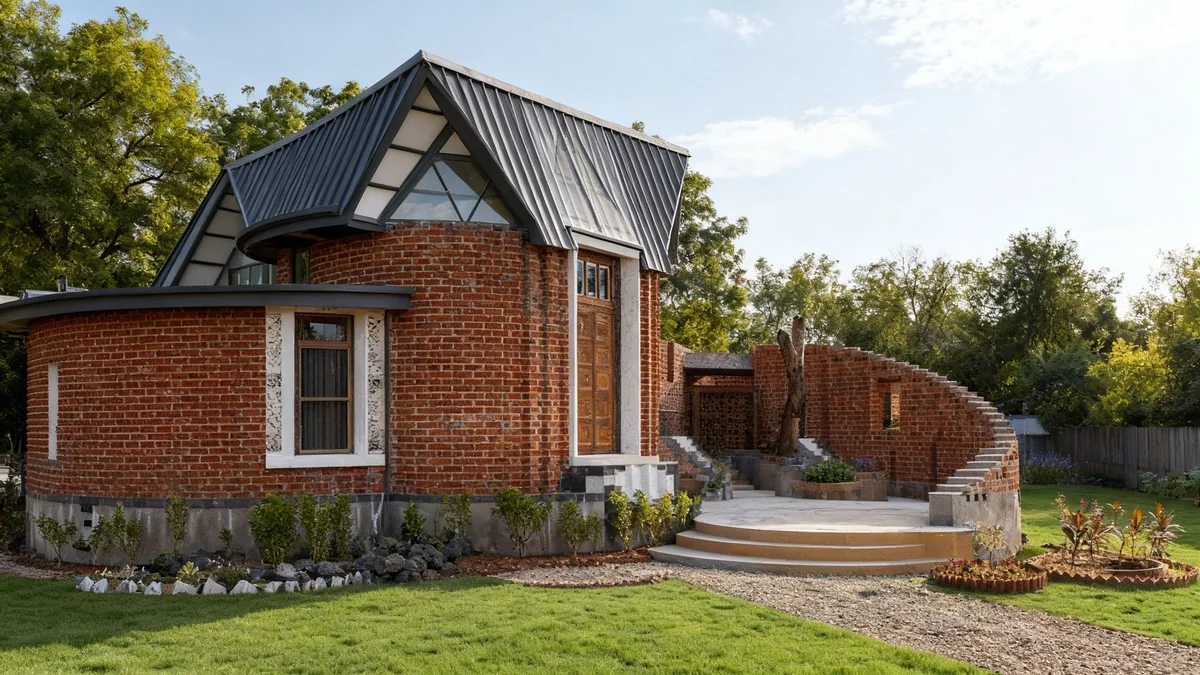
The former residence of acclaimed modern architect Victor Lundy in Bellaire, Houston, is scheduled for dismantling by its new owner in September 2025. This decision follows significant structural disrepair, including extensive water damage and mold. The impending demolition has sparked concern among architectural preservationists who view the home as a vital part of Houston's architectural heritage.
Key Takeaways
- Victor Lundy's former Bellaire home faces demolition due to disrepair.
- Preservationists consider the home a key example of Lundy's architectural legacy.
- Extensive water damage and mold are present throughout the structure.
- Restoration costs are estimated to be very high, potentially exceeding $1 million.
- Bellaire's floodplain regulations significantly complicate repair efforts.
- The new owner has offered to donate the house for relocation.
Architectural Legacy at Risk
Victor Lundy, recognized for his modern designs, built his Bellaire home in the late 1980s. While many of his prominent works, such as churches in the Northeast and a former U.S. Embassy in Sri Lanka, are located elsewhere, this residence holds a unique place. It represents Lundy's last remaining residential structure that has not undergone major alterations.
Architect Steve Curry, who serves as president of Houston Mod, emphasized the home's importance.
"It's our best representative example of Lundy's legacy… It's part of our architectural heritage," Curry stated. "There's literally nothing else like it."This sentiment highlights the unique value preservationists place on the property.
Victor Lundy's Impact
Victor Lundy (1923-2024) was an American architect known for his innovative use of modern materials and curvilinear forms. His work often blended structural expression with natural light and setting. The Bellaire home, though built later in his career, reflects his distinctive style and design philosophy.
Challenges of Preservation
The situation surrounding Lundy's home illustrates the common conflict between preservation ideals and practical constraints. Financial limitations and local building regulations often make saving historic structures difficult. The property's location within a floodplain adds another layer of complexity.
Nick Lundy, Victor Lundy's son, shared his personal connection to the house. "The house was more than just (my parents’) home. To me, it’s a masterpiece… it’s just incredibly sad, it’s a huge loss," he said. He recalled his parents building the home after falling in love with Houston, describing it as a "joyful kind of environment" where they hosted parties with local artists.
Property Sale and Initial Intentions
Nick Lundy sold the 0.6-acre property in January 2025, several months after his father's passing at 101. His mother had passed away in 2009. The new owners initially aimed to save the house. However, the significant challenges of restoring such a specialized structure in a flood-prone area quickly became apparent.
Floodplain Impact
- The property is located in a 100-year floodplain.
- This designation means the area has a 1% chance of flooding in any given year.
- Such locations require specific building regulations to mitigate flood risks.
Evidence of Decay
Recent inspections reveal the extent of the home's deterioration. While older marketing photos presented a pristine image, the current condition tells a different story. Construction fencing now surrounds the property, revealing its decline.
Holes are visible on the facade, likely caused by termites or moisture. Leaks have created rust-colored stains on a floor and dark streaks along structural beams. Inside, tables bear watermarks from Hurricane Harvey's flood. Mold growth is evident in various corners and on warped shelving. Neighbors have reported that the backyard frequently turns into a lake after heavy rainfall, suggesting long-standing drainage issues.
Restoration Costs and Complexity
Chris Fry, president of Dovetail Builders, a Houston homebuilder specializing in complex remodels, inspected the property earlier this year. "It’s got some unique architectural features that are hard to reproduce," Fry noted. He specifically highlighted the large, arched laminated beams, which were custom fabricated and would be extremely difficult to restore.
Experts estimate that a full restoration of the home could cost hundreds of thousands of dollars, potentially exceeding $1 million. This figure does not include the additional expenses required for expanding and elevating the structure to meet current standards.
Bellaire's Building Regulations
Bellaire, a city adjacent to southwest Houston, enforces strict building codes, particularly for properties within floodplains. New constructions must be elevated above the floodplain. Remodeling projects face a critical threshold: if the cost of renovations surpasses 50% of the home's appraised structural value, the entire house must be raised above flood level.
This regulation poses a significant hurdle for the Lundy home. The property has an appraised value of $1.53 million, but most of this value is attributed to the land. The structure itself was appraised at approximately $442,000 last year, dropping to $295,226 in 2025, according to the Harris County Central Appraisal District.
Given these figures, any remodeling project exceeding $147,613 would trigger the requirement to elevate the entire house. This amount is far too low to cover the necessary repairs and restoration, making a conventional renovation financially impractical under current regulations.
Efforts to Save the Structure
Preservationist organizations, including Houston Mod and Preservation Houston, have actively campaigned to save the home. They sent a letter to the new owners, urging them to "prevent an immense tragedy" and preserve the home "for future generations."
An offer of $1.75 million to purchase the property was made by a couple interested in its preservation. However, the new owner declined the offer. He reportedly wishes to retain access to the lot for his family of six, indicating a desire to use the land for new construction.
Dismantling and Relocation Possibilities
While no demolition permit has been formally filed yet, preparatory work is underway. A tree permit has been approved, and a water/sewer disconnect request is currently under review by the City of Bellaire. Instead of a traditional demolition, the new owner has arranged for Habitat for Humanity to dismantle the house. This process will salvage materials for reuse in the nonprofit's ReStores, which support affordable housing initiatives.
Despite the planned dismantling, a small possibility remains for the home's relocation. Preservationists acknowledge that moving the structure would be a significant financial and logistical challenge. Unlike a typical wood-frame house, Lundy's design is complex. It consists of two distinct structures: a studio built on piers and a residence built on a slab, connected at a single point. Moving it would require carefully separating the slab without damaging the main structure.
The new owner has expressed willingness to donate the structure to anyone capable of relocating it to a different site. However, a suitable party with the necessary resources and a new location would need to come forward very quickly. Otherwise, this important architectural piece could soon be lost.