A former ironworks factory on Teshima Island, Japan, has been transformed into a modern cafe and brewery. Japanese architecture firm Schemata Architects led the conversion of the 360-square-meter industrial building, now known as Teshima Factory, located near the Ieura Port harbor. The project aims to blend the building's industrial past with a welcoming new purpose, using polycarbonate walls to bring natural light into the structure.
Key Takeaways
- An old ironworks on Teshima Island is now a cafe and brewery.
- Schemata Architects used polycarbonate panels to replace metal walls, increasing light.
- The design balances the building's industrial character with a comfortable, inviting atmosphere.
- The project incorporates local materials and addresses the island's history.
- Lighting fixtures are made from marine plastic waste collected around Teshima.
Industrial Past Meets Modern Design
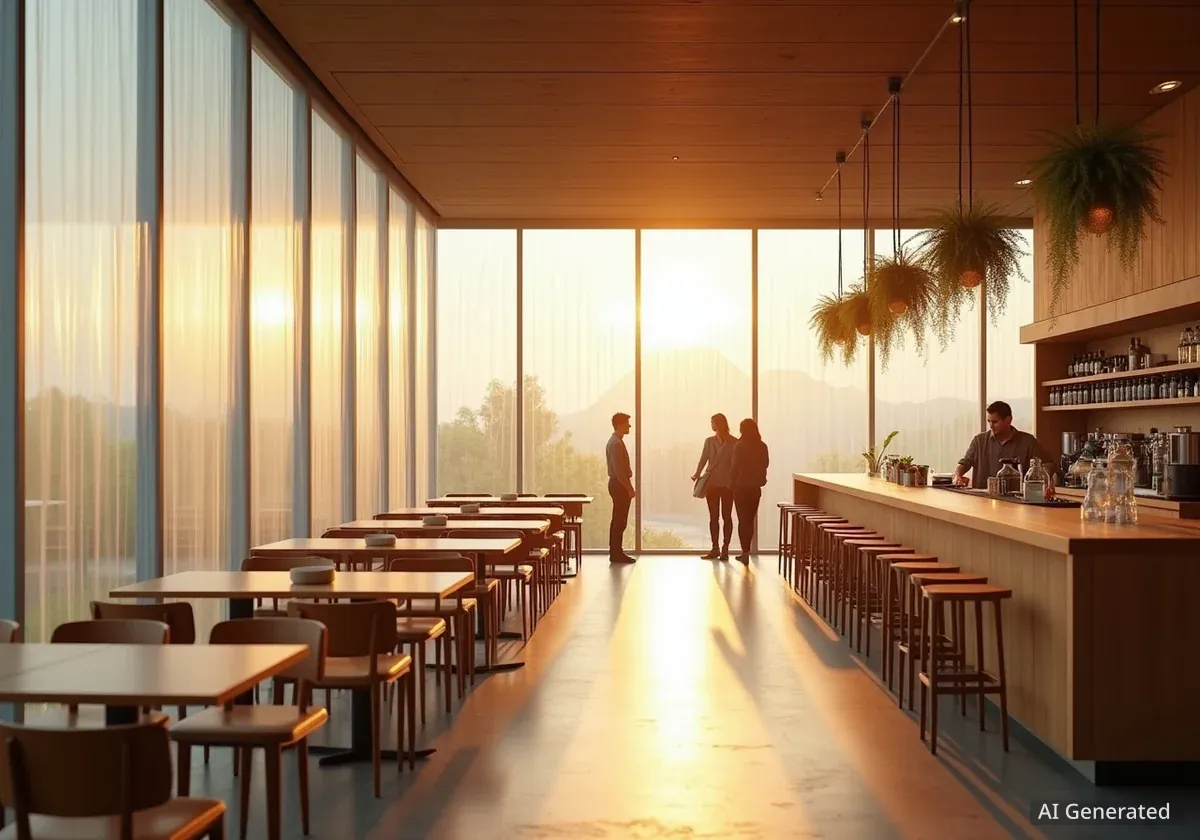
The original factory space was a single, open-plan area. Schemata Architects divided this into two distinct sections. One section now houses the cafe, while the other accommodates a brewery. Functional areas, such as the kitchen and brewing equipment, are enclosed within box-like structures placed inside these main sections.
The architects incorporated steel braces to strengthen the building's structure. A significant change involved replacing half of the factory's original metal walls with polycarbonate panels. This material choice was strategic.
"By using polycarbonate, light is now drawn into the interior, visually conveying that people are inside, transforming it into a more welcoming space for visitors," Schemata Architects stated.
Balancing Aesthetics and Function
Jo Nagasaka, who leads Schemata Architects, emphasized the importance of balancing the building's raw industrial feel with the need for a comfortable dining environment. The challenge was to make the space inviting without completely removing its historical character.
"Given the cafe's program, it needed to be a comfortable place to dine," the studio explained. "However, as the existing structure was a factory, it had an overly stark, industrial feel. Yet, removing that impression entirely would diminish the appeal of the unusual experience of dining within a factory setting."
Project Details
- Building Size: 360 square meters
- Location: Ieura Port, Teshima Island, Japan
- Architect: Schemata Architects (Jo Nagasaka)
- Key Material Change: Metal walls replaced with polycarbonate
- New Facilities: Cafe and Brewery
Tactile Materials and Color Palette
To achieve the desired balance, Schemata Architects focused on using specific materials and a distinct color scheme. They chose tactile materials for surfaces that people would interact with directly.
"We proceeded with the policy of using warm materials like wood, fabric, and tiles for surfaces people touch – tables, chairs, sofas, counters, and so on – while retaining the rough atmosphere in other areas," the studio noted.
A turquoise-green color is used throughout the interior. This specific shade was inspired by the rust-proof coating already present on the existing steel framework. This choice helps to integrate the new design with the building's original industrial elements.
Teshima's Transformation and Community Involvement
Teshima Island has a unique history. It was once known as "garbage island" due to illegal industrial waste dumping. However, the island has undergone a significant transformation. It is now recognized as a cultural destination, home to an art museum and other creative projects.
This project aligns with Teshima's renewed focus on sustainability and community. The architects aimed to create "a space for communication that leverages the island's cyclical agriculture and fishing industries."
Teshima Island History
Teshima Island faced environmental challenges due to illegal waste dumping in the past. Over time, it has evolved into a notable destination for art and culture, attracting visitors and artists. The island emphasizes sustainable practices and local resources.
Sustainable Elements and Local Craftsmanship
The Teshima Factory project incorporates several sustainable and community-focused elements. Inside the cafe, visitors will notice spherical lighting fixtures. These unique lights were made from marine plastic waste collected from the ocean surrounding Teshima. This initiative highlights the issue of plastic pollution and provides a creative solution.
In another collaboration, Dutch artist Sander Wassink was commissioned to work with local residents of Teshima. Together, they created a collection of chairs for the new space. This involved using reclaimed timber found on the island itself.
"When considering what material would suit Teshima, we concluded that, much like agriculture and fishing, sourcing materials from within the island itself would be ideal," the studio stated. "To foster a sense of attachment to this new space among the islanders, we opted to produce the pieces through workshops."
This approach not only reduces waste but also provides a sense of ownership and connection for the islanders to the new cafe and brewery. The project reflects a careful consideration for the environment and the local community.
Architectural Impact and Future Outlook
The conversion of the Teshima Factory demonstrates Schemata Architects' expertise in adaptive reuse projects. Their previous works include a wooden cafe overlooking Tokyo Bay and guesthouses on Kouri Island clad in local timber. These projects often focus on integrating structures with their natural and cultural surroundings.
The Teshima Factory is expected to become a new focal point for both residents and visitors, offering a unique dining and social experience within a historically significant building. The blend of industrial heritage, modern design, and sustainable practices sets a new standard for revitalization efforts on the island.
The project involved a team of specialists, including structural supervisors, construction companies, furniture builders, and equipment designers. Collaboration with local experts and artists was central to its successful completion. This comprehensive approach ensured that both the aesthetic and functional aspects of the conversion were meticulously addressed.